

Audio By Carbonatix
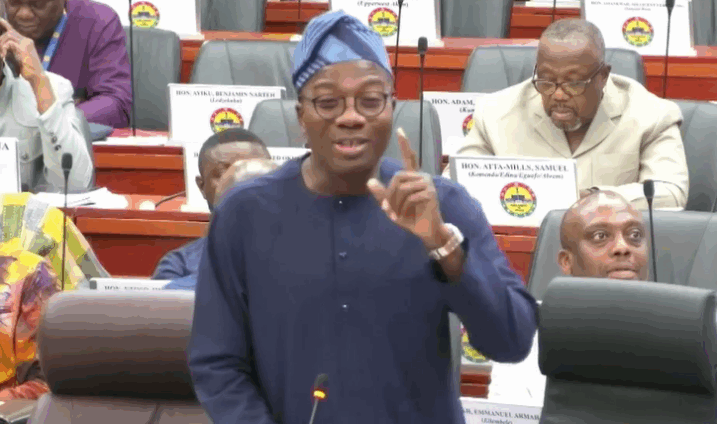
The Majority Leader, Mahama Ayariga, has cautioned that dissolving the Office of the Special Prosecutor (OSP) will not prevent the prosecution of implicated former government officials.
Addressing Parliament on Thursday, December 4, during discussions on the arrest and detention of private legal practitioner Martin Kpebu by the OSP, he stressed that accountability processes will continue regardless of whether the office is abolished.
“Mr Speaker, let me sound a warning that abolishing it will not let off the hook those who we are considering prosecuting for violations of the law when it comes to corruption,” he said.
“I can assure you that abolishing the Office of Special Prosecutor will not let off anybody who is found culpable.”
He noted that the call to scrap the OSP should not be misinterpreted as an attempt to protect officials who may face prosecution.
“People should not see the call for the abolition of the OSP as an indication that those who are going to be held accountable will be let off the hook. Indeed, I will ensure that the process is even expedited,” he added.
Mr Ayariga reiterated his firm position that the OSP has outlived its usefulness and should be dissolved, whether through a private member’s bill, as previously suggested by former Speaker Prof. Mike Oquaye, or by an executive-led amendment.
According to him, the establishment of the OSP was a “futile constitutional experiment” rooted in the wrong assumption that a politically appointed Attorney General cannot effectively fight corruption.
“Is the OSP coming from space? Who is nominating him? The same political process is going to generate the occupant,” he argued.
“You will not be freed of that political pressure.”
He maintained that genuine anti-corruption success depends on strong political leadership, not the proliferation of new institutions with “fanciful names” and big budgets.
“This government has been in office for about 11 months now. We haven’t reported a single scandal because of the political commitment to ensure accountability,” the Majority Leader said.
“Political corruption is a function of political leadership. If political leadership is determined not to be corrupt, they will not be corrupt.”
The Majority Leader insisted that the resources allocated to the OSP should instead be channelled to the Attorney General’s office, which is constitutionally mandated to prosecute criminal cases.
“The money that we are giving to the Office of Special Prosecutor, let’s resource the Attorney General’s office, and I’m sure this particular Attorney General will produce the results we expect of him,” he added.
Latest Stories
-
GMTF engages Defence Ministry and Armed Forces on plans for comprehensive cancer facility
38 seconds -
Mahama urges Ghana and Zambia to transform historic ties into trade deals
15 minutes -
Work to meet timelines or have your contracts abrogated – Volta Parliamentary Caucus warns
17 minutes -
Government and World Bank intensify push to boost local rice production
21 minutes -
Get the policy document and make recommendations – NDC MP responds to Minority criticism of 24-hour economy bill
41 minutes -
Erratic power supply triggers acute water shortage in parts of Kumasi
50 minutes -
24-hour economy framework has major issues – Dr Amoah on Minority’s opposition
52 minutes -
Cybersecurity Threats in Ghana: A Comprehensive Analysis
59 minutes -
Korle Lagoon Smart City Project to kick off soon as committee meets – MCE
1 hour -
24-hour economy unnecessary – Minority opposes secretariat bill
1 hour -
Why Amasaman High Court cut Agradaa’s 15-year sentence to 12 months
1 hour -
Daily Insight for CEOs: Eliminating execution bottlenecks
1 hour -
Transport Minister boosts collaboration to fix transport challenges
1 hour -
President Mahama outlines Ghana’s economic recovery and invites Zambian investors
1 hour -
Transport Minister unveils multi-sector plan to decongest roads
1 hour