

Audio By Carbonatix
The Chief Executive Officer of the Korle Bu Teaching Hospital (KBTH), says there are about 700 to 1,000 people on dialysis treatment in the country.
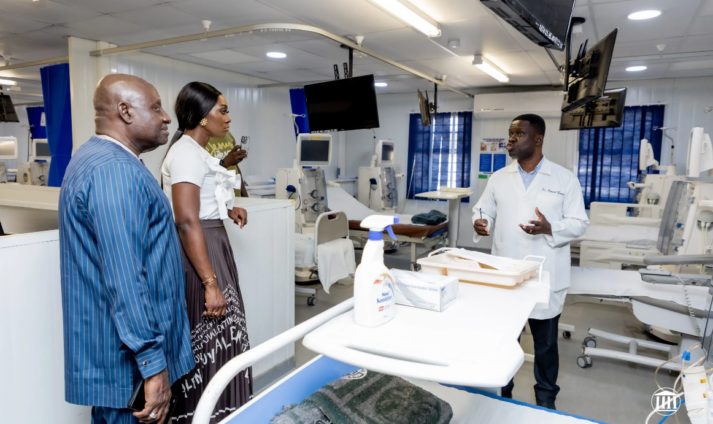
Dr Opoku Ware Ampomah said out of the number, the Dialysis Unit of the KBTH had 350 patients, adding that, they run 2,000 sections of dialysis every month.
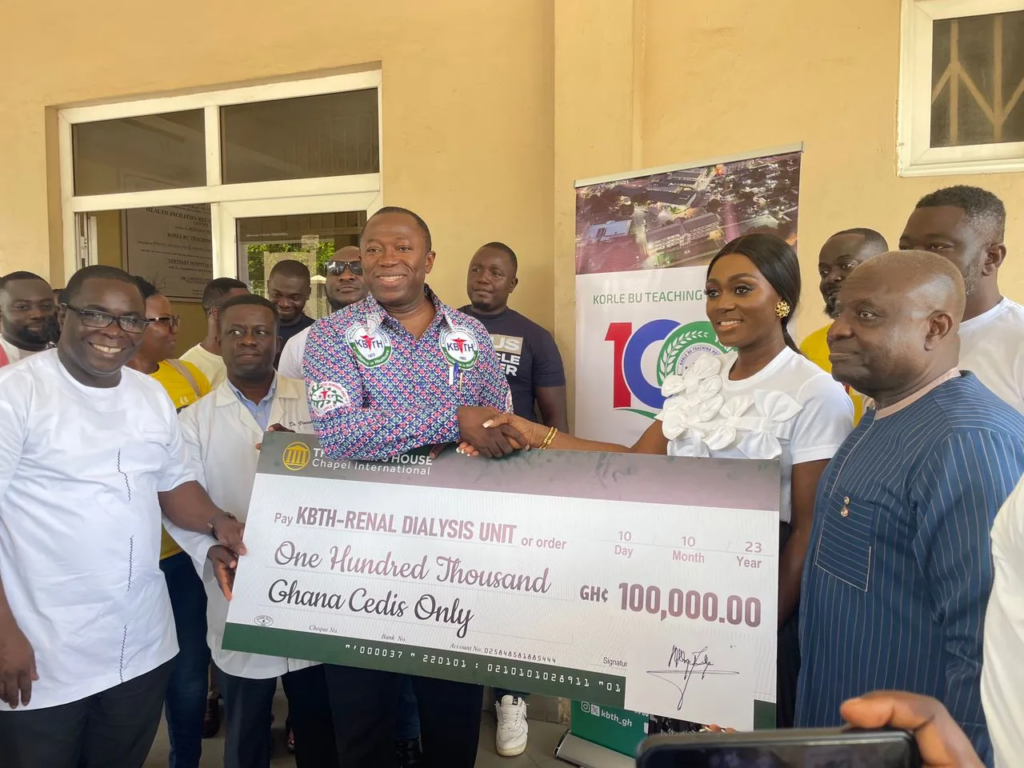
Dr Ampomah disclosed this when a team from The Maker’s House Chapel International made a GHS 100,000 donation to the Dialysis Unit of the Hospital.
The Church also donated GHS 50,000 to the Dialysis Unit of the 37 Military Hospital, making a total of GHS 150,000.
The donation was the Church’s way of reaching out to help address issues that confronted people and society.
This comes on the back of concerns about dialysis fees and how patients are finding it difficult to pay for their regular sessions.
Dr Ampomah said due to exchange rate fluctuations and the high cost of importing dialysis equipment, they were not able to break even in operating the Unit.
He said the GHS 300 fee charged for dialysis treatments was not sufficient to meet the cost involved.
He said the Hospital fell short of GHS 961,000 every month due to that challenge, adding that, they had so far incurred GHS 4million loss.
“We are always under recovery, so we are not able to make payments to suppliers. As I speak, 45 machines are being held by our suppliers.”
Dr Ampomah said the Hospital had not increased the fee for dialysis as being speculated, saying the decision to increase the fee was not their prerogative.
He said that decision was for the Fees and Charges Committee of Parliament.
Dr Louis Agyeman Siriboe, Head of Dialysis Unit at 37 Military Hospital, said their Unit recorded 10 new cases of kidney disease every week.
He said dialysis was supposed to be done three times a week, but due to the cost involved, most patients were having it once a week.
He urged the Government to put in place the necessary legal frameworks to enhance options for kidney transplants rather than patients being on dialysis, which was more stressful.
“We must begin looking at moving from dialysing patients to transplants. This would be a preferable option once we put in the legal framework,” he reiterated.
Latest Stories
-
Trade Minister applauds GUTA as a pillar of economic growth; Prez Mahama honoured
50 minutes -
President’s brother’s takeover of Damang Mines is ‘untidy’ – Alhassan Tampuli
56 minutes -
It’s not true that gov’t decided not to renew the lease for Gold Fields – Bobby Banson
1 hour -
Ghana to boost tomato production with 60-hectare irrigated farms and processing initiatives
1 hour -
E&P’s takeover process of Damang Mines was very clean – Inusah Fuseini
1 hour -
Damang takeover: There is not going to be any job loss; it is a lease change – Bobby Banson
2 hours -
Gold Fields didn’t stop mining at Damang mines; such claims are untrue – Bobby Banson
2 hours -
Engineers and Planners currently operate only in Ghana – Bright Simons
2 hours -
Lands Minister has no legal basis to restrict lease to Ghanaian firms – Bright Simons
2 hours -
Gov’t’s refusal to renew Gold Fields’ lease was simply untenable – Bright Simons
2 hours -
SOS Children’s Villages Ghana deepens partnership with Gender Ministry
3 hours -
Gender Ministry celebrates Christina Koch, reaffirms commitment to empowering girls
3 hours -
Live stream: Newsfile digs into E&P’s takeover of Damang Mines, OSP powers and Anti-LGBTQ Bill
3 hours -
Moody’s maintains Ghana’s rating at Caa1, revises outlook to positive
4 hours -
Zambia elevates tourism education to national priority as President Hichilema backs continental summit
4 hours