

Audio By Carbonatix
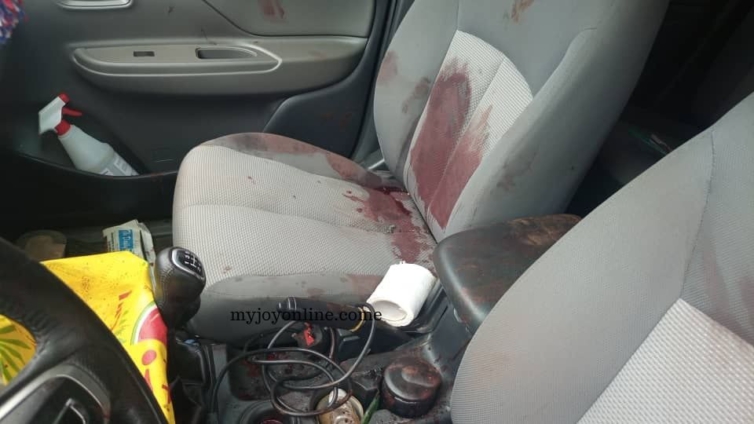
Following the gruesome killing of MP for Mfantseman, Hon. Ekow Quansah Hayford, the issue of providing armed police guards to MPs has yet again gained precedence.
I find the call unscientific and not sustainable. Besides, it doesnt in anyway solve the wider issue of insecurity in the country. Infact, criminals are able to successfully target bullion vans carrying cash with armed police escorts and also stage broad daylight attacks against police personnel. Consequently, this issue requires a broader contextual approach and an analytical insight into why criminals are becoming more vicious and brazen by the day.
According to police statistics, crime is on the increase in Ghana. In a recent US Department of State travel advisory report on Ghana, it is stated that crime is increasing in the country. There are over 1.2 million illegal firearms in the country resulting in an average, 500 murders annually. The report further emphasizes that local authorities lack the capacity to confront the threat.
Putting these into perspective, dealing with the state of high profile figure killings in the country requires a multi-dimensional strategy. It's an incontrovertible fact that we have failed to modernize crime and investigation in Ghana over the years. We have constricted efficient security management to the procurement and donation of vehicles. But failed woefully in investing in situational crime prevention; deterring crime by making strategic changes to an environment hence, making crime not profitable. One of the ways this is possible is by investing in crime and investigation. Let us integrate the various biometric databases; passport office, National Identification Authority, SSNIT, etc. Let us make this information treasure trove available to law enforcement. Officers who are usually first respondents to crime scenes must be trained well enough to protect the integrity of crime scenes. They should be able to harvest fingerprints and DNA at crime scenes to be ran through the database. Let's invest in DNA technology and have a crime lab in every Regional capital of Ghana. When criminals know there is a higher probability that they would be caught when they violate the law, they will refrain (based on a theory in criminology called "rational choice"). Mostly, cases sent to court are not water tight enough but based on circumstances because of the lack of empirical evidence. As a result, dangerous criminals are sometimes acquitted.
There is also the need for awareness creation on the need for Ghanaians to exercise a great deal of discretion in ensuring they are safe at the personal and community levels. I have on countless occasions performed security audits for a number of MPs including the provision of surveillance systems. Unfortunately, a lot more do not see the need because they feel very confident in the "love" their constituents have for them. Ghanaians are generally not security conscious. We tend to be reactive rather than proactive to security issues. Most of us start investing in security after we fall victim to crime. We use the same route home from work even during late hours. We do not double check to ensure our doors are locked at night. We do not pay attention to unusual happenings in our communities. We irresponsibly expose ourselves and our families to criminals online.
We have a role to play in safeguarding ourselves and our communities from violent crimes. Vigilance is key.
Adib Saani
Security Analyst/Exec. Director, Jatikay Centre for Human Security and Peace Building
Latest Stories
-
Power restoration fault suspected in Kumasi Central Market fire
14 minutes -
The 7-foot giant of Ngleshie Amanfro: Seven-foot Ghanaian Ephraim Saawa dreams of joining the national basketball team
52 minutes -
Government promises support for Kumasi Central Market fire victims
59 minutes -
Vibes The Movie: Big Ghun’s Ghanaian film earns five nominations at 2026 REFFA
1 hour -
MamaCare CEO warns unresolved conflicts among health workers could undermine maternal and neonatal care
2 hours -
Health professionals urged to translate medical knowledge into practice to save mothers
2 hours -
Conflicts among care providers linked to maternal, neonatal deaths – Expert
4 hours -
GIS marks 10th TIME conference, champions improved teaching practices
4 hours -
BRICS Or Balance? What Ghana’s bid really means
4 hours -
GPRTU wants full TRAFFITECH-GH implementation to start in 2027
4 hours -
Mahama announces plans to import electric wheelchairs for PWDs
5 hours -
KGL U17 Colts 2026: Western beat Prempeh Elite Academy to set up final final with Greater Accra Region
5 hours -
Late Solanke strike salvages 10-man Spurs draw at Man United
5 hours -
Gender Ministry to monitor welfare of Nana Akua Addo’s children amid domestic violence case
5 hours -
Benedict Okyere Yeboah: Ghana’s football problem goes beyond sacking a coach
5 hours