

Audio By Carbonatix
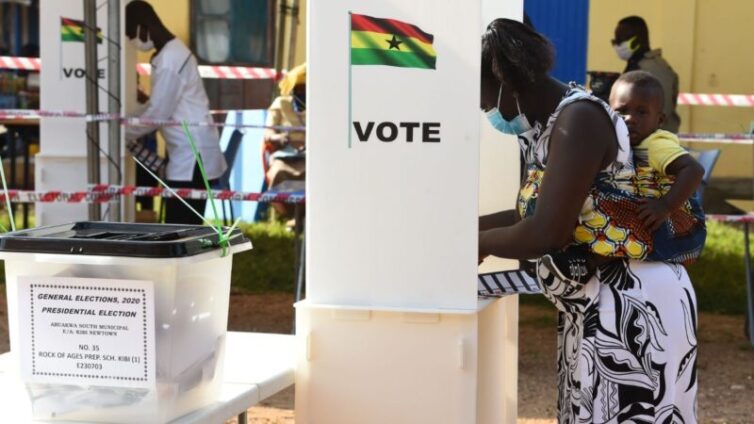
Contrary to common assumptions, the latest Afrobarometer report shows that Africa’s poorest citizens are more politically and civically engaged than the wealthy, and Ghana is no exception.
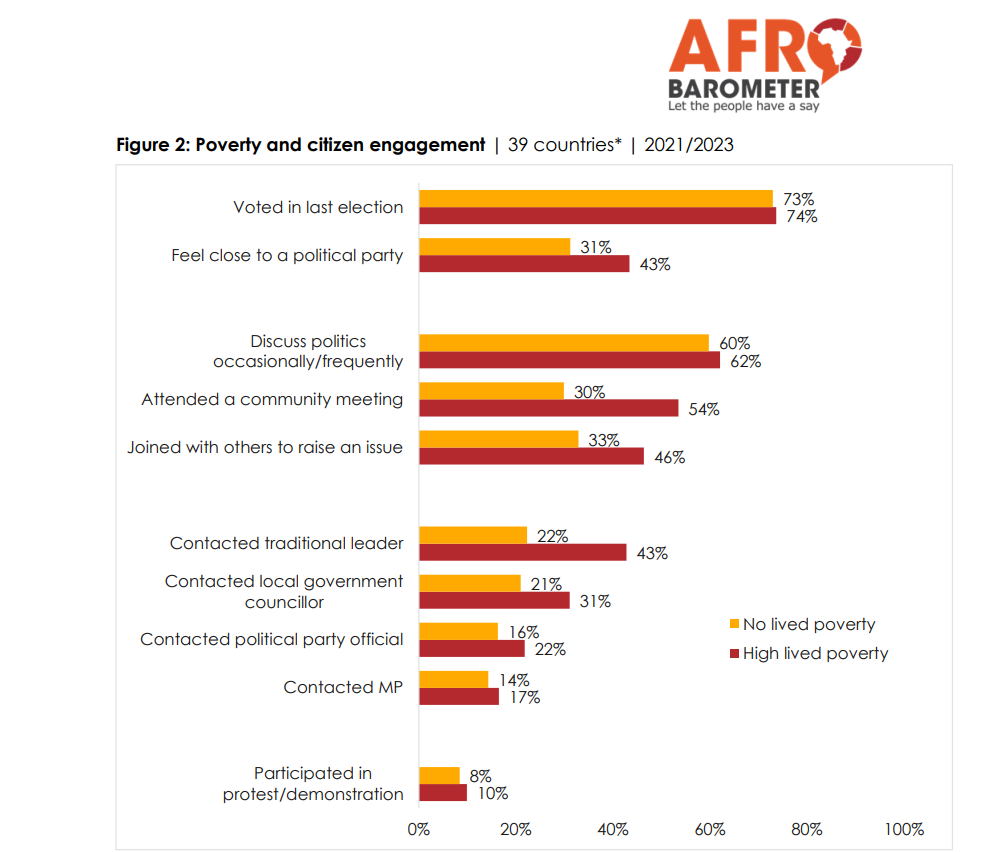
The 2025 flagship report – based on face-to-face interviews with over 53,000 people across the continent – found that people experiencing higher levels of poverty were more likely to attend community meetings, join others in raising issues, and contact local leaders than their better-off counterparts.
The findings suggest that economic hardship fuels political involvement, possibly as a form of advocacy for change.
In Ghana, respondents from poorer households reported greater engagement with traditional leaders, local councillors, and even political party officials.
“Those in communities with the greatest need are also the ones pushing for change,” said Josephine Appiah-Nyamekye Sanny, Director of Communications at Afrobarometer.
“This challenges the Global North's theory that civic participation is higher among the affluent.”
Interestingly, despite widespread urbanisation, rural and less educated citizens in Ghana were also more civically active, attending meetings and aligning with political movements more frequently than their urban, educated peers.
However, gender disparities persist. Women in Ghana and across Africa continue to engage at lower rates than men in nearly all forms of political and civic activity.
The Afrobarometer report also points to a paradox in elected leadership access. While citizens view local councillors as more responsive and accessible, Members of Parliament remain out of reach, a pattern consistent across the continent.
In terms of democratic engagement, the report finds that citizens who are satisfied with democracy and believe elections are free and fair are more likely to vote and participate constructively.
On the other hand, protest participation increases in countries where citizens lack confidence in the democratic process.
With Ghana facing similar trends, the Afrobarometer recommends increasing transparency, responsiveness, and grassroots engagement to maintain citizen trust and participation, especially among vulnerable groups.
Read the full report below:
Latest Stories
-
Kwaku Azar writes: A-G vs OSP
9 minutes -
Mfantsipim–Adisadel rivalry built excellence, not division – Sam Jonah
33 minutes -
Vice President launches Mfantsipim’s 150 years of shaping Ghana’s greatest mind
50 minutes -
I assure Otumfuo, Mahama will join him to commission KNUST Teaching Hospital by end of this year – Haruna Iddrisu
2 hours -
Gov’t to roll out free special education for persons with disabilities from July 1 – Education Minister
2 hours -
“We used it to test our officiating officials’ readiness” – Bawah Fuseini after CAA Athletics event
2 hours -
Volleyball emerges as Ghana’s fastest rising sport
2 hours -
National Sports Fund needs strong leadership from the top – Administrator David Wuaku
3 hours -
JoySports Exclusive: Steve McLaren in talks with GFA after expressing interest in Black Stars job
3 hours -
Fire guts auto parts warehouse at Bubuashie, one fire officer injured
3 hours -
I owe my victory to coach Ofori Asare – Allotey after winning WBA Africa Gold Super Flyweight belt
3 hours -
Church of Pentecost supports over 2,000 BECE candidates in Obuasi with career guidance seminar
5 hours -
Brandon Asante and Coventry all but promoted to Premier League despite Sheffield Wednesday draw
5 hours -
GPL 2025/26: Late Kwartemaa strike downs Hearts in Tema
5 hours -
Ghana Faces Sierra Leone Moment as Prosecutorial Powers come under strain
5 hours