

Audio By Carbonatix
There is a number Ghana set for itself. A limit. A line that says: if the air gets this dirty, something has to change.
The country's national standard for PM2.5, the tiny pollution particles that travel deep into your lungs and into your blood, is 35 micrograms per cubic metre, measured over 24 hours. The World Health Organisation's safe limit is 15. Ghana gave itself more than twice the room.
Even that more lenient bar is being broken.
That is what Ghana's Environmental Protection Authority (EPA) has put on record in a statement delivered at the opening of a four-day regional workshop on Air Quality Data, Air Sensors and Computational Tools for West Africa in Accra. The statement was written by EPA Chief Executive Professor Nana Ama Browne Klutse and read on her behalf by Selina Amoah, Head of the Authority's Air Quality Unit.
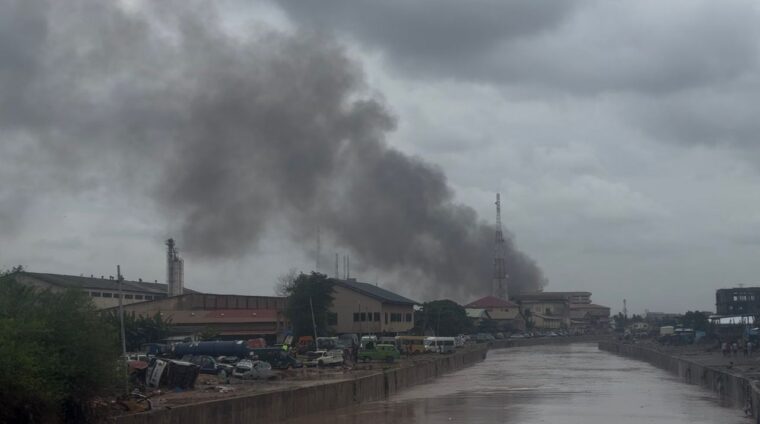
"Results from the Environmental Protection Authority's air quality monitoring activities reveal particulate matter concentrations that exceed the national air quality standards in most of the monitoring locations. Additionally, virtually the entire population in both urban and rural areas is exposed to particulate matter concentrations that exceed the World Health Organisation's guidelines."
PM2.5 stands for particulate matter 2.5 micrometres or smaller in diameter. To picture it: a single strand of human hair is about 70 micrometres wide. These particles are nearly 30 times smaller than that. Small enough to pass through your nose, slip past your body's natural filters and go straight into your bloodstream. That is why they are the pollutant health experts worry about most.
Ghana's 24-hour PM2.5 standard sits at 35 micrograms per cubic metre. The WHO recommends no more than 15. In most Ghanaian cities, the air exceeds even the national figure, which is itself more than twice as permissive as what the world's leading health authority considers safe. That the country cannot meet its own relaxed standard says everything about how serious the problem has become.
The EPA says the World Health Organisation estimated in 2017 that air pollution contributed to approximately 28,000 preventable deaths in Ghana every year. In Greater Accra alone, about 2,800 premature deaths were attributed to air pollution in 2015, with that figure projected to rise to 4,600 by 2030 if urgent interventions are not implemented.
More recent estimates suggest the burden is becoming even heavier. The State of Global Air 2024 report places the annual death toll at roughly 32,000 Ghanaians, indicating that thousands more people are now dying from air pollution-related illnesses than were a decade ago.
It is not adults alone who are carrying this burden. The EPA was clear about who is being hit hardest.
"The burden of air pollution is disproportionately borne by children, the elderly, and individuals with underlying conditions such as respiratory issues. More than 45,000 children under the age of five die each year across Africa due to air pollution-related illnesses."
The Air Quality Life Index 2025, produced by the University of Chicago's Energy Policy Institute, adds another layer: air pollution is not only killing Ghanaians prematurely, but it is also quietly shortening the lives of those who survive. People living in Ghana's most polluted areas stand to lose years of life expectancy, not from a single illness, but from breathing polluted air day after day, year after year.
According to the EPA, indoor and outdoor air pollution costs Africa an estimated 250 billion US dollars every year. In Ghana alone, the annual economic burden is estimated at 2.5 billion US dollars, equivalent to about 4.5 per cent of the country's Gross Domestic Product, according to World Bank country analysis.
"There is therefore an urgent need to address the growing burden of air pollution-related illness and deaths," the EPA said.
The Authority says reversing the trend will require action on several fronts. It is calling for stronger public education to discourage open burning of waste and indiscriminate disposal of refuse, wider adoption of cleaner fuels and cleaner cooking technologies, proper vehicle maintenance, environmentally responsible driving practices, stricter enforcement of environmental laws, expansion of Ghana's air quality monitoring network, and sanctions against environmental polluters.
The EPA says better air quality data must also be placed at the centre of policymaking.
To support that effort, the Authority says it has developed the Ghana Air Quality Portal, which streams real-time air quality data for researchers, students, policymakers, civil society organisations and the general public.
"We encourage researchers, academia, civil society organisations and NGOs to make full use of the information available on the Ghana air quality portal for epidemiological and health assessment studies, knowledge sharing and public awareness creation on the health impacts of air pollution."
Despite the worsening pollution levels, the EPA says Ghana has made important strides in air quality management over the past two decades.
Among the milestones highlighted were the publication of the Air Quality Management Regulations (LI 2507) in 2025, the expansion of the country's monitoring network from eight regulatory-grade stations in 2005 to 15 regulatory monitors and 28 local sensors across Accra, Tema, Kumasi, Sekondi-Takoradi and Tamale between 2018 and 2026, and the establishment of advanced monitoring stations at the University of Ghana, St. Joseph's Roman Catholic Basic School at Adabraka, with another planned for offices in Tema.
The Authority also cited Ghana's position as the first country in West Africa to phase out leaded petrol, the first in the sub-region to adopt low-sulphur diesel, and one of the few countries in sub-Saharan Africa with the technical capacity to operate advanced federal-equivalent air quality monitors capable of producing real-time data on particulate matter, black carbon and weather conditions.
It further pointed to policies promoting cleaner buses, electric mobility, fuel efficiency, national motor vehicle emission standards and the relaunch of the Greater Accra Air Quality Management Plan in 2024.
But the EPA admits that progress in infrastructure has not yet translated into cleaner air.
Monitoring more locations has, if anything, exposed the scale of the crisis even more clearly.
The Authority says it remains committed to strengthening air quality management across the country but insists that meaningful progress will depend on stronger enforcement, public cooperation and sustained investment in clean air initiatives.
This story was a collaboration with New Narratives. Funding was provided by the Clean Air Fund, which had no say in the story’s content.
Latest Stories
-
Ghana’s BRICS move requires clear strategy to manage risks – Godfred Bokpin
1 hour -
Pay teachers realistic income – Duncan Amoah to gov’t
2 hours -
Bechem to become chicken capital of Ghana – Mahama projects
2 hours -
Gov’t targets recruitment of 16,500 health professionals in 2026
2 hours -
Two-week strike will not derail academic calendar – GNAT President
2 hours -
Headmaster detained after BBC investigation into alleged sexual abuse of students
2 hours -
GNAT pushes for clear implementation procedures of teachers’ conditions of service
3 hours -
Recurrent strikes threaten quality of education and academic calendars – Prof Bokpin
3 hours -
‘Cockroach’ group leaders among hundreds detained in Delhi protest
3 hours -
Don’t let speed of information become your judgement – CJ tells new lawyers
3 hours -
World Cup visa scandal: People have leveraged public office to facilitate fraud – Senyo Hosi
3 hours -
Glut! Farmers count losses as prices crash, customers happy
4 hours -
GSA postpones auction of unserviceable vehicles
4 hours -
Man charged with attempted murder after stabbing
4 hours -
World Cup visa scandal: Senyo Hosi says issue goes beyond calls for Sports Minister’s resignation
4 hours