

Audio By Carbonatix
RnB star Akon has been in the music business for almost 20 years. And the Senagalese-American singer says he's finally able to start making music for himself.
Born in the USA, Akon spent his childhood moving between New Jersey and the African country.
He learned to play several western and African instruments, but when he started to pursue a musical career in the early 2000s, he says producers were only interested in one side of his heritage.
"One of the biggest things that I had to actually distance myself from at the time when I did come out, was the fact that I was African," he tells BBC Newsbeat.
"That wasn't really something that they could market or promote in that kind of arena that I was actually playing in."
Commercially, Akon was a massive success, finding huge popularity with pop and RnB songs such as Lonely and Locked Up.
But he says the financial demands of the music business, and the need to make money, had an effect on his output.
"Everything had to be so calculated," he says. "It becomes stressful and starts to feel like work."
Since those early successes the Smack That star has developed his own record label, and launched business ventures such as the Konvict Clothing line.
Some of his projects - like building a "real-life Wakanda" in Senegal with its own cryptocurrency - haven't panned out as planned.
But he says enough have worked out to get him to a position where he no longer relies on others to back him.

Making music at 50 years old is more about "the passion and love for music", he says, and he's able to include "more of an African influence" in his work because there is less pressure on him to make money.
"Music is not my first revenue stream now, it has dropped down to maybe the tenth," he says.
He says the financial freedom means he can "add more culture" to his songs, and says the tracks on his new Afro Freaks EP are a "huge evolution" from Lonely and Locked Up.
"I can enjoy doing it without dealing with politics, and the music business that comes with it," he says.
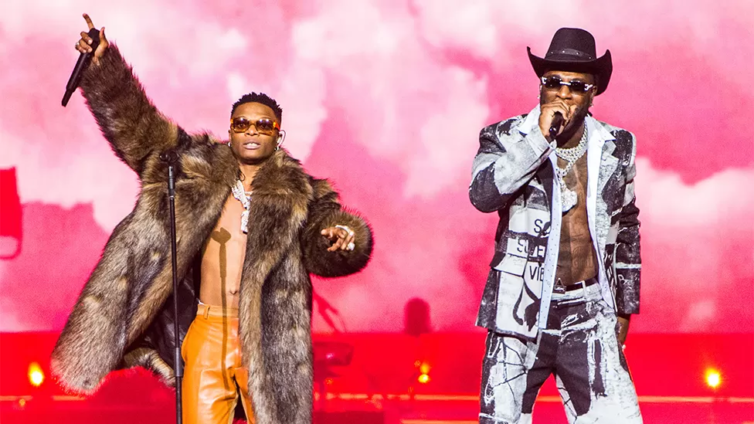
Akon's new EP draws heavily from Afrobeats - a genre that's become a global phenomenon thanks to artists like Davido, Wizkid and Burna Boy.

He says he's been trying to boost the style of music, which mixes African and Western influences, for years, and even signed Wizkid to his own label in 2008.
But Akon recalls a time when Afrobeats would be dismissed by US industry bosses.
"I remember back in the early 2000s, when I was trying to market and get Afrobeats in America signed, they thought it was Reggae music," he says.
"It was one of the things that was so frustrating, trying to get them to understand the African population was so big, and this music will be the future.
"Unfortunately, I got a lot of pushback."
It would be another 10 years before Afrobeats fully broke through, with huge artists like Drake and Beyonce collaborating with some of its biggest stars.
And when Wizkid took home a Grammy Award in 2021, Akon says it was "one of those 'I told you' so moments".

Latest Stories
-
Police intercept narcotics, arrests five suspects in Upper West
3 minutes -
Government to establish Kumasi Machinery Innovation Park under 24-Hour Economy programme
5 minutes -
When Hormuz Fails: The day a waterway stops the world
6 minutes -
Ghanaian students in UK to protest over unpaid fees, stipends
7 minutes -
Inflation to go up marginally in April 2026 – Report
8 minutes -
Newborn baby found abandoned at Kronkromase cemetery, residents in shock
9 minutes -
VIP Jeoun Transport increases fares effective April 8
12 minutes -
Minority warns against alleged LGBTQ provisions in constitutional review
17 minutes -
Wave of violence kills at least 26 in Nigeria as army thwarts mass church abduction
35 minutes -
Anti-LGBTQ+: Mahama must be held to account to fulfil his promise – Ntim Fordjour
36 minutes -
Latvian businessman Aldis Ozols enstooled as development Chief of Supresu-Man
47 minutes -
‘We should go in for the best’ – Ernest Thompson on next Black Stars coach
52 minutes -
US, Iran receive 45-day ceasefire proposal as Trump deadline to reopen Strait of Hormuz looms
1 hour -
Iran defiant as Trump vows ‘entire country’ could be taken out if no deal reached by tonight
1 hour -
Afigya Kwabre North crowned champions of maiden MTN Ashantifest Regional U17 football competition
1 hour