

Audio By Carbonatix
A carefully constituted team of experts from the UN Inter-Agency Working Group, in collaboration with the National Disaster Management Organization (NADMO) and other state agencies, is expected to arrive in Mepe, in the North Tongu District of the Volta Region on Tuesday, November 7, to commence an in-depth assessment of the scope of contamination caused by the flood disaster following the spillage of the Akosombo Dam.
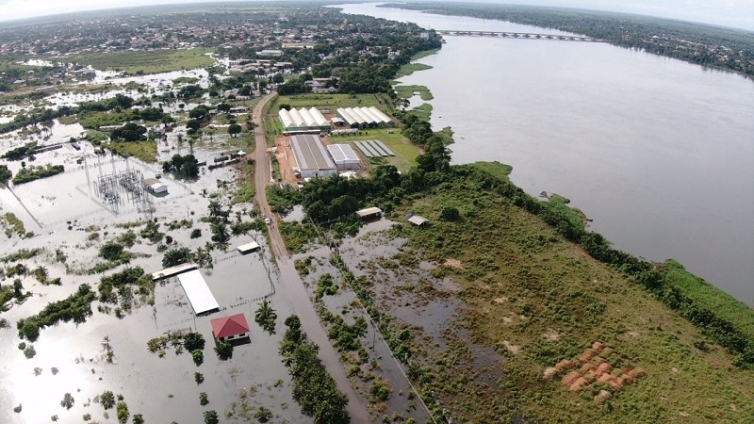
Following the spillage, a total of 192 communities were inundated with floods for weeks, posing major health hazards to residents. Even though floodwaters have receded significantly, NADMO maintains that there is a need for a thorough assessment before allowing flood victims back to their homes.
Speaking to Joy News on Friday, November 3, the Deputy NADMO Director General, Seji Saji Amedonu, revealed that a team of experts from the UN's Inter-Agency Working Group, in collaboration with NADMO and other state agencies, will carry out a crucial assessment to ascertain the scope of contamination across flood-hit settlements.
"You are well aware of the total inundation of some communities. Water from the Volta River entered the communities, washed pit latrines, and even some cemeteries were flooded. We don't know what level of contamination that water that remained in people's homes for about two weeks caused; we don't know the extent of the contamination.”
So, we also need to do an assessment to ascertain the extent of the contamination. Then we can move into proposed solutions as to how to disinfect, fumigate, and decontaminate. And this is what we are carrying out."
Mr. Amedonu, however, revealed, "We have the UN Inter-Agency Group on Emergencies helping with this. We're working with all stakeholders, including the EPA, the Ghana Institute of Engineers, the VRA, and NADMO. They will be moving in on Tuesday, November 7th, 2023, to start this assessment, and they have about three days to complete their work. By the weekend, some solutions will be proposed."
With weeks of the flood disaster that affected 39,333 Ghanaians in 192 communities, NADMO reveals that the disaster has now entered a recovery stage where they are doing all within their power through interventions such as assessment and fumigation to return life to normal.
"We are at the recovery stage. At the recovery stage, what we normally do is to try to restore back to normal, I mean, services and other things that were disrupted as a result of the disaster."
The Deputy Director-General of NADMO also revealed interventions such as digging trenches to channel stagnant floodwaters out of the community as measures being taken by NADMO to bring life back to normal.
Latest Stories
-
TTAG raises alarm over proposed recruitment of 7,000 teachers, demands national posting roadmap
12 minutes -
Civilians feared killed after reports of air strike on Nigerian market
22 minutes -
Bishop Simon Kofi Appiah installed as new Jasikan Diocese Bishop
23 minutes -
Trump’s Strait of Hormuz blockade threat raises risks and leaves predicaments unchanged
26 minutes -
US Court backs extradiction of former MASLOC CEO Sedina Tamakloe-Attionu’s to Ghana
44 minutes -
Seven arrested as NAIMOS dismantles illegal mining camp, seizes firearms at Boin River
46 minutes -
Fire erupts at Madina Ritz Junction, destroys multiple wooden structures and containers
1 hour -
Daniel-Kofi Kyereh returns from long-term injury, registers assist for Freiburg U23
1 hour -
Knifeman calling himself ‘Lucifer’ slashes three at NYC’s Grand Central
1 hour -
Brands are built from within to without
1 hour -
Matriculants urged to pursue excellence as gov’t reaffirms support for Maritime education
2 hours -
See the areas that will be affected by ECG’s planned maintenance on Monday, April 13, 2026
2 hours -
GPL 2025/26: Salim Adams double fires Medeama back to summit after Kotoko rout
2 hours -
Two robbery suspects convicted following violent gold dealer attack in Obuasi
2 hours -
Supreme Court @150: Fanfare meets reflection as nationwide activities roll out
2 hours