

Audio By Carbonatix
Nkrumah envisioned it, Kufuor implemented it through Dr Papa Kwesi Nduom, Akufo-Addo stunted it, and Mahama has revived it. Ghana must let MiDA work—free from partisan hands.
When Ghana created the Millennium Development Authority (MiDA), it was meant to be more than a vehicle for just the American Millennium Challenge grant. Its roots go back much further—to the Volta River Authority (VRA) under President Kwame Nkrumah, and before that, the Tennessee Valley Authority (TVA) in the United States. All three institutions were designed with the same purpose: to use big infrastructure not just for power, but as a springboard for broader development and economic transformation.
The TVA, established in 1933, remains one of the most successful development models in history. It combined energy generation with agriculture, resettlement, flood control, transport, and industrial growth. The results were spectacular: hundreds of thousands of jobs created, billions in investment, and a once-impoverished valley transformed.
Nkrumah’s VRA was modelled directly on TVA. Its original Act gave it a broad mandate: energy, agriculture, industrial promotion, lake transport, fisheries, and the resettlement of communities displaced by the Akosombo Dam. For a time, VRA embodied that integrated vision. But after Nkrumah’s overthrow in 1966, its role was narrowed to electricity alone, leaving behind the unrealised dream of turning the Afram Plains into Ghana’s breadbasket.
Decades later, Ghana tried again. Under President John Agyekum Kufuor, Dr Papa Kwesi Nduom, then Minister for Public Sector Reforms, championed the creation of MiDA. He designed it as Ghana’s institutional vehicle for the Millennium Challenge Compacts with the U.S.—a professional, insulated authority capable of delivering large-scale transformation much like VRA was once intended to do.
Under Compact I (2007–2012), MiDA delivered real results: rehabilitated feeder roads, modernised farms, improved irrigation, and supported agribusinesses with measurable returns. It showed how a focused authority could deliver benefits that touched hundreds of thousands of lives.
But politics soon crept in. Under Compact II (2014–2019), MiDA was tasked with reforming Ghana’s struggling energy sector. Unfortunately, political interference under President Akufo-Addo’s administration derailed the effort. The mishandling of the power concession not only undermined Compact II but also cost Ghana the chance for a Compact III. In short, partisan interests robbed the country of billions in potential investment and badly dented MiDA’s credibility.
That is why the recent directive by President John Dramani Mahama is so significant. It resuscitates MiDA, expanding its mandate beyond MCC compacts to include mobilising grants, philanthropy, and private capital for national development. Crucially, MiDA’s Act already allows it to perform “any other functions or activities as directed by the President,” so this is not a reinvention but a reaffirmation of its legal foundation.
This move echoes Nkrumah’s broad vision for VRA and TVA before it. It positions MiDA not just as a donor project office but as a permanent development authority—one that can coordinate agriculture, energy, climate resilience, and even digital transformation.
The story is clear:
- Nkrumah envisioned it (through VRA’s broad mandate).
- Kufuor implemented it, with Dr Papa Kwesi Nduom championing MiDA’s creation.
- Akufo-Addo stunted it, with political interference that cost Ghana Compact III.
- Mahama has revived it, giving MiDA a second life with a broader national role.
The challenge is whether Ghana will protect this vision.
The lessons are obvious:
- Keep politics out. Professional leadership, not partisan interference, is the only way MiDA can win donor confidence and mobilise serious investment.
- Secure its mandate. Just as TVA endured through different administrations in the U.S., MiDA must be entrenched legally and operationally so it is not reshaped at every election.
- Think beyond energy. VRA lost its broader mission after Nkrumah. MiDA must not fall into the same trap.
MiDA now has a second chance. If managed well, it could become Ghana’s 21st-century equivalent of TVA—a permanent institution of transformation, not a short-term project vehicle. But if political meddling continues, Ghana risks repeating the story of VRA: a broad vision narrowed into a utility.
The arc is clear: Nkrumah’s vision, Kufuor’s implementation (through Dr Papa Kwesi Nduom), Akufo-Addo’s setback, and Mahama’s revival. Ghana now has the opportunity to finally deliver on that vision.
The time to let MiDA work is now.
-
About the Author:
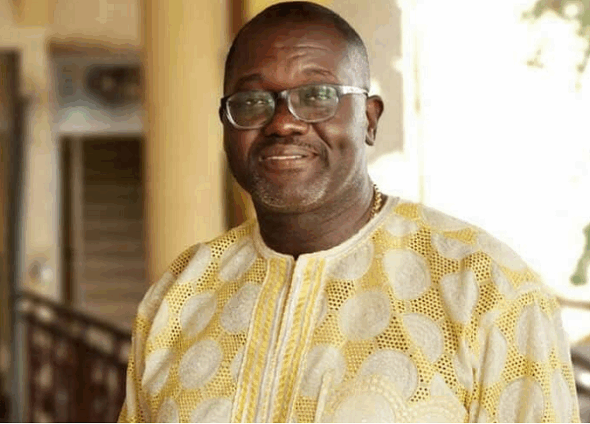
Nana Ofori Owusu worked with the Millennium Development Authority and is an advocate for insulating Ghana’s development institutions from political interference.
Latest Stories
-
Zimbabwean author denies using AI to write award-winning story
13 minutes -
GTEC’s letter directing public universities to reopen by October 16 is unprofessional – GAUA
14 minutes -
Suspect in viral video assaulting wife jailed for 3 months
14 minutes -
GAUA insists strike will end only after Fair Wages addresses market premium issue
14 minutes -
Kpemka seeks compensation as he sues BOST over alleged unlawful termination
17 minutes -
GES asks applicants to check status of 2026 promotion applications on October 15
42 minutes -
Kobe Boujee joins Olympics.com team for Dakar 2026 Youth Olympic Games
49 minutes -
Slaty egret’s shifting nesting sites offer clues to changing ecosystems
56 minutes -
First phase of arrears for promoted teachers to be paid on Friday – Haruna Iddrisu announces
59 minutes -
Caveman Watches partners with Mfantsipim School for 150th anniversary
1 hour -
We’ll pursue GH¢15m defamation suit against Sammy Gyamfi to its logical conclusion – Afenyo-Markin’s lawyers
1 hour -
Martin Kpebu urges Afenyo-Markin not to return to court over Sammy Gyamfi lawsuit
2 hours -
GRA submits preliminary report on drug shipment case to Mahama – Commissioner-General
2 hours -
Sammy Gyamfi using ‘procedural roadblocks’ to dodge defamation case? – Afenyo-Markin’s lawyers
2 hours -
The illusion of a good deal: Why some everyday money-saving habits may be costing you more
2 hours