

Audio By Carbonatix
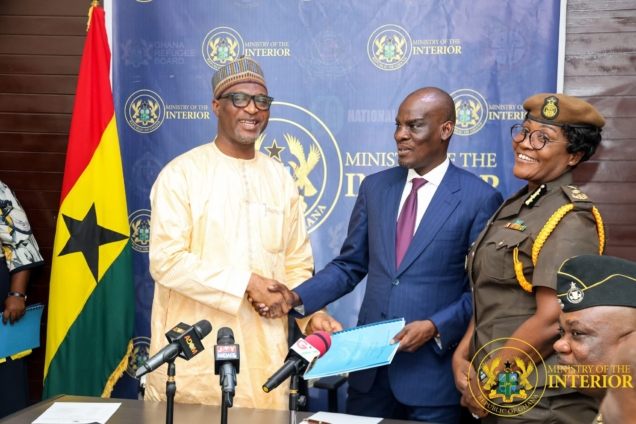
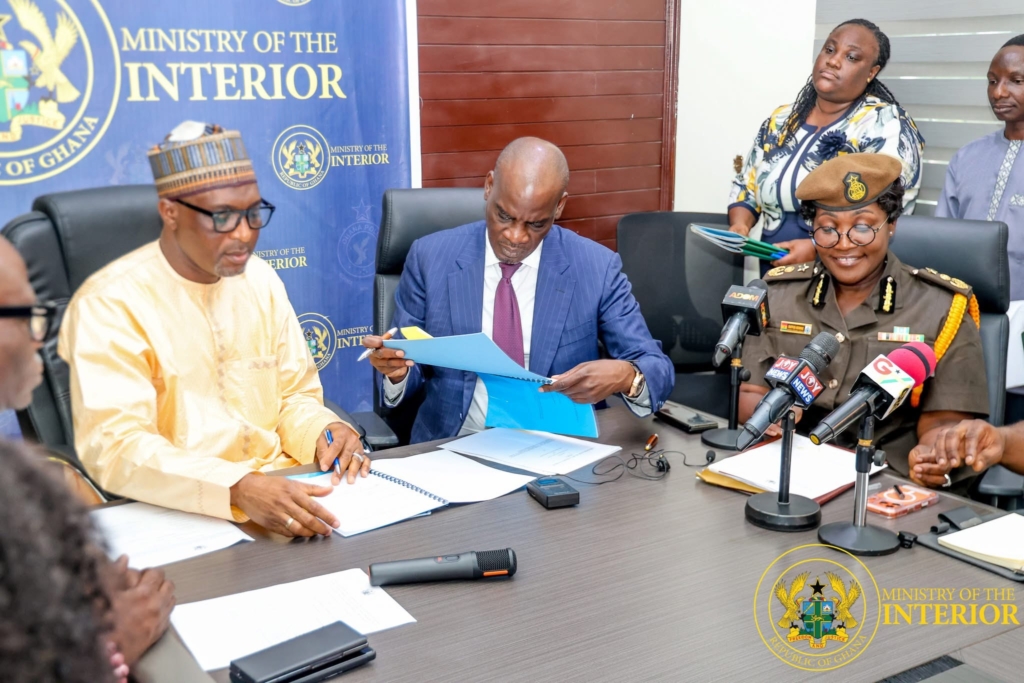
The Ministries of the Interior and Education have signed a Memorandum of Understanding (MoU) to enable the Ghana Prisons Service to produce and supply at least 30 per cent of sanitary pads, school uniforms and furniture for schools across the country.
The signing ceremony, held at the Ministry of the Interior in Accra, forms part of the government’s broader agenda to strengthen local production, ensure value for money in public procurement, and support inmate rehabilitation while meeting critical needs within the education sector.
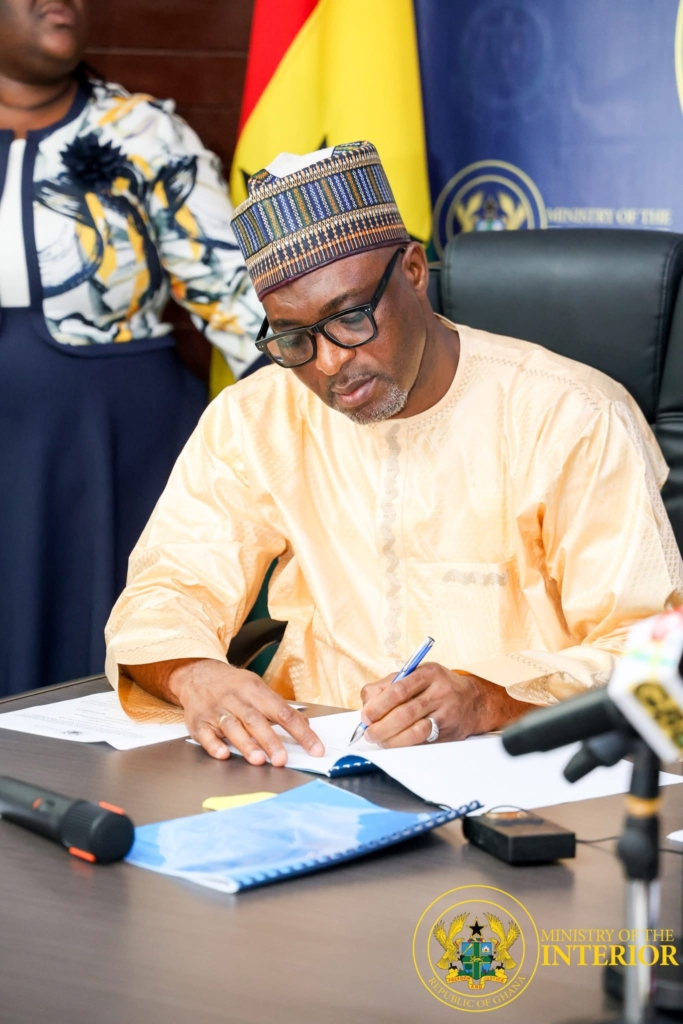
Minister for the Interior, Muntaka Mohammed-Mubarak, described the initiative as a deliberate policy decision that places education at the heart of national development.
He said anchoring the production of essential educational materials within state-owned institutions would help improve efficiency, promote transparency, and guarantee timely supply.
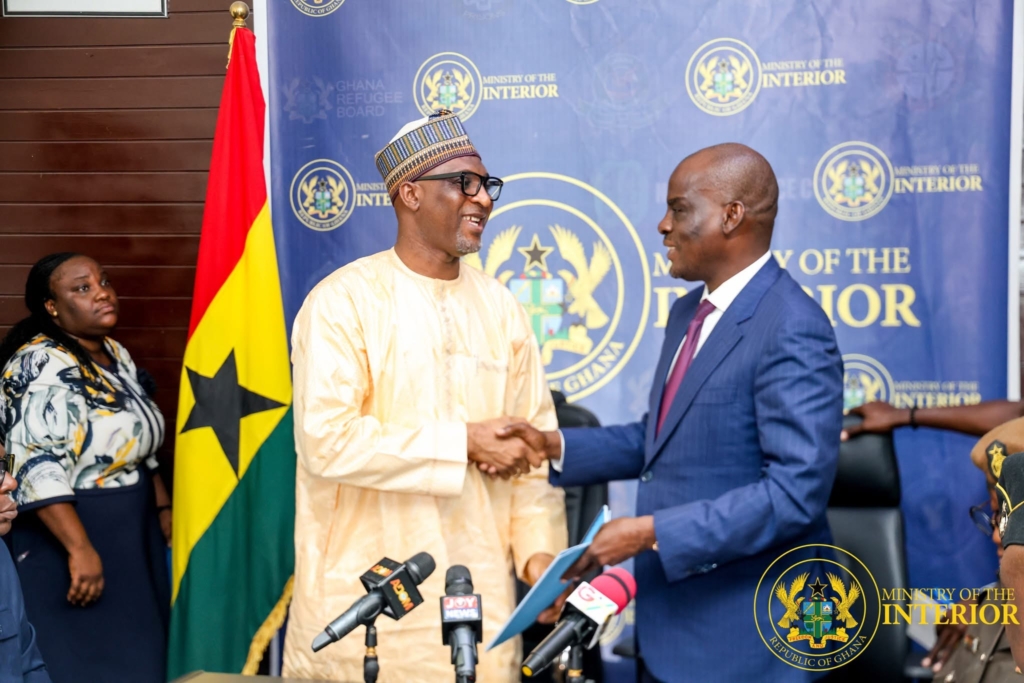
According to him, the initiative is expected to deliver multiple benefits, including skills development for inmates, income generation, improved rehabilitation outcomes, and a reduction in recidivism.
He announced that a five-member implementation committee would be established to oversee the effective rollout of the agreement, commending the Ghana Prisons Service for embracing its expanded developmental role.
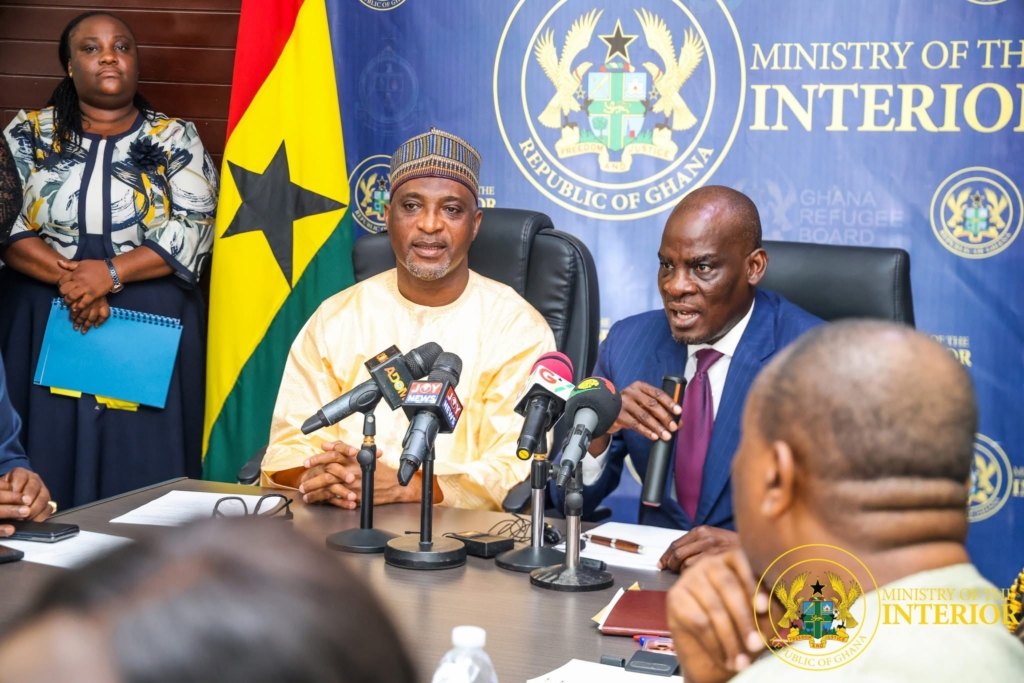
On his part, Minister for Education, Haruna Iddrisu, said the MoU redefines the role of the Ghana Prisons Service by integrating it into the education value chain.
He noted that recidivism—relapse into criminal behaviour, remains a major concern and stressed the importance of engaging inmates in structured, productive activities that equip them with employable skills.
He added that the initiative adopts a value-chain approach rooted in indigenous and local production, including the establishment of productive units within prison facilities.
Director-General of the Ghana Prisons Service, Mrs. Patience Baffoe-Bonnie, described the agreement as a game changer, saying it positions the Service as a key contributor to national production and development.
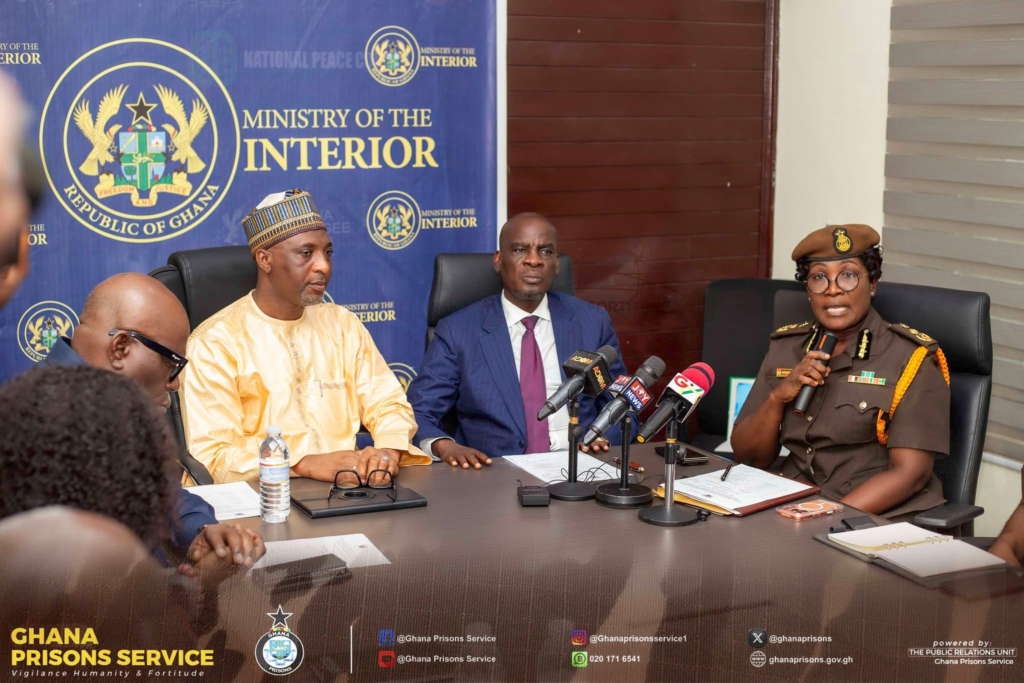
She said the ultimate objective is to enhance public safety by breaking the cycle of reoffending and supporting inmates to reintegrate into society as productive, law-abiding citizens after incarceration.
Latest Stories
-
The 7-foot giant of Ngleshie Amanfro: Seven-foot Ghanaian Ephraim Saawa dreams of joining the national basketball team
32 minutes -
Government promises support for Kumasi Central Market fire victims
39 minutes -
Vibes The Movie: Big Ghun’s Ghanaian film earns five nominations at 2026 REFFA
1 hour -
MamaCare CEO warns unresolved conflicts among health workers could undermine maternal and neonatal care
2 hours -
Health professionals urged to translate medical knowledge into practice to save mothers
2 hours -
Conflicts among care providers linked to maternal, neonatal deaths – Expert
3 hours -
GIS marks 10th TIME conference, champions improved teaching practices
3 hours -
BRICS Or Balance? What Ghana’s bid really means
4 hours -
GPRTU wants full TRAFFITECH-GH implementation to start in 2027
4 hours -
Mahama announces plans to import electric wheelchairs for PWDs
4 hours -
KGL U17 Colts 2026: Western beat Prempeh Elite Academy to set up final final with Greater Accra Region
4 hours -
Late Solanke strike salvages 10-man Spurs draw at Man United
5 hours -
Gender Ministry to monitor welfare of Nana Akua Addo’s children amid domestic violence case
5 hours -
Benedict Okyere Yeboah: Ghana’s football problem goes beyond sacking a coach
5 hours -
GPL 2026/27: Darkwah Wiafe’s winner sees All Blacks beat Kotoko
5 hours