

Audio By Carbonatix
A five-member committee appointed by President John Mahama, has delivered its report on the 2023 Akosombo Dam spillage, exposing critical lapses in Ghana’s disaster preparedness and response mechanisms.
Chaired by senior officials from both the government and the Volta River Authority (VRA), the panel presented its findings on Wednesday, 7 May 2025, and urged immediate policy reforms to avert future catastrophes.
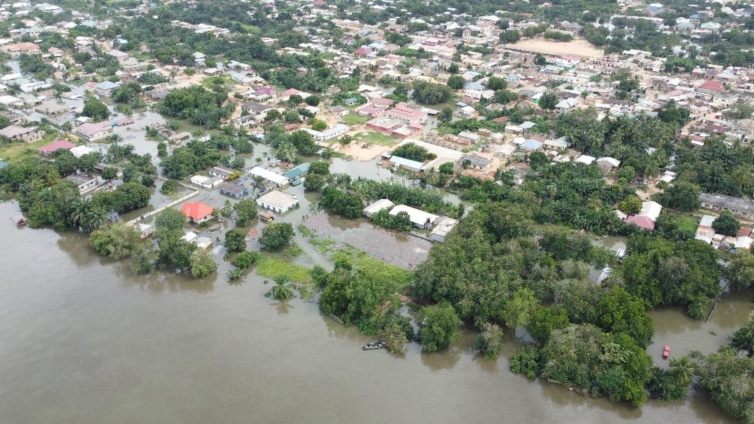
Between 15 September and 30 October 2023, the VRA conducted controlled water releases from the Akosombo and Kpong dams after water levels rose to perilous heights, threatening the dams’ structural integrity.
Although these spillages were deemed essential, they caused devastating floods in riverside towns—including Mepe, Battor, Sogakope, Mafi, Adidome, Kpong and Ada—displacing some 38,624 residents and destroying homes, farmlands and infrastructure.
Emergency operations led by the National Disaster Management Organisation (NADMO) and the VRA, alongside government relief distributions, mitigated immediate suffering.
Yet the committee’s report highlights a glaring absence of coordinated flood-mitigation planning and insufficient early-warning systems. It calls for a comprehensive national disaster management strategy, improved inter-agency communication, and investment in resilient infrastructure.
In a nationwide address marking his administration’s first 120 days, President John Dramani Mahama acknowledged the enduring hardships faced by flood victims and confirmed that compensation payments are forthcoming.
He pledged to release a government action plan derived from the committee’s recommendations “in the coming weeks,” underscoring the need for accountability and strengthened community safeguards against future events.
Seen as a pivotal moment for Ghana’s disaster resilience, the report is expected to inform legislative revisions and institutional reforms.
Stakeholders hope that its adoption will ensure that controlled spillages no longer translate into humanitarian crises, but instead trigger swift, well-coordinated responses that protect vulnerable populations.
Read below the detailed key findings regarding the spillage:
1. Factors that determine water spillage from the dam include reservoir elevation, rainfall and energy output from the power plant.
2. The Akosombo Dam recorded a maximum water inflow of 477,984 cubic feet per second (cfs) on September 18, 2023, at the Akosombo hydrometric station.
3. The 2023 Spill occurred between September 15 and October 30, 2023. The total volume of water discharged from the spillway was approximately 8 Million Acre Feet (MAF) for 46 days.
4. Historical spillage exercises have shown that in 1968, the volume was 5 times the volume spilled in 2023, indicating that there could be larger volumes of spill in the future due to climate change uncertainties.
5. Examination of Events Leading to Spillage: The spillage was primarily caused by releasing approximately 8 MAF volumes of water from the Akosombo Dam to prevent the dam’s destruction (overtopping) due to high reservoir water levels. Other contributing factors included unprecedented rainfall due to climate change and human activities exacerbating flood risks. Breaching the dam could have resulted in a catastrophic chain of events in the country.
6. VRA’s Emergency Preparedness Plan (EPP): The EPP specifies the roles and responsibilities of all stakeholders, including VRA, NADMO, District Assemblies, Security Agencies, etc., when an emergency occurs. The EPP was used to manage the disaster caused by the spillage and was the most technical document to be understood by various non-technical stakeholders. While VRA had socialised the document with all stakeholders and conducted a simulation exercise for some selected communities before the spill, high turnout and divisions amongst some District Chief Executives (DCEs)/Metropolitan Chief Executives (MCEs) and Members of Parliament (MPs) could have derailed clear communication lines for implementing the plan and distribution of relief items.
7. Assessment of Actions Taken: The response involved various government agencies, including the Volta River Authority (VRA) and the National Disaster
Management Organisation (NADMO). While there were efforts to provide immediate assistance, gaps in communication, resource allocation, and community engagement were identified.
8. Challenges Encountered: The Committee noted operational challenges, such as a lack of local disaster preparedness plans and inadequate evacuation resources, that hampered the emergency response process. Communication breakdowns and skepticism among community members regarding the information provided by authorities further complicated response efforts.
9. Community Challenges: The Committee also noted that land tenure attachment by the people, economic reliance on location, fear of unpredictability, insufficient financial resources and support from Authorities, restricted housing options, historical precedence of spillage and cultural resistance were factors that made most affected people unwilling to relocate during the spill event.
10. Temporal accommodation: The Committee noted with concern that some affected persons were still housed in tents, at the mercy of the weather, refusing to relocate to temporary accommodation built by VRA. They cited a lack of privacy as families were required to share rooms.
11. Resettlement: Some Government-initiated resettlement projects are far from the people’s previous abode. The people lament that their opinions were not sought in selecting the sites for the resettlement, and therefore, have refused to relocate and are requesting that the resettlement project be halted as the objective is not served.
12. Compensation: Since the spillage occurred, in communities upstream and downstream, the affected people in these communities have not been adequately compensated for the devastating impact the floods had on their properties and source of livelihoods. Some also expressed displeasure that though they suffered and continue to suffer the direct effects of the dam, they were not compensated when the Akosombo dam was built.
13. Evaluation of Strategies: The strategies employed to manage the situation revealed short-term and long-term effectiveness. However, improvements were necessary in community education and disaster management protocols.
14. Proposals for Additional Measures: To mitigate future risks, recommendations were made for enhancing emergency response protocols, improving community engagement, and implementing stricter land use regulations.
15. Communities Upstream: Several communities located upstream of the dam experienced significant flooding, resulting in the submersion of homes and farmland. The rising water levels inundated large portions of agricultural land, leading to the loss of crops and threatening the livelihoods of affected farmers.
Latest Stories
-
Yale School of Management names Togbe Afede XIV as global chair
45 minutes -
Citizen Attoh: The multifaceted voice of Ghana’s media and heritage
1 hour -
Breaking borders, building futures: How African-led AI is rewriting the rules of global innovation
2 hours -
Guinea orders dissolution of 40 political parties, including three main opposition groups
2 hours -
Dozens killed as Israeli special forces raid Lebanese village in search of 40-year-old remains
3 hours -
Trump demands ‘unconditional surrender’ from Iran as Putin speaks with Iran’s president
3 hours -
Iran Embassy in Ghana opens Book of condolence after death of Supreme leader in US-Israel attacks
4 hours -
GPL 2025/26: Vision FC cruise past Berekum Chelsea with emphatic 3–1 win
4 hours -
GPL 2025/26: Samartex held by Dreams FC as winless run extends to five
4 hours -
New Juaben North MP challenges gov’t to provide evidence of jobs created and cheap loans
5 hours -
Nadowli-Kaleo District marks 69th Independence Day with cultural exhibition, academic awards
6 hours -
Confusion, tension rock NPP polling station registration exercise in Tarkwa-Nsuaem
6 hours -
Burger King opens first Kumasi branch in Ahodwo
7 hours -
Burma Camp Tennis Club hosts successful 12th Ghana–Nigeria Independence Day Tennis Tournament
7 hours -
Rights, justice and action for all women and girls must include women and girls with disabilities
7 hours