

Audio By Carbonatix
Sylvester Newton, a Clinical Microbiology, and MPhil candidate with the Global Health and Infectious Diseases Research Group at the Kumasi Centre for Collaborative Research at KNUST has revealed that some livestock farmers in the Ashanti region have antibiotic-resistant bacteria in their nostrils.
“Out of the 184 healthy livestock farmers sampled, 9% harboured Methicillin-Resistant Staphylococcus aureus. 28% of the bacteria showed resistance to at least one antibiotic agent in three or more antimicrobial categories,” Sylvester revealed.
He shared these insights while speaking at the maiden Public Health Alliance for Genomic Epidemiology (PHA4GE) Conference held in Cavalli Estate in Cape Town, South Africa.
The Conference was on the theme, “Developing collaborative Bioinformatics solutions for Public Health & Beyond”.
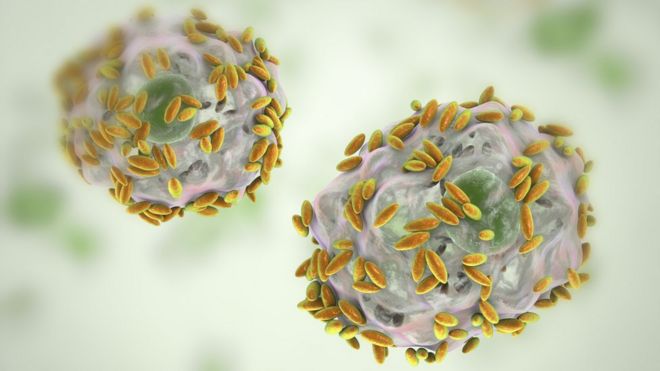
Staphylococcus aureus (staph) is a type of bacteria found on people’s skin. Staph bacteria are usually harmless, but they can cause serious infections that can lead to sepsis or death. Methicillin-resistant Staphylococcus aureus (MRSA) is a cause of staph infection that is difficult to treat because of resistance to some antibiotics.
Sylvester further explained, “The study aimed to determine the prevalence of Staphylococcus aureus and Methicillin-Resistant Staphylococcus aureus (MRSA) in livestock farmers on commercial and smallholder farms in the Ejisu-Juaben Municipality and Asante Akim North District. This would help us describe their antibiotic resistance pattern.”
“You see, Staphylococcus aureus is one of the most important microorganisms that has increasingly become resistant to the most commonly used antimicrobials,” he added.
Sylvester Newton continued, “The carriage of resistant bacteria by people in close contact with animals such as livestock farmers has been widely reported. This could possibly lead to outbreaks on farms and within the community.”
“Unfortunately, few studies have reported on resistant pathogens among farmers in the Ashanti Region, Ghana. However, we are looking at how to curb this. We need to put in control measures to be able to prevent the spread of MRARS especially on livestock farms and in the communities,” he concluded.
The conference delved into a wide range of topics crucial to public health and genomics, including discussions on quality assurance in public health laboratories, harmonizing pathogen data collection, priority pathogens, one health, computational tools for pathogen surveillance, and other priority areas in bioinformatics and genomics.
The Public Health Alliance for Genomic Epidemiology (PHA4GE) is a global coalition actively working to establish consensus standards; document and share best practices; improve the availability of critical bioinformatic tools and resources; and advocate for greater openness, interoperability, accessibility, and reproducibility in public health microbial bioinformatics.
Latest Stories
-
A source of excellence across generations – Vice President Opoku-Agyemang lauds Mfantsipim
18 minutes -
(Photos) Mfantsipim School launches historic 150th anniversary
41 minutes -
Knights and Ladies of Marshall group backs Catholic Bishops’ stance on anti-LGBTQ+
2 hours -
Bright Simons writes: All the Filla in the Ibrahim Mahama/E&P – Gold Fields Saga
2 hours -
Monetise Idiocy In Ghana
2 hours -
The Ghanaian prophet and the mysterious death of his scottish wife Charmain Speirs
3 hours -
Nearly 400 sentenced in Nigeria for links to militant Islamists
3 hours -
Ghana’s recovery supported by gold strength despite global oil price pressures – Standard Bank Research
3 hours -
Methodist Church hails Mfantsipim@150; calls for “fresh consecration” to excellence
4 hours -
‘Excellence is our inheritance’ – Nana Sam Brew-Butler hails Mfantsipim’s 150-year reign in leadership
4 hours -
Kwaku Azar writes: A-G vs OSP
4 hours -
Mfantsipim–Adisadel rivalry built excellence, not division – Sam Jonah
4 hours -
Vice President launches Mfantsipim’s 150 years of shaping Ghana’s greatest mind
5 hours -
I assure Otumfuo, Mahama will join him to commission KNUST Teaching Hospital by end of this year – Haruna Iddrisu
5 hours -
Barcelona dominate derby to extend La Liga lead
5 hours