


Audio By Carbonatix
A new study published in the journal Nature Cities shows that pollution from construction is much higher than earlier estimates.
The research examined data from more than 1,000 cities globally. It found that construction activities are responsible for between 10 and 20 per cent of global greenhouse gas emissions.
The researchers say cities now emit 1 to 3 metric tons of greenhouse gases per person each year from construction.
A major finding is that smaller cities, with populations below 500,000, produce about 60 per cent of these emissions.
Scientists warn that if current building trends continue, construction alone could use up most of the emissions allowed to keep global warming below 2°C.
This temperature limit was agreed upon by countries under the Paris Agreement to reduce dangerous climate impacts.
Further evidence emerged in 2024 during the United Nations climate talks in Baku, Azerbaijan. New figures released by Climate Trace, an organisation co-founded by former U.S. Vice President Al Gore, revealed that urban emissions are rising fast.
The group used satellite data, ground measurements, and artificial intelligence to track pollution from over 9,000 cities worldwide.
The findings showed that Asian and U.S. cities are the biggest contributors to climate-warming gases. Shanghai ranked as the world’s top-emitting city.
According to Climate Trace, Earth's carbon dioxide and methane emissions rose by 0.7 per cent, reaching 61.2 billion metric tons. Methane, which is more powerful but short-lived, increased by 0.2 per cent.
The figures are higher than other datasets ‘because we have such comprehensive coverage and we have observed more emissions in more sectors than are typically available,’” said Gavin McCormick, Climate Trace’s co-founder.
Shanghai released 256 million metric tons of greenhouse gases, more than the total emissions of countries such as Colombia or Norway.
Tokyo followed with 250 million metric tons. New York City produced 160 million metric tons, while Houston recorded 150 million metric tons. Seoul, in South Korea, ranked fifth with 142 million metric tons.
“One of the sites in the Permian Basin in Texas is by far the No. 1 worst polluting site in the entire world,” Al Gore said.
“And maybe I shouldn't have been surprised by that, but I think of how dirty some of these sites are in Russia and China and so forth. But Permian Basin is putting them all in the shade.”
From 2022 to 2023, emissions increased the most in China, India, Iran, Indonesia, and Russia. During the same period, Venezuela, Japan, Germany, the United Kingdom, and the United States recorded the largest declines.
The authors of the Nature Cities study say the problem can still be managed. They argue that cities do not need to stop building, but must change how they build.
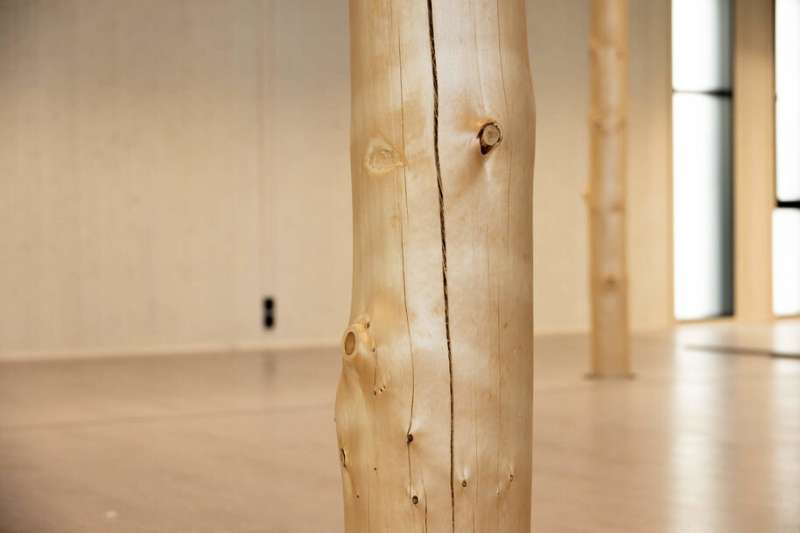
Their main recommendations include reducing the use of concrete and steel, which create high emissions, and increasing the use of engineered wood, a lower-carbon option.
They also advise cities to make better use of space by building more multi-family housing instead of spreading out single-family homes.
In cities with very high construction demand, the study suggests a balance. These cities may need to cut emissions faster in transport and energy to leave enough room in the carbon budget for new buildings.
“Cities must take a leading role in building a future within climate limits,” the researchers wrote. To support action, they launched an open-access dashboard that allows planners, leaders, and the public to track emissions in their cities.
“Our findings…can help city-level stakeholders create science-backed plans for meeting future construction demand within climate targets.”
Scientists say that as urban areas expand, decisions about construction will play a critical role in the global fight against climate change.
Latest Stories
-
From despair to dance: Family of nurse Salomey Baffoe rejoices after GH¢100k bail granted
57 minutes -
Kejetia Phase III pricing talks loom as government moves to restart stalled works
2 hours -
Nchiraa Yam festival: Two killed, 14 injured as police restore calm
2 hours -
I draw inspiration for my songs from Reggae music – Lyrical Joe
2 hours -
AI must not replace human judgment in public spending – BoG Governor
2 hours -
Ghana should withdraw from 2027 AFCON – Kojo Addae Mensah
2 hours -
Team Ghana departs Accra for Angola ahead of Karting Africa Trophy
2 hours -
AIT President Prof Clement Dzidonu urges lifelong learning as AI reshapes work and education
2 hours -
FWSC to meet striking teacher unions on Tuesday
2 hours -
NPP won’t force candidates to step down – Miracles Aboagye
2 hours -
Black Stars: Building in the sinking sands
2 hours -
Low inflation on paper, high cost of living: How Presidents Mahama and Trump are facing stark economic reality
2 hours -
NPP will negotiate with popular non-politicians to secure winnable candidates – Miracles Aboagye
3 hours -
Only 5% of Ghanaians can afford housing without support – Gov’t
3 hours -
Nigeria launches rescue after military plane crashes with 32 aboard
3 hours