


Audio By Carbonatix
Apple sold fewer iPhones than expected in its most recent quarter but higher selling prices meant the tech giant still beat Wall Street forecasts.
The firm said it sold 41.3 million iPhones in the three months to the end of June, up just 1% from last year.
But the average iPhone selling price hit $724, well above the expected $694.
The firm said its $999 iPhone X - launched last year - remained its most popular iPhone model in the quarter and had driven the higher sales price.
Strong revenue growth of 31% from Apple's services business, which includes the App store, Apple Music and Apple Pay, also boosted its performance.
The services business is on track for more than $14bn in revenue in 2020, chief executive Tim Cook said.
"We couldn't be happier with how things are going," he said.
Overall the tech giant's revenue jumped 17% year-on-year to a quarterly record of $53.3bn (£40.6bn), with every region except Japan reporting double digit growth.
Profits rose to $11.5bn, up 32% compared to the same period in 2017.
Shares in the Californian tech giant jumped more than 3% in after hours trading in New York.
The gains brought Apple, already the world's most valuable company, one step closer to a market value of $1 trillion.
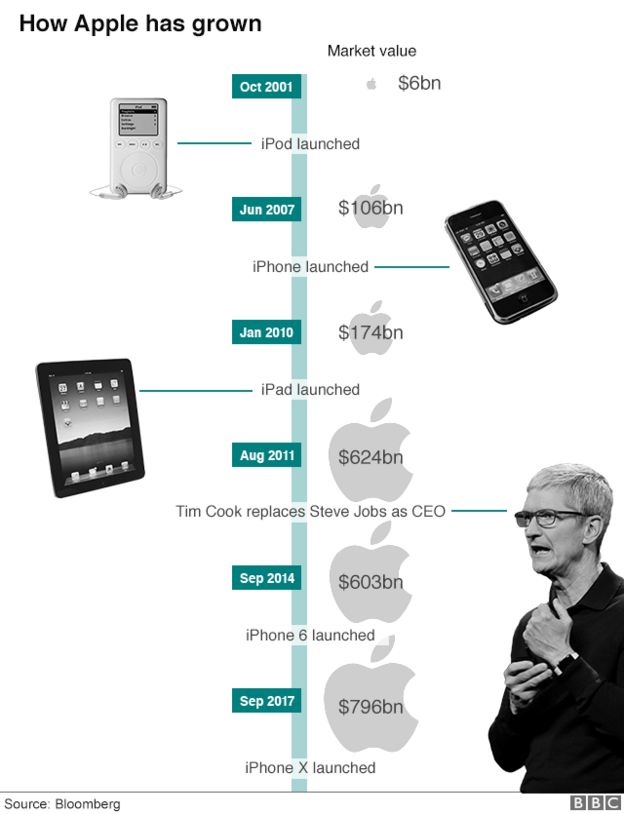
The strong demand for the firm's most expensive phones marked a contrast with the world's largest smartphone seller Samsung, which disappointed investorsby warning of lower than expected sales of its high-end Galaxy S9 .
But Apple faces increasing competition in the global smart phone market, which saw growth slip 0.3% last year, according to research firm International Data Corp.
Chinese tech company Huawei, which reported 15% revenue growth in the first half of this year, overtook Apple to become the world's second-biggest smartphone seller in the quarter, according to market research firm Canalys.
That left Apple in third place after Samsung and Huawei.
Tariff impact
Executives said they are confident about Apple's position. The firm forecast revenue in the range of $60bn to $62bn in the July to September period, indicating a fifth consecutive quarter of double digit growth.
Chief executive Tim Cook also downplayed concerns about how trade tensions between the US and China might affect Apple's business.
He said the firm had not been affected directly by the tariffs in place so far. It is still reviewing the implications of threatened tariffs on a proposed $200bn in Chinese goods, he added.
"Our view on tariffs is that they show up as a tax on the consumer and wind up resulting in lower economic growth and sometimes can bring about significant risk of unintended consequences," he said.
However, he said he was optimistic that "this will get sorted out".
Latest Stories
-
Trump seeks $152m to reopen notorious Alcatraz prison
6 minutes -
Ex-Chelsea player Oscar retires with heart issue
15 minutes -
CA Foundation drives constitutional literacy in Kpone Katamanso municipality
20 minutes -
GPRTU to hold talks with Transport Ministry over rising fuel costs
23 minutes -
CUTS International urges gov’t to halt sachet water price hike pending cost review
29 minutes -
Chief Justice: Efficient Judiciary essential to reducing business costs
32 minutes -
Bayern grabs 99th-minute winner to cap superb fightback
32 minutes -
Ahmed Ibrahim urges Ghanaians to reflect Easter values in nation-building
35 minutes -
ECG inefficiencies undermining power supply -Mahama outlines reforms
37 minutes -
Lewandowski scores as Barca fight back to defeat Atletico
38 minutes -
Lack of private sector consultation undermining economic growth – Jerry Ahmed Shaib
42 minutes -
Real Madrid seven points adrift after Muriqi’s late Mallorca winner
42 minutes -
Ghana must lead AfCFTA implementation by example – Trade Minister Ofosu-Adjare
47 minutes -
Strong Judiciary key to business confidence – Chief Justice Baffoe-Bonnie
51 minutes -
Mahama announces 60-Hectare irrigation project to boost tomato production
58 minutes