

Audio By Carbonatix
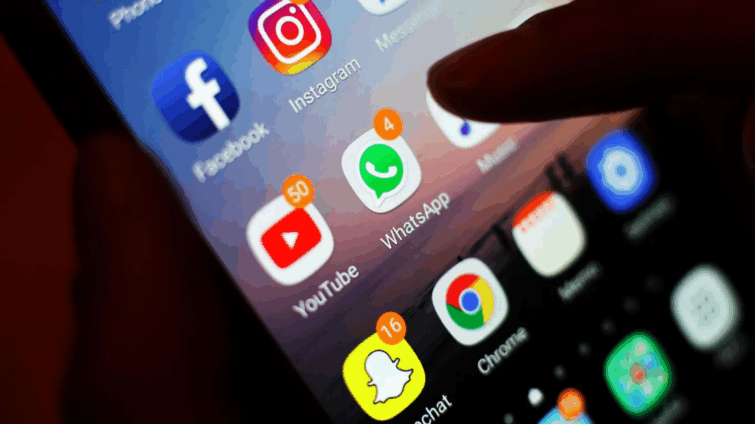
Apple may have to allow rivals to operate their own app stores on iPhones in the UK, after a ruling from the competition regulator.
This would be a significant change to Apple's infamous "closed system" where apps can only be downloaded from its own App Store.
But the Competition and Markets Authority (CMA) has designated both Apple and Google as having "strategic market status" - effectively saying they have a lot of power over mobile platforms.
The ruling has drawn fury from the tech giants, with Apple saying it risked harming consumers through "weaker privacy" and "delayed access to new features", while Google called the decision "disappointing, disproportionate and unwarranted".
The CMA said the two companies "may be limiting innovation and competition".
But the regulator said it did not "find or assume wrongdoing" from the firms.
"The app economy generates 1.5% of the UK's GDP and supports around 400,000 jobs, which is why it's crucial these markets work well for business," said Will Hayter, the CMA's executive director for digital markets.
"Around 90-100% of UK mobile devices running on Apple or Google's mobile platforms," the CMA has previously said, adding this meant the firms "hold an effective duopoly".
According to analysis from Uswitch, 48.5% of UK mobile owners use an iPhone, which runs Apple's iOS operating system (OS) - with the vast majority of the rest using Google's Android OS.
It comes after a separate decision taken in October, where the CMA designated Google's search division as having strategic market status.
Apple hits back
The CMA's investigation focused on how prominent Apple and Google's own apps are compared with rivals, as well as their browsers and operating systems.
It is unknown what changes the regulator will look to request, but in July, it published roadmaps outlining potential measures it could take.
These include requiring it to be easier for people to easily switch between Apple and Android devices, and for both firms to rank apps "in a fair, objective and transparent manner" in their app stores.
Apple specifically may be required to allow alternative app stores on its devices and let people download programs directly from companies' websites.
This would follow a similar ruling in the European Union (EU), which fined Apple in April, accusing it of anti-competitive behaviour.
Apple warned the UK could lose access to getting new features, as has happened in the EU, which the company blames on heavy regulation.
For example, some Apple Intelligence features which have been rolled out in other parts of the world are not available in the EU.
"Apple faces fierce competition in every market where we operate, and we work tirelessly to create the best products, services and user experience," the company said in a statement.
"The UK's adoption of EU-style rules would undermine that, leaving users with weaker privacy and security, delayed access to new features, and a fragmented, less seamless experience."
Google also livid
Android users can currently use third-party app stores - though critics say they are not as smooth as Google's own Play Store.
The CMA's roadmap said Google may have to "change the user experience" of downloading apps directly from websites, as well as "remove user frictions" when using alternative app stores, such as listing them directly on the Google Play Store.
"We simply do not see the rationale for today's designation decision," Google competition lead Oliver Bethell said.
Mr Bethell said "the majority of Android users" use alternative app stores or download apps directly from a developer's website, and claimed there is a far greater range of apps available for Android users compared to those on Apple devices.
"There are now 24,000 Android phone models from 1,300 phone manufacturers worldwide, facing intense competition from iOS in the UK," he said.
Android is an open-source operating system, which means developers can use and build on top of it for free.
Google argues this means it opens up competition.
But consumer group Which? said curbs on these companies' power in other countries "are already helping businesses to innovate and giving consumers more choice".
"Their dominance is now causing real harm by restricting choice for consumers and competition for businesses," said its head of policy and advocacy, Rocio Concha.
Latest Stories
-
Why has Trump eased sanctions on Russian oil – and will it help Putin?
44 minutes -
ETI Jumps GH¢0.22, Enterprise Group gains GH¢0.51 as GSE cap hits GH¢292billion
1 hour -
Police arrest five suspects over daring GHS 200,000 Chinese firm heist
2 hours -
The 27 black billionaires you should know
2 hours -
Thomas Partey to deny rape charges, court hears
2 hours -
Prime Insight to dissect Dzata Jet use by Mahama, the GH¢ 68bn audit report scandal and security service recruitment
3 hours -
Suspend security recruitment now — Minority warns of “scam” amid massive youth rush
3 hours -
Parliament passes bill to cut gold mining tax from 3% to 1%
3 hours -
Kidney health in the spotlight: SHEILD Ghana issues urgent call for national action on World Kidney Day
4 hours -
Ernesto Yeboah writes: For over 20 years, I have fought a silent battle
5 hours -
‘Heart cleanser’ or toxic cocktail? FDA sounds alarm over ‘Sukudai’
5 hours -
Ghana’s ‘Tier 2’ status under fire: NGOs demand radical action against GH¢7m modern slavery crisis
5 hours -
NPP launches digital membership drive; bans manual dues collection by executives
5 hours -
Learn to win with others – Richard Nii Armah Quaye advises young entrepreneurs
5 hours -
Build yourself first, success requires discipline and time – Richard Nii Armah Quaye tells youth
5 hours