

Audio By Carbonatix
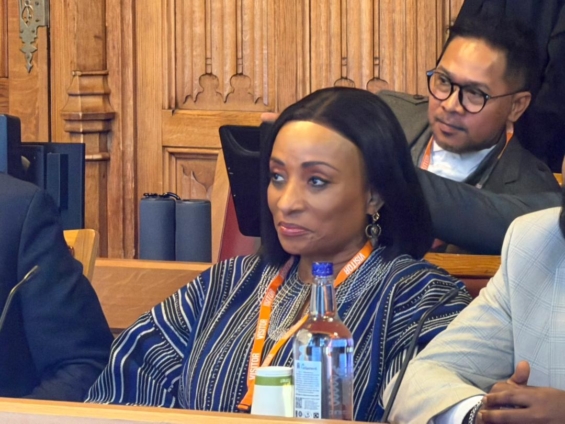
Ghana’s High Commissioner to the United Kingdom and Ireland, Sabah Zita Benson, has reaffirmed the country’s commitment to inclusive multilingual policies at a commemorative event marking International Mother Language Day 2026 at the UK Parliament in London.
The event, hosted by the Bangladesh High Commission, brought together diplomats, Members of Parliament and cultural stakeholders to celebrate linguistic diversity and its central role in sustainable development.
Addressing the distinguished gathering, the High Commissioner described the occasion as “a profound honour” and underscored the intrinsic link between language, identity, dignity and development.
She paid tribute to the historic leadership of the People’s Republic of Bangladesh in championing the global recognition of linguistic rights. It was through Bangladesh’s initiative that UNESCO proclaimed 21 February as International Mother Language Day in 1999, a decision later endorsed by the United Nations General Assembly.
“This act transformed a national historical experience into a global commitment to linguistic rights and cultural preservation,” she noted, commending Bangladesh for elevating the cause to the international stage.
Highlighting the global context, the High Commissioner cited UNESCO estimates that approximately 7,000 languages are spoken worldwide today, with nearly 40 per cent endangered.
“When a language vanishes, humanity loses irreplaceable cultural knowledge, oral traditions and intellectual heritage that cannot be replicated,” she warned.
She further stressed that research consistently demonstrates that children who begin their education in their mother tongue achieve stronger literacy outcomes and improved cognitive development than those taught exclusively in a second language, aligning mother-tongue-based multilingual education with Sustainable Development Goal 4 on quality education.
Turning to Ghana’s national experience, she noted that the country is home to over 80 indigenous languages, forming a vibrant mosaic of traditions and social systems. Languages such as Akan, Ewe, Ga and Dagbani, she explained, are foundational to community cohesion, local governance and intergenerational knowledge transfer.
Ghana’s language-in-education policy promotes the use of Ghanaian languages in the early years of basic education, with a gradual transition to English.
“These efforts ensure that access to quality education is equitable and inclusive, particularly for children in rural and linguistically diverse communities,” she stated.
She concluded by reaffirming Ghana’s commitment to advancing inclusive multilingual policies and strengthening international partnerships.
“Linguistic diversity is not a barrier to national unity; rather, it is a source of strength,” she said.
On behalf of the Republic of Ghana, she pledged continued collaboration with Bangladesh and the wider international community to ensure that “no language, and no community, is left behind.”
Latest Stories
-
Who’s Emelia Affi Agbenyo, the 43-year-old newly sworn-in Deputy EC Chair?
22 minutes -
Haruna Iddrisu calls for limits on annual university accommodation fee increases
58 minutes -
Today’s front pages: Tuesday, October 13, 2026
2 hours -
Wealth Over Water: How Galamsey Is Threatening Ghana’s Water Security
2 hours -
LA 2028: Black Queens pumped up for second leg of Mauritius tie
2 hours -
LA 2028: Black Queens hold final training session ahead of second leg against Mauritius
3 hours -
Standards are not Seasonal: What the EC appointments teach both sides
3 hours -
King Mohammed VI urges private sector to create youth jobs and spread benefits of growth
3 hours -
KGL U17 Colts 2026: Greater Accra win title after penalties win over Western Region
3 hours -
UK Investment Roadshow opens in London to advance UK-Ghana growth partnership
3 hours -
Assemblies of God requires pastors to resign before entering partisan politics – Rev. Wengam
4 hours -
Ghana targets 20% annual reduction in maternal deaths – Health Minister
4 hours -
Cyber attacks in Africa grow faster than global rate, report finds
4 hours -
Ghana signs UAE deal to create 5,000 overseas jobs
4 hours -
One Million Coders Programme targets 100,000 digital jobs in two years – Sam George
4 hours