

Audio By Carbonatix
The Ministry of Environment, Science, Technology and Innovation (MESTI) has pointed out that artisanal small scale mining is now the largest source of mercury pollution in the country.
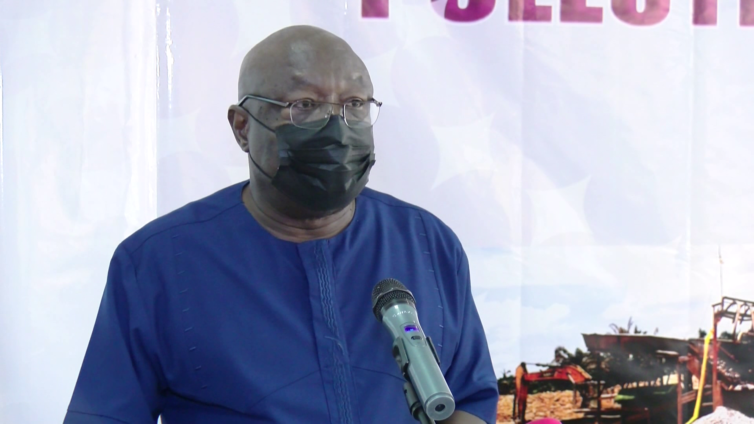
According to the Minister, Dr. Kwaku Afriyie, the artisan miner’s man-made source of mercury in Ghana, poses serious threat to the country’s natural and land resources.
“Artisanal and small scale gold mining is estimated to be responsible over 700 tonnes per year of mercury emissions in to the atmosphere and additional 800 tonnes per year of mercury release to land and water making it the largest man-made or anthropogenic source of mercury. A very serious environmental challenge that calls for effective management if we have to enjoy these deposit to the fullest,”he explained.
Ghana for decades has struggled with environmental challenges, from land degradation and soil erosion, to air pollution and many others.
Although government continues public education on the harmful effects of some human practices on the environment, the situation is only getting worse.
Mercury, a very toxic mineral is now being largely emitted into our air, water and soil daily as a result of small-scale mining.
Therefore, in the Ministry’s bid to manage the environment, it launched the Africa Environmental Health and Pollution Management Program aimed at tackling the harmful effects of mercury and e-waste on the environment.
“These programme seeks to manage those two environmental pollution because they are the major ones. You get a handle on those ones and then virtually that steps you use to manage those ones will take care of the rest,” MESTI Minister asserted.
In an interview with JoyNews, Dr. Afriyie further indicated mercury intoxication can affect some vital parts of the system.
“Mercury once released into the air, water, soil is practically irrecoverable and it is not essentially degradable substance so when it logs into your system, your brains, your bones everywhere, it is there forever and it cases neurological and kidney damage.”
Executive Director of the Environmental Protection Agency (EPA), Henry Kwabena Kokofu told Joy News that the agency on its part is exploring a bamboo species which can help extract mercury from the soil.
“We at EPA, we are going to compliment these project effort we are exploring the means of using bio technology by way of plants, we are aware of some bamboo species outside this country that has the capacity to take poisonous or toxic substances like mercury and cyanide from the soils as they grow. So very soon we are going to integrate the approaches as to solving the challenges of mercury,” he said.
Latest Stories
-
Kwaku Azar writes: A-G vs OSP
17 minutes -
Mfantsipim–Adisadel rivalry built excellence, not division – Sam Jonah
42 minutes -
Vice President launches Mfantsipim’s 150 years of shaping Ghana’s greatest mind
59 minutes -
I assure Otumfuo, Mahama will join him to commission KNUST Teaching Hospital by end of this year – Haruna Iddrisu
2 hours -
Barcelona dominate derby to extend La Liga lead
2 hours -
Gov’t to roll out free special education for persons with disabilities from July 1 – Education Minister
2 hours -
Importers and Exporters Association declares full support for Publican AI port system
2 hours -
“We used it to test our officiating officials’ readiness” – Bawah Fuseini after CAA Athletics event
2 hours -
Volleyball emerges as Ghana’s fastest rising sport
3 hours -
National Sports Fund needs strong leadership from the top – Administrator David Wuaku
3 hours -
JoySports Exclusive: Steve McLaren in talks with GFA after expressing interest in Black Stars job
3 hours -
Fire guts auto parts warehouse at Bubuashie, one fire officer injured
3 hours -
I owe my victory to coach Ofori Asare – Allotey after winning WBA Africa Gold Super Flyweight belt
3 hours -
Church of Pentecost supports over 2,000 BECE candidates in Obuasi with career guidance seminar
5 hours -
Brandon Asante and Coventry all but promoted to Premier League despite Sheffield Wednesday draw
5 hours