

Audio By Carbonatix
In Binduri’s Bansi community, a tree that once fed families, healed the sick, and supported livelihoods is slowly disappearing as climate change tightens its grip.
The baobab tree is often called the “Tree of Life.” For generations, it has fed families, provided medicine, offered shade, and supported entire communities across northern Ghana. But today, in the Binduri District of the Upper East Region, this powerful symbol of life is dying.
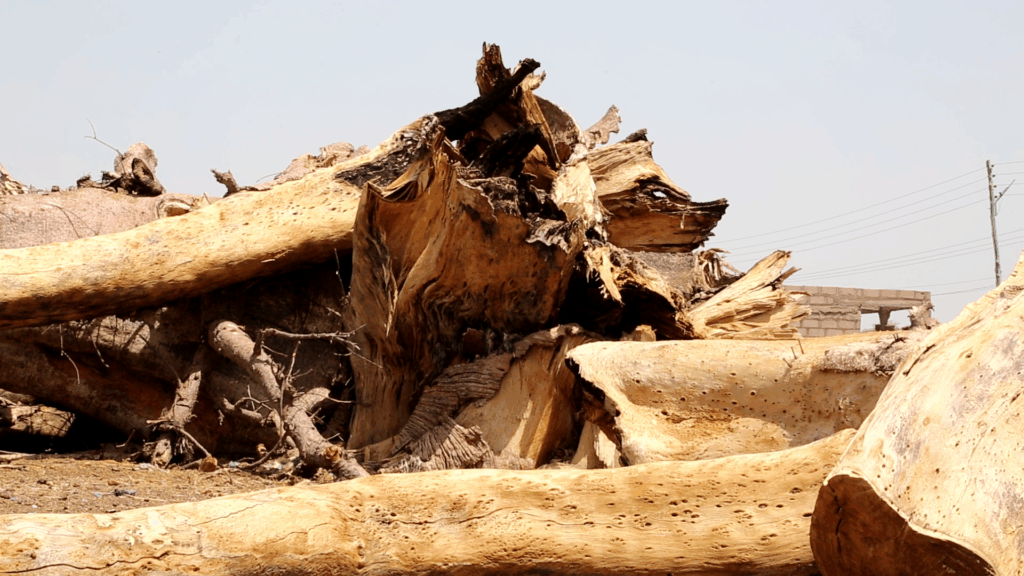
In communities like Bansi, residents are watching helplessly as baobab trees that once stood strong for hundreds of years now struggle to survive. The trees are producing fewer fruits, their leaves are thinning, and some are collapsing without warning. Many believe changing weather patterns and environmental decline are to blame.
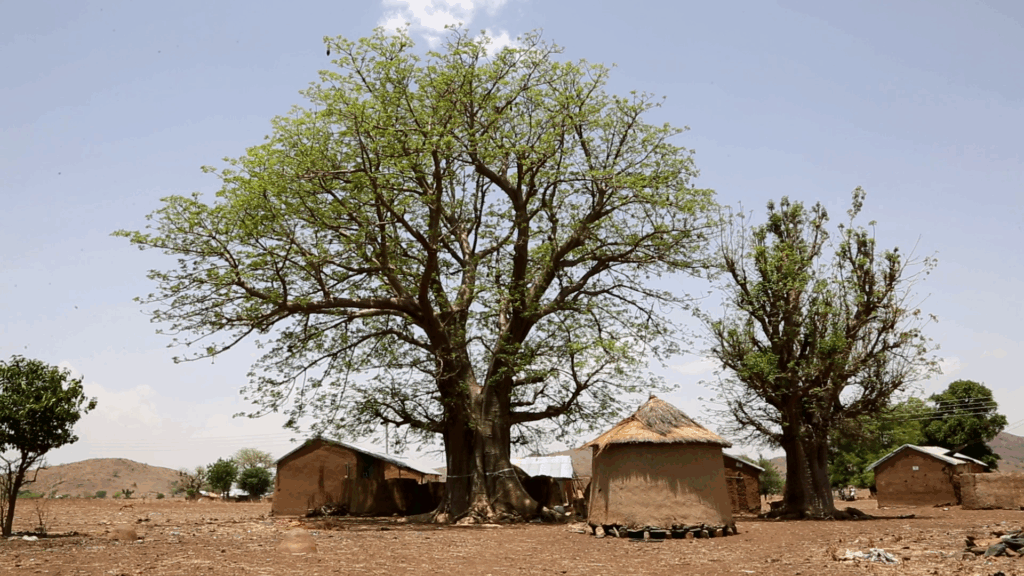
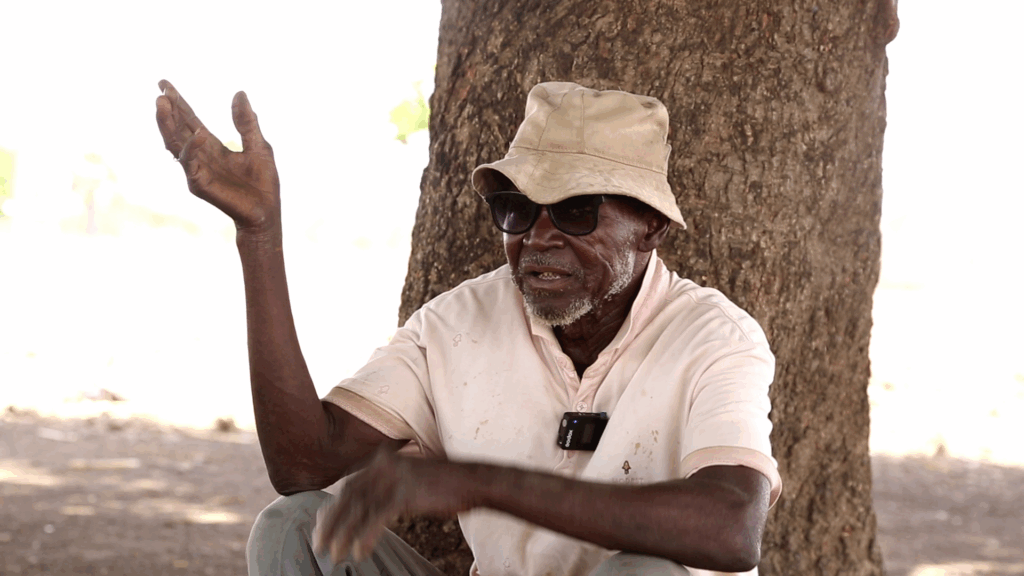
“We used to have this baobab tree here that produced fruits for food,” says Musah Ayariga, a resident of Bansi.
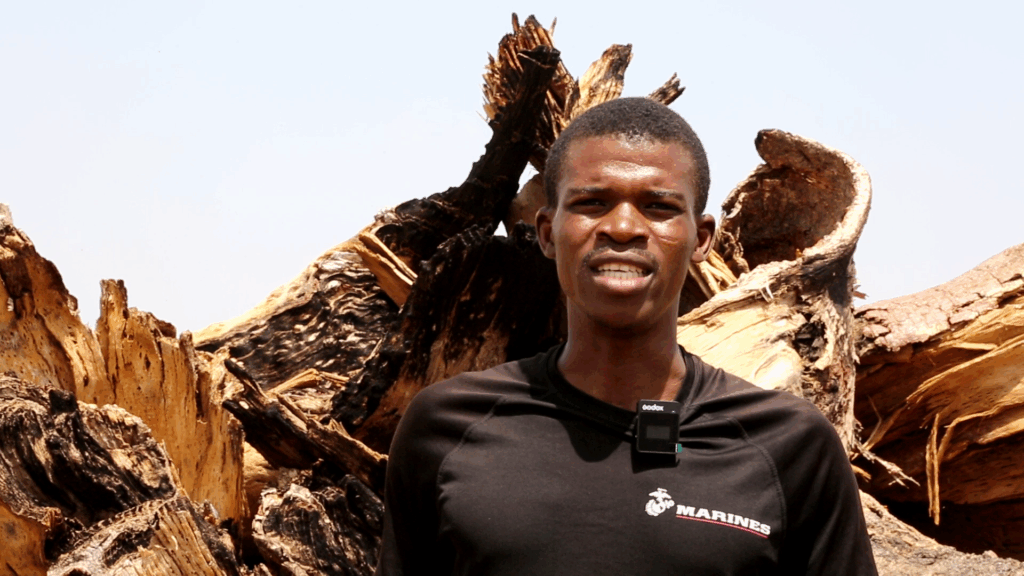
“We used it for drinks and also sold it. We used both the fresh and dry leaves to prepare soup. It helped us a lot because we did not need to buy soup leaves from the market.”
For Musah and many others, the baobab tree was a source of daily survival.
A tree that fed and sustained families
Baobab leaves are a key ingredient in many meals in northern Ghana. Experts say the fruit pulp is rich in Vitamin C, and the seeds are crushed to make oil. For decades, families harvested the fruits, sold part of them, and used the rest to prepare food for their homes.
“Economically, we harvested the fruit and sold it,” Musah explains. “People used it to prepare local drinks. Some mixed it with flour to prepare TZ, and others made porridge. The leaves were also sold for soup. If you harvested well, you could make good money.”
According to residents, a healthy baobab tree can produce more than 500 fruits in a season. For many households, this meant school fees, food, and basic needs.
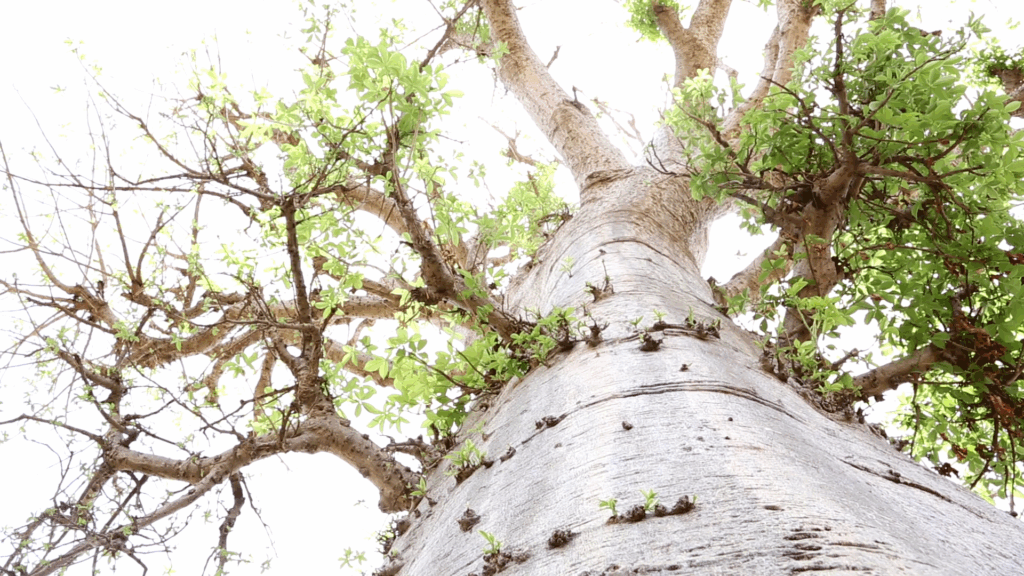
“What cocoa is to the south, baobab is to the north,” one resident says. “It is not just food. It is our economic survival.”
But that survival is now under threat.
Decline without answers
Across Binduri, especially in Bansi, farmers say baobab trees are no longer producing as they used to. Some trees have stopped fruiting completely. Others lose their fruits before harvest.
“When I moved into this house, the baobab tree was very healthy,” says Vida Ndago, another resident.
“We harvested leaves for nutritious soups. But for the past three years, fruit production has been very poor. Even when fruits appear, pests destroy them. We are very worried.”
Others say they do not even know what is wrong. “We don’t know why the baobab is no longer fruiting,” says Akudubilla Anaba. “We can’t tell if it is a disease or something else.”
The trees are also losing their shade, a serious problem in the Upper East region where temperatures continue to rise.
“The tree is no longer yielding enough leaves and fruits,” adds Anaba Anyagri. “You may now have to buy them elsewhere if you need. Even the shade is reducing, and we don’t know the cause.”
Storms, weak soil, and broken branches
Residents say strong and unpredictable windstorms are now common. Old baobab trees, once firm and unbreakable, are now falling apart.
“The branches have become weak and break easily during strong winds,” says Atini Atubiga, a farmer.
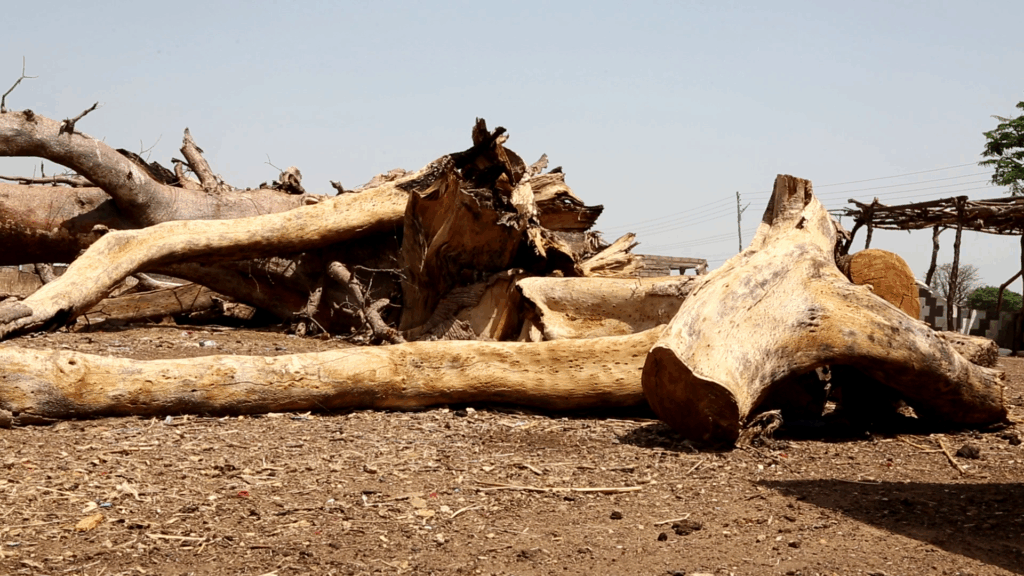
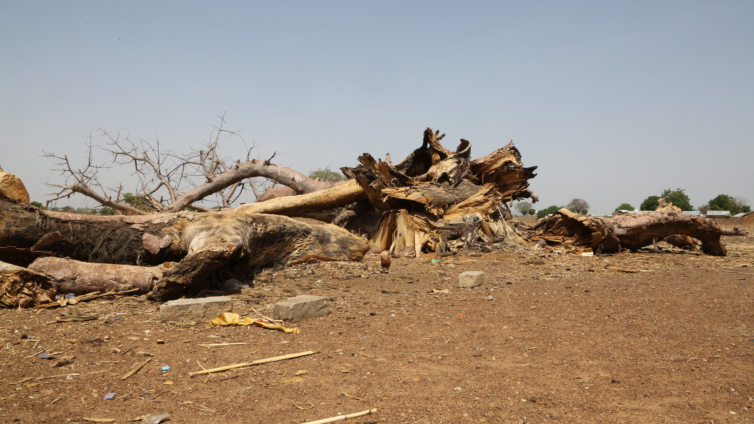
In one painful incident, a massive baobab tree collapsed in the middle of the night.
“It was a storm that pulled it down,” recalls Ayariga Lazarus. “We were sleeping around 1 or 2 a.m. when we heard a loud sound. In the morning, we saw it was destroyed. We believe it happened at night to protect us. In the daytime, children would have been under it.”
For many, the fall of a baobab tree feels like losing a family elder.
Climate change and a continental crisis
The problem in Binduri is not isolated. Across Africa, scientists are raising alarm about the mysterious death of ancient baobab trees.
A major survey led by Adrian Patrut, a chemist at Babeș-Bolyai University in Romania, found that many of Africa’s oldest baobab trees have died or are badly deteriorating. The study, published in the scientific journal Nature Plants, examined more than 60 large baobab trees across the continent.
“Such a disastrous decline is very unexpected,” Patrut says. “These are trees which may live for 2,000 years or more, and we see that they're dying one after another during our lifetime. It's statistically very unlikely."
Patrut believes the most likely cause is climate change. "These trees are under pressure by temperature increases and drought," he explains.
Other scientists agree. A savannah ecology expert at Yale University, Carla Staver, says climate change is a serious threat to baobabs.
In other publications, she is quoted to have expresssed growing concern in the conservation community about the long-term survival of baobab trees. "Climate change certainly seems like a possible (or likely) contributor," she notes.
Southern Africa, including countries such as Botswana, Namibia, South Africa, and Zimbabwe where Patrut studied the baobab trees, is heating up faster than the global average. Scientists warn that in the coming decades, the region is likely to face some of Africa’s sharpest temperature rises and significant drops in rainfall.
While Ghana’s baobabs are not part of that exact region, scientists say similar climate pressures are spreading across Africa.
A tree that needs protection
Baobabs are cultural symbols, meeting places, and part of local belief systems. Many communities see them as protectors. They also support birds, insects, and other wildlife.
But today, the protector needs protection. Residents in Binduri are calling for urgent help especially in the area of research to restore, and provide community protection measures.
“If people can help us solve this problem, we will be very happy,” Musah says. “We need help.”
Unless urgent action is taken to study, restore, and protect baobab trees, one of Africa’s most important natural resources could disappear.
For the people of Bansi and Binduri, the tree must be provided protection before it is too late. Because if the Tree of Life dies, a way of life may die with it.
Latest Stories
-
Anti-LGBTQ Bill: Forget the rumour mongers, I’m a man of action, and will pass the bill – Speaker
23 minutes -
Women and children among those killed in Sudanese army shelling of wedding celebration
27 minutes -
President Mahama is not sincere with Ghanaians on LGBTQ bill matter – Hassan Tampuli
44 minutes -
Gov’t to establish Prison Industrial Hub to equip inmates with income-generating skills – Prison Service boss
1 hour -
Alhassan Tampuli donates cement, roofing sheets to support storm victims in Gushegu
1 hour -
Alhassan Tampuli appeals for urgent support for storm victims in Gushegu
1 hour -
The hypocrisy must stop; pass Anti-LGBTQ+ Bill now – Alhassan Tampuli to Mahama
1 hour -
Imprisonment should be rehabilitative, not punitive – Ghana Prisons boss at UNGA
2 hours -
Ga Adangbe traditional priests petition Mahama over McDan aviation licence revocation
2 hours -
Anti-LGBTQ Bill: NDC’s arrogance is worrying – Hassan Tampuli
2 hours -
Let’s give OSP time to mature, not to scrap it – Hassan Tampuli
2 hours -
Nigeria convicts 386 Islamist militants in mass trials
2 hours -
Djibouti president wins election with 97.8% of vote, state media says
2 hours -
We don’t have mandate to deduct tax from rent allowance of security services personnel – Interior Ministry clarifies
2 hours -
Ablakwa receives Presidential Special Envoy on Reparations to advance global agenda
3 hours