

Audio By Carbonatix
A Lecturer at the Kofi Annan International Peacekeeping and Training Centre (KAIPTC) says the government is somehow lacking the political will to resolve the Bawku conflict.
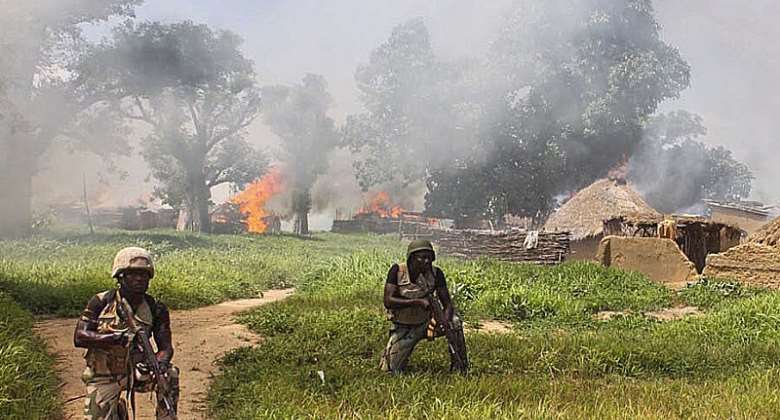
His comment follows recent killings in the area by unidentified gunmen and military men leading to the deaths of five persons in the area.
Tensions are once again high in the community.
According to Dr. Victor Doke, the heightened tension in the area is testament to a break of trust between the people and the state agencies in the area.
He explained that government agencies have failed to engender collaboration between them and the community people hence the frequent acts of violence in the area.
Also read: 3 more killed in Bawku, death toll now 5
“There is a clear problem here that there isn’t collaboration or coordination between even the state agencies that are on the ground to ensure peace, i.e. the military, the police and other state institutions,” he said.
He noted that the lack of collaboration also boils down to the woefully under-resourced security agencies expected to engender peace in the area.
Dr. Doke stated that government’s failure to appropriately train and fund the security agencies expected to contain the conflict is somewhat a sign of a lack of political will on their part.
“The resources aren’t there to build the capacity to train these servicemen to understand how to relate with conflict access, i.e. the Mamprusis and then the Kusasis, the youth especially.
"Now the political will somehow is lacking. We need to ensure that there is the political will to invest the resources needed, involve the CSOs to come in. There are NGOs on the ground there, most at times you don’t even hear about these NGOs except when there is a meeting, bilateral consultation that they’re invited.
Also read: Security high in Bawku after gunmen killed 2
“But when you go to the ground there, you need these NGOs to also be part of you to ensure your engagement with the community is there. We don’t have the sustaining engagements going in.
“Every time we start the process, then we lay back thinking that when we send the soldiers there to separate the two sides from clashing then that is it. But you still hear sporadic shooting that tells you that the guns are still in the system,” he said.
He has urged that government collaborates with peace NGOs in the area to sensitise residents of Bawku on the effect of the conflict on development in the area and to urge them to give up their firearms to ensure an end to gun violence in the area.
Latest Stories
-
Anti-LGBTQ Bill: Forget the rumour mongers, I’m a man of action, and will pass the bill – Speaker
25 seconds -
Women and children among those killed in Sudanese army shelling of wedding celebration
4 minutes -
President Mahama is not sincere with Ghanaians on LGBTQ bill matter – Hassan Tampuli
22 minutes -
Gov’t to establish Prison Industrial Hub to equip inmates with income-generating skills – Prison Service boss
41 minutes -
Alhassan Tampuli donates cement, roofing sheets to support storm victims in Gushegu
41 minutes -
Alhassan Tampuli appeals for urgent support for storm victims in Gushegu
44 minutes -
The hypocrisy must stop; pass Anti-LGBTQ+ Bill now – Alhassan Tampuli to Mahama
48 minutes -
Imprisonment should be rehabilitative, not punitive – Ghana Prisons boss at UNGA
1 hour -
Ga Adangbe traditional priests petition Mahama over McDan aviation licence revocation
1 hour -
Anti-LGBTQ Bill: NDC’s arrogance is worrying – Hassan Tampuli
2 hours -
Let’s give OSP time to mature, not to scrap it – Hassan Tampuli
2 hours -
Nigeria convicts 386 Islamist militants in mass trials
2 hours -
Djibouti president wins election with 97.8% of vote, state media says
2 hours -
We don’t have mandate to deduct tax from rent allowance of security services personnel – Interior Ministry clarifies
2 hours -
Ablakwa receives Presidential Special Envoy on Reparations to advance global agenda
2 hours