

Audio By Carbonatix
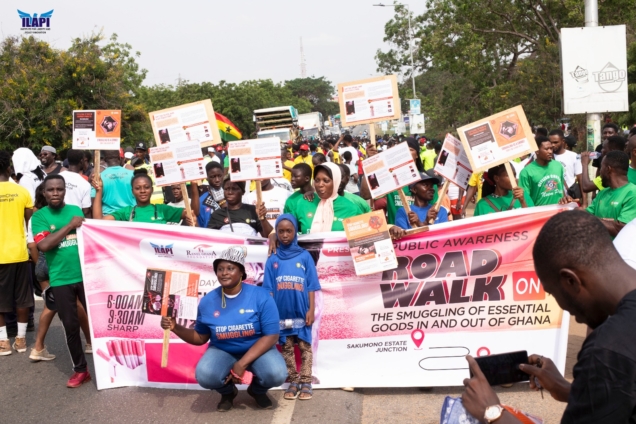
The Institute for Liberty and Policy Innovation (ILAPI), in collaboration with government agencies and civil society partners, has concluded a Nationwide Anti-Illicit Trade Road Walk Awareness and Education Campaign across three major regions of Ghana. The initiative aims to combat the growing menace of smuggling and illicit trade, which threatens national revenue, public safety, and economic stability.
The campaign, held between 1 and 20 December 2025, covered Tamale in the Northern Region, Kumasi in the Ashanti Region, and Accra in the Greater Accra Region. It brought together stakeholders including the Ghana Revenue Authority (Customs Division), Food and Drugs Authority (FDA), Ghana Police Service, Ghana Immigration Service, Environmental Protection Agency, health professionals, students, civil society organisations, and community volunteers.
More than 720 participants joined the exercise — over twice the initial target of 300 — demonstrating strong public and institutional support for the initiative.
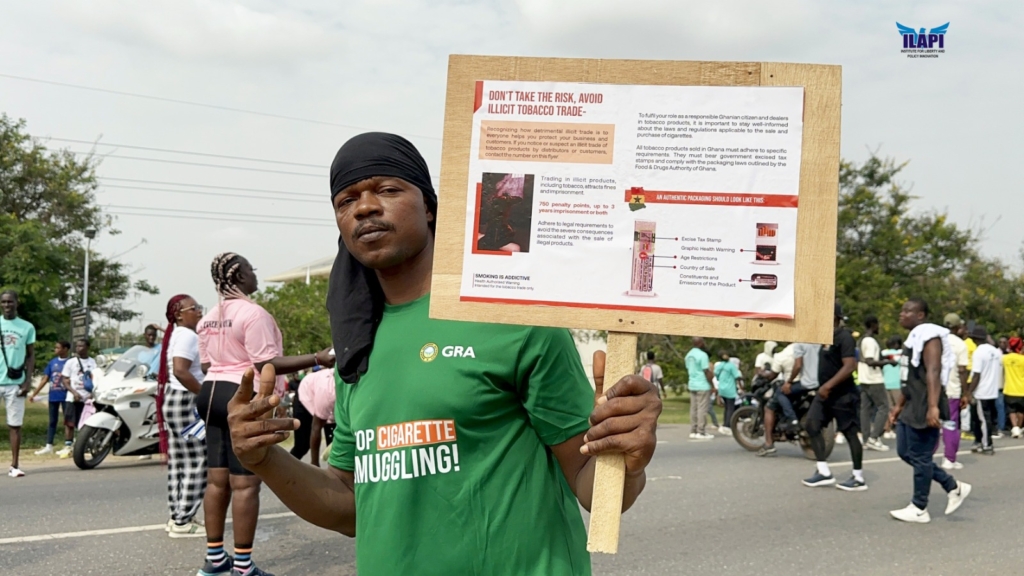
“Illicit trade is not a victimless crime. It weakens our economy, erodes government revenue, and exposes our youth to dangerous products,” said Mr Peter Bismark Kwofie, Chief Executive Officer of ILAPI. “This campaign was designed to take the conversation directly to the streets and markets, where the impact of illicit trade is most deeply felt.”
Despite sustained efforts to strengthen border control, regulatory enforcement, and inter-agency collaboration, illicit trade continues to threaten multiple sectors of the economy, including pharmaceuticals, food items, textiles, alcohol, tobacco, and other consumer goods. Structural vulnerabilities such as porous borders, wide tax differentials, and sophisticated smuggling networks continue to undermine these regulatory gains.
“When illicit trade thrives, the government loses revenue needed for development, and legitimate businesses are crowded out,” Mr Kwofie added. “Addressing this challenge requires sustained collaboration between government agencies, civil society, and the public.”
The Road Walk campaign deliberately targeted busy market areas and commercial corridors to engage traders, transport operators, market women, students, and the general public. Participants distributed educational materials, conducted community conversations, and raised awareness on the economic, social, and health consequences of illicit trade. The campaign also highlighted links to broader criminal activities, including counterfeit goods distribution, smuggled alcohol, and illegal mining.
Accra recorded the highest participation, reflecting rising public awareness and concern about the impact of illicit trade on livelihoods and national development.
The campaign benefited from strong inter-agency cooperation. The Ghana Police Service ensured public safety, while regulatory agencies educated citizens on existing laws, enforcement mechanisms, and civic responsibilities.
“The success of this campaign shows what is possible when institutions work together with citizens toward a common national goal. Awareness is the first line of defence against illicit markets, and this initiative has laid a solid foundation for sustained action,” Mr Kwofie noted.
ILAPI reaffirmed its commitment to promoting legitimate trade, youth empowerment, public health, and economic integrity, calling for continued collaboration to build on the gains of the Road Walk initiative.
Latest Stories
-
Haruna Iddrisu calls for limits on annual university accommodation fee increases
28 minutes -
Today’s front pages: Tuesday, October 13, 2026
1 hour -
Wealth Over Water: How Galamsey Is Threatening Ghana’s Water Security
2 hours -
LA 2028: Black Queens pumped up for second leg of Mauritius tie
2 hours -
LA 2028: Black Queens hold final training session ahead of second leg against Mauritius
3 hours -
Standards are not Seasonal: What the EC appointments teach both sides
3 hours -
King Mohammed VI urges private sector to create youth jobs and spread benefits of growth
3 hours -
KGL U17 Colts 2026: Greater Accra win title after penalties win over Western Region
3 hours -
UK Investment Roadshow opens in London to advance UK-Ghana growth partnership
3 hours -
Assemblies of God requires pastors to resign before entering partisan politics – Rev. Wengam
3 hours -
Ghana targets 20% annual reduction in maternal deaths – Health Minister
3 hours -
Cyber attacks in Africa grow faster than global rate, report finds
3 hours -
Ghana signs UAE deal to create 5,000 overseas jobs
3 hours -
One Million Coders Programme targets 100,000 digital jobs in two years – Sam George
3 hours -
John Jinapor, Italian Ambassador explore opportunities for energy sector investment
3 hours