

Audio By Carbonatix
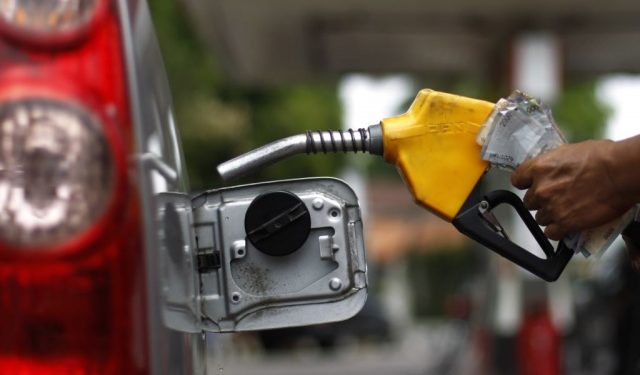
The government is under pressure to remove the entire petroleum tax or part of it to reduce prices at the pump. That’s something the government is unwilling to and can’t afford to miss out on revenue. There’s a total of ¢4 billion at stake annually.
We know how the government is cash-strapped. It’s faced with tight fiscal financial conditions hence removing the petroleum tax will worsen the current condition. Some of the revenues from the same petroleum tax are used to pay some of the salaries of the seven hundred thousand public workers on government payroll. As a result, this option is not available to the government because of constraints in revenue generation.
In June 2015, the petroleum industry regulator for BDC & OMC, the National Petroleum Authority, NPA finalised its deregulation process, which is Price Liberalisation. This involved a full decontrol of the prices of petroleum products from government.
Private importers, distributors and retailers are empowered to set ex-refinery and ex-pump prices with no intervention from the government.
However, just like the US, government should consider the release of petroleum products from its strategic petroleum stock if it’s available to help bring the prices of petrol and diesel down.
The Strategic reserve stock (SRS) was established as an emergency measure which government can tap into during an energy crisis. There’s a fuel crisis and the government is justified to use the SRS. It’s the last instrument the government can apply to avoid further economic hardship for Ghanaians.
The US recently announced an increase in the release from its Strategic Petroleum Reserve, SPR by 10 million barrels of oil since its largest release of 180 million barrels earlier this year to make up for the loss of crude oil supply on the global market due to the Ukraine war. The US government has been trying to reign in prices at the pump ahead of their midterm elections.
Ghana is not energy self-sufficient. Even though we produce 170, 000 barrels per day of crude, we still import 64,000 barrels of refined oil daily to meet our consumption demand.
As a result, we are exposed to the volatility of the global oil market. Ghana can secure its energy future with a reliable source of supply of crude oil from its oilfields and an efficient operating refinery to process it.
Latest Stories
-
GPL 2025/26: Late Kwartemaa strike downs Hearts in Tema
6 seconds -
Ghana Faces Sierra Leone Moment as Prosecutorial Powers come under strain
10 minutes -
Don’t consume fish or seafood from Tema Shipyard until further notice – FDA warns
15 minutes -
Why volunteering might be Africa’s most underrated career accelerator
21 minutes -
ActionAid Ghana raises concern over gender gaps in Feed Ghana Programme
23 minutes -
Windstorm wreaks havoc in Gushegu, displacing nearly 2,000 residents and damaging schools
25 minutes -
Friends of Bridget Bonnie Marks her 35th birthday with donation to Kasseh Model Health Centre
1 hour -
From Ekumfi Kokodo to the Pulpit Stage: Essi Donkor’s gospel journey takes shape
1 hour -
Landfilling waste management creates no value, it’s an economic waste
2 hours -
Photos: Speaker Bagbin Commissions MPs constituency office under parliamentary decentralisation programme
2 hours -
Black Stars technical advisor Winfried Schäfer sacked as GFA shakes up backroom staff
2 hours -
Wenchi water project almost complete, critical to gov’t agenda – GWL MD
2 hours -
Anti-LGBTQ+ bill not part of government’s legislative agenda – Inusah Fuseini
2 hours -
Anti-LGBTQ Bill: Forget the rumour mongers, I’m a man of action, and will pass the bill – Speaker
3 hours -
Women and children among those killed in Sudanese army shelling of wedding celebration
3 hours