

Audio By Carbonatix
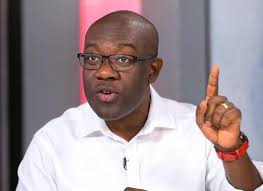
Member of Parliament for Ofoase-Ayirebi, Kojo Oppong Nkrumah, says the government must be transparent about the methods being used to achieve Ghana’s recent decline in inflation.
Speaking on Joy News, the Pulse on March 4, Mr Oppong Nkrumah said the public has a right to know how inflation is being managed.
While acknowledging the drop in inflation, he has urged authorities to fully disclose the strategies behind the figures and outline the potential long-term implications for the economy.
“Inflation doesn’t just drop by itself — it reduces because of the interventions the government introduces. It’s important that government is candid, because every method comes at a cost,” he said.
He pointed out that heavy sterilisation has been a major tool, where money is withdrawn from the economy to control demand.
“In 2025 alone, the government sterilised about 62 billion Ghana Cedis. That money would have been available to stimulate demand, but it was mopped up instead,” he explained.
The minister warned that while sterilisation addresses the demand-pull side of inflation, it does not solve the cost-push factors, like rising production costs, tariffs, and electricity bills.
“Tariffs are going up, electricity bills are increasing between 24 to 28%, yet liquidity is being removed from the economy. The question is: what has been done to reduce these real costs?”
Kojo Oppong Nkrumah also questioned the sustainability of current interventions.
“If the central bank no longer has the reserves to intervene in the market, what happens to our currency? Intervention is part of the toolkit, but when it becomes routine, people should question its long-term impact,” he said.
He urged the government to align inflation targets with economic growth and job creation. “Our inflation target has a lower band of 6% to support productive activity. If interventions push it down to 3.3%, don’t just celebrate — ask what it means for jobs and real sector productivity.”
Finally, he called on the Ghana Statistical Service to clearly explain the methods behind the reported figures.
“It’s not enough to report numbers; we must check if they reflect the lived experiences of Ghanaians in the markets,” Oppong Nkrumah concluded.
Latest Stories
-
Assemblies of God requires pastors to resign before entering partisan politics – Rev. Wengam
3 minutes -
Ghana targets 20% annual reduction in maternal deaths – Health Minister
8 minutes -
Cyber attacks in Africa grow faster than global rate, report finds
10 minutes -
Ghana signs UAE deal to create 5,000 overseas jobs
17 minutes -
One Million Coders Programme targets 100,000 digital jobs in two years – Sam George
20 minutes -
John Jinapor, Italian Ambassador explore opportunities for energy sector investment
22 minutes -
NHIA seeks legal reforms to support Free Primary Healthcare
26 minutes -
Beatrice Annan defends Afi Agbenyo’s EC appointment, cites record of gender advocacy
29 minutes -
Ghana seeks investment deals in Bangkok amid global economic crises
33 minutes -
IMF raises Ghana’s 2026 growth forecast to 5.7%, sees inflation falling to 4.8%
34 minutes -
Ablakwa urges Africans not to view immigrants as threat to national progress
39 minutes -
Mahama Cares must fund treatment, not looting – Asogli chiefs
40 minutes -
Ghana’s economic salvation lies not in shifting geo-political allegiances – Dr Atuahene
43 minutes -
BoG proposes tougher rules on loan repayment assessment
48 minutes -
Government plans mandatory drug tests for public service jobs — Muntaka
53 minutes