

Audio By Carbonatix
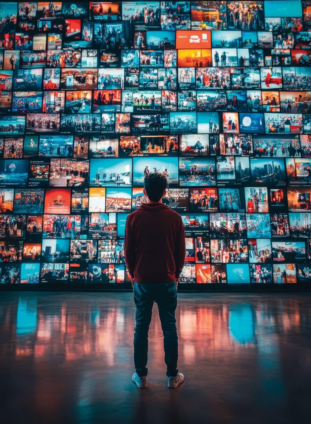
Every morning, before many people have finished their first cup of coffee, the world has already arrived on their screens. One notification announces a conflict. Another reports an economic shock.
A third reveals a political decision or a natural disaster unfolding thousands of kilometres away.
Within seconds, millions of people know that something has happened. But knowing that something happened is not always the same as understanding why it happened.
This is the paradox of our age. We have more information at our fingertips than any previous generation. Yet we increasingly experience the world in fragments: a headline, a short video, a viral post, or a brief comment. These fragments may capture a moment, but they rarely reveal the history, forces, and human experiences behind it.
The greatest challenge of the information age is not a lack of information. It is a lack of understanding.
In conversations, classrooms, and online spaces, people often debate the same event while holding completely different accounts of what happened. The difference is not always a lack of facts; it is often a lack of context. Without the wider picture, information can create certainty without fostering genuine understanding.
Facts remain essential. They provide the foundation for knowledge. However, facts without context can leave people with an incomplete view of reality. Context connects events, explains causes, and reveals consequences. It enables societies to move beyond immediate reactions towards informed decisions.
Consider the rising cost of food. For many families, the experience is simple: prices are rising, and household budgets are under pressure. Behind that reality, however, lies a much larger story involving climate change, disrupted supply chains, energy markets, international conflicts, and decisions made far beyond local communities. Without context, people see the problem. With context, they begin to understand it.
Migration poses a similar challenge. Public debate is often shaped by powerful images of people crossing borders or seeking refuge. Those images matter, but they capture only a single moment in much longer journeys. Behind each person is a story shaped by conflict, economic uncertainty, environmental pressures, and the search for safety or opportunity.
When context disappears, complexity gives way to assumptions. People become symbols rather than human beings. Difficult issues are reduced to slogans. Understanding becomes harder than judgement.
Technology has accelerated this challenge. Social media enables information to travel instantly, but speed does not always ensure accuracy or meaning. A misleading claim can spread faster than a careful explanation, and a powerful image can shape opinions before its full context is understood.
Artificial intelligence has made this challenge even more urgent. Machines can now generate convincing text, images, and videos in seconds. As the ability to produce information expands, the ability to interpret it becomes even more important. Technology can generate content, but human judgement determines its meaning.
This is why critical thinking has become one of the most important skills of our time. Education must prepare people not only to collect facts but also to question, analyse, and connect them. The future will belong not simply to those who know more but to those who understand more deeply.
The greatest risk of the information age is not that society knows too little. It is that constant exposure to information creates the illusion of understanding. Seeing more does not necessarily mean knowing more.
Breaking news will always matter. It alerts us to events that demand attention. Yet every headline is only the beginning of a larger story. The deeper questions remain: Why did this happen? What shaped it? Who is affected? What comes next?
Information tells us what happened. Context tells us why it matters. Understanding shapes the choices we make as individuals, communities, and societies.
In a world overflowing with information, context is not a luxury. It is the foundation that helps us look beyond the moment, recognise our shared realities, and make wiser decisions about the future.
Latest Stories
-
Ghana Medical Trust Fund, Hungary explore partnership to strengthen specialised healthcare
16 seconds -
Manhyia South MP Baffour Awuah pleads not guilty to EOCO charges, granted GH¢10m bail
4 minutes -
NPP conference: We need leaders to complement our efforts in Parliament – Annoh-Dompreh
6 minutes -
Sammy Crabbe steps down from NPP Chairmanship race, backs John Boadu
7 minutes -
NPP postpones constitutional amendments, including proposal on party leadership to next national conference
10 minutes -
NDC ‘running into opposition like Usain Bolt’ – Sammy Awuku
22 minutes -
Local pharma production can create jobs, strengthen Africa’s health security – Mahama
24 minutes -
Mahama calls for removal of barriers to boost Africa’s pharmaceutical industry
29 minutes -
NPP needs ‘war-like’ leaders to take fight to government – Annoh-Dompreh
32 minutes -
Mahama unveils HINGE digital platform to streamline health investment and regulation in Africa
39 minutes -
We won’t return to the classroom without concrete solutions – NAGRAT
44 minutes -
Mahama urges Africa to invest in local pharmaceutical manufacturing
50 minutes -
Akufo-Addo giving Bawumia space to assert himself as NPP leader – Gabby Otchere-Darko
56 minutes -
NPP delegates, not social media, will decide election winners – Miracles Aboagye
1 hour -
I have no interest in this election; I believe Bawumia will win 2028 election – NAPO
1 hour