


Audio By Carbonatix
There's nothing quite like living in a big city. Everything is close by, transit systems are easily within reach, jobs are aplenty, and there's always something social to undertake. Since the 1950s, more people have been choosing to live in urban environments and the populations in cities are expected to keep rising well into the future.
While there are many positives with living in a metropolis, there are some downsides including a greater risk to health. Several factors have been found to be responsible, such as socioeconomic status, stress levels, and exposure to physical and chemical hazards. The end results of these exposures have been identified as cardiovascular diseases, respiratory ailments, diabetes, cancer and mental health illness. Not surprisingly, these troubles all appear to have higher rates in denser populations.

But a recent study from a group of Korean researchers reveals another possible problem associated with living in a large city. Your skin microbes may be at risk of losing their ability to stay balanced. Based on the results, living in an urban environment could lead to a "fragile microbiome" that could increase the chances for a number of skin ailments and a lack of defence against pathogens.
Normally, our skin is home to a variety of different microbial species. Research has shown the presence of a diverse population of species helps to keep the integrity of the skin intact and prevent the likelihood of infections. A "fragile microbiome" lacks that diversity and as a result, is unable to help as much as it could. When this occurs, several skin problems including dermatitis, psoriasis, dandruff and acne are more likely to happen. For the team, the identification of fragility might offer some hints as to why skin problems seem to occur more frequently in urban environments and possibly how to prevent these troubles from happening.
The team focused on several cities in China, including Beijing, which has a population of 21 million people. They also chose smaller cities, including Guangzhou, Xi'an, Kunming and Hohhot. The latter two had populations similar to that of larger Canadian cities like Toronto, Montreal and Vancouver.
The procedure was rather simple in design. The team swabbed the faces of 231 people — 50 per city other than Guanzhou with 31 samples — and then determined the species and diversity of the bacteria present. The hope was to find a link between population size and differences in skin microbial composition. If the team could find different trends, they might be able to find links to suspect issues such as pollution, climate and socioeconomic status.
When the results came back, the team noticed differences in microbial populations based on city size. Those living in the most urban environments tended to have less diversity in their bacterial populations. As expected, a closer look at the microbial populations revealed a collapse in diversity making the microbiome more fragile.
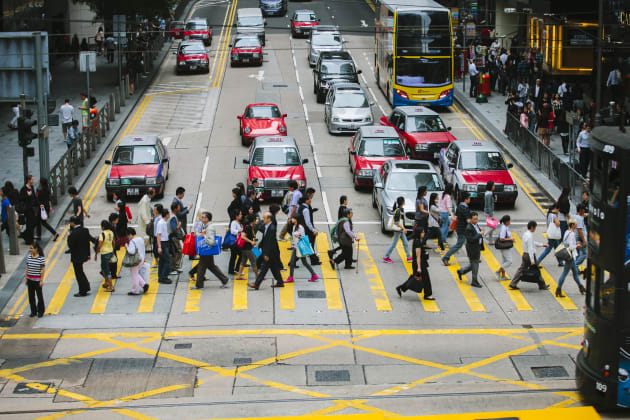
With this result in place, the team attempted to find one or more reasons for the lack of diversity in larger urban environments. This required moving away from the lab and collecting information on the cities themselves. The team acquired information on over two dozen different factors ranging from gross domestic product to rain days to the levels of polluting chemicals. If the group was right, they could find a link between the lower diversity and one or a few of these parameters.
When the results came back, the team had found links. Yet, instead of only one or two, the data revealed 12. The team had no choice but to conclude the simple act of existing in a larger city puts the microbiome and consequently, a person's skin health at risk.
For the authors, this large number of links demonstrates a rather unsettling reality. The skin microbiome is part of a much larger ecosystem comprised not just of our bodies but also the environment around us. Without major changes to the way these cities function, little can be done to reduce the chances for fragility.
Latest Stories
-
Pentecost University to host international sustainability conference
6 minutes -
Ampofo Ankrah did not collect World Cup visa money – Lawyer
16 minutes -
Baffour Awuah to spend night in EOCO custody – Atta Akyea
18 minutes -
Torgbiga Wenya III opposes proposed elevation of 36 Anlo chiefs to Paramount status
26 minutes -
The strengthening El Niño and what it could mean for Ghana
29 minutes -
Baffour Awuah formally charged with money laundering, loss of public funds – Lawyer
30 minutes -
Drone flight over EOCO building could attract 30-year jail term – Security consultant
38 minutes -
Flying drone over EOCO premises is strictly prohibited – Security consultant
38 minutes -
SIC file was surrendered to client, EOCO has no reason to search Manhyia South MP’s firm – Atta Akyea
39 minutes -
EOCO search of Baffour Awuah’s law firm raises confidentiality concerns – Atta Akyea
40 minutes -
“I will never ignore an invitation from EOCO if I had received one” — Manhyia MP
42 minutes -
Baffour Awuah ready to cooperate fully with EOCO investigation – Bosome Freho MP
1 hour -
How a Ghanaian technology is helping fish farmers detect hidden threats before fish die
1 hour -
AI tool helps Ghanaian farmers identify crop threats from field observations
1 hour -
NEIP: Designing a Ghana Startup Agency that builds enterprises, not programmes
1 hour