

Audio By Carbonatix
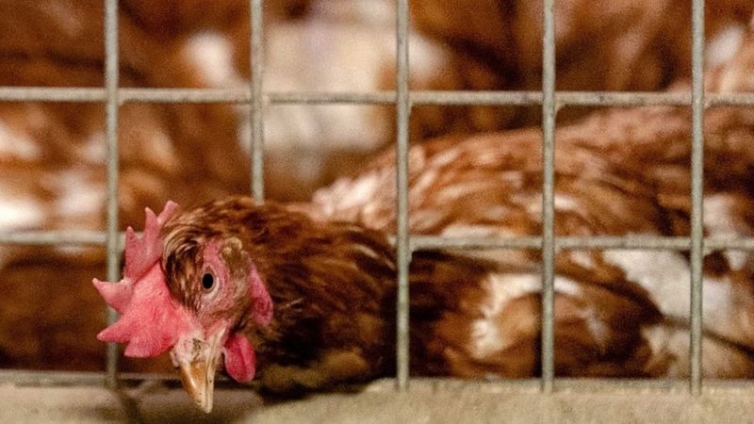
The Dutch authorities are racing to contain a bird flu outbreak at two poultry farms and the same strain - H5N8 - has also infected chickens and wild birds in north Germany.
A farm in the eastern Dutch town of Puiflijk and another nearby have been told to cull 200,000 chickens.
Chickens are also infected at a small poultry farm in Nordfriesland, part of Germany's Schleswig-Holstein state.
H5N8 is very low-risk for humans, but the economic cost can be significant.
Health experts say people should avoid touching sick or dead birds, and chicken and eggs are safe to eat if cooked thoroughly, as that kills the virus.
A poultry farm in Frodsham, north-west England, also has cases: a cull of 13,000 birds was ordered there on Monday.
A smaller cull is under way at a farm in Kent, in the south-east, where the H5N2 avian influenza strain was detected this week.
H5N8 has been detected in migratory birds from Russia. A huge cull was carried out on farms in Russia's western Kostroma region late last month, to contain an outbreak.
Bird flu: Culls in Dutch and German farms over outbreaks
Thousands of chickens are being culled as H5N8 bird flu spreads in Europe.https://t.co/OTFbiQ3ziI#News#BreakingNews pic.twitter.com/aaCdpHKXPl— THE WORLD NEWS (@NEWSWORLD555) November 5, 2020
The Dutch farms affected are just outside Nijmegen, 30km (19 miles) from the German border.
Containment zones have been set up around the farms, as well as around the north German farm in Oland, Nordfriesland. Farmers have been urged to keep their poultry indoors.
German public broadcaster NDR says more than 1,000 dead wild birds - mainly geese and ducks - have been found on the Nordfriesland coast, most likely infected with bird flu.
Germany's worst bird flu outbreak was in 2016-2017, when more than 900,000 birds were culled nationally.
The Netherlands is Europe's largest exporter of chicken meat and eggs, employing 10,000 people on 2,000 farms.
The Dutch culled more than 30 million chickens, ducks and other fowl in a major bird flu outbreak in 2003, the BBC's Anna Holligan reports from The Hague.
Latest Stories
-
Otto Addo lacked credentials for Black Stars job – Ekow Asmah
2 minutes -
74% of SMEs collapse within 5 years; experts call for urgent business structuring reforms
2 minutes -
Agbodza commends Maripoma Enterprise for progress on Tema Motorway project
4 minutes -
Justice Dela Amevor leads PTA to deliver new girls’ dormitory at Anlo Technical Institute
4 minutes -
Ga Mantse urges strict enforcement of building regulations after Accra New Town tragedy
6 minutes -
Germany commissions border Sheds to boost Ghana’s immigration operations at Aflao
12 minutes -
Sam Jonah’s concerns fuel IMANI’s petition to Mahama over political interference in insurance sector
12 minutes -
Absa SME Business Clinic equips entrepreneurs with practical financial management strategies
25 minutes -
Franklin Cudjoe hails ‘productive’ civil society meeting with Mahama; backs inquiry into ‘Big Push’ procurement
26 minutes -
Telecel Foundation supports safer pregnancies with ultrasound outreach in Naaha
1 hour -
AU’s 10-year reparations agenda is essential to address historic injustices – Spio-Garbrah
2 hours -
Ghana can’t remain vulnerable to global economic disruptions— Dr Tutu-Boahene
2 hours -
‘No nepotism’ – Former NSA Board Chairman demands world-class coach after Otto Addo exit
2 hours -
Volta Region seen as top choice for luxury weekend breaks — V. L. K. Djokoto
2 hours -
Halt small-scale mining for one year to fight galamsey – Hopeson Adorye
2 hours