

Audio By Carbonatix
The Africa Head of Infrastructure and Capital Projects at Deloitte, Yaw Appiah Lartey, has expressed worry about how the operates in a state of profound paradox, despite its dynamism and undeniable global footprint
According to him, the continent captures only a small fraction of the value of its cultural exports, and the vast majority of its creators operate in the informal economy, lacking basic protections and struggling to build sustainable livelihoods.
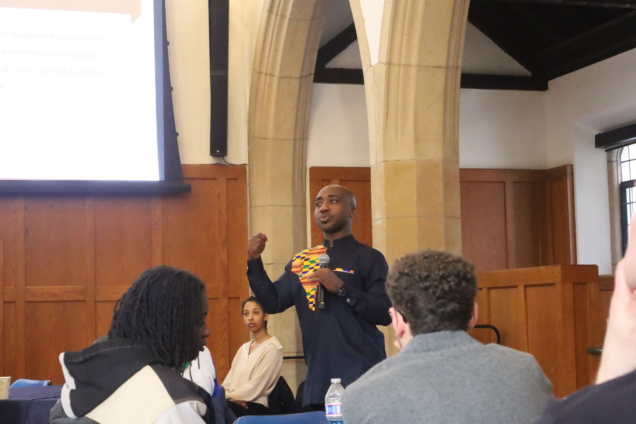
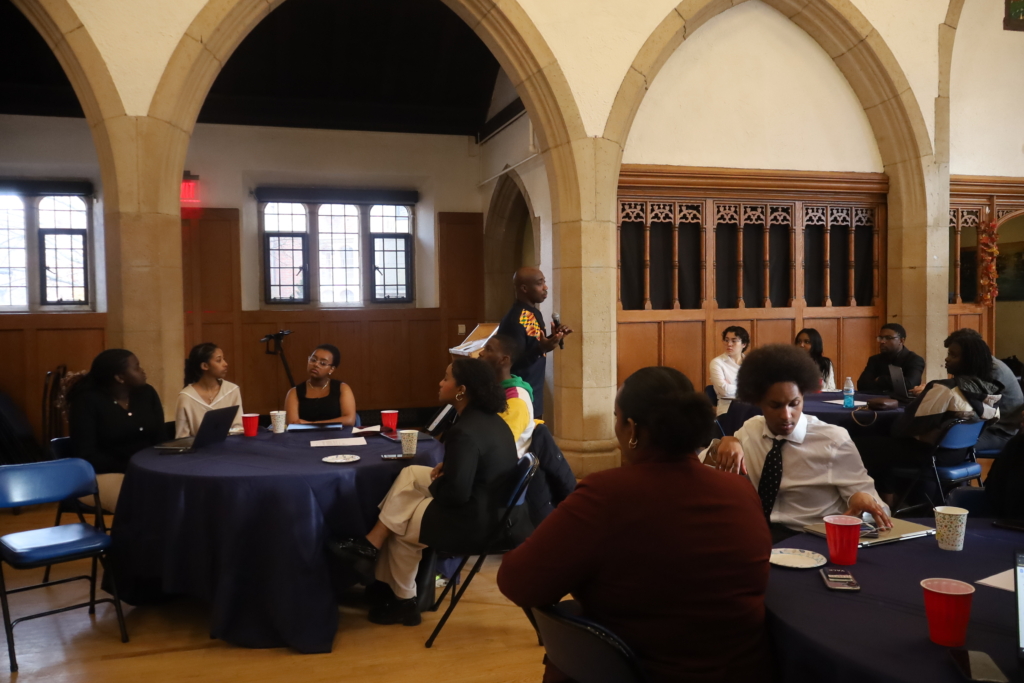
He disclosed this at a leadership conference in New York, USA organised by Yale Model African Union (YMAU).
About 60% of African creators earn less than US$100 a month. Mr. Lartey said it is not attractive to invest in creators in Africa because businesses are too closely tied to individual personalities rather than institutionalised systems, whilst Income lacks durability and predictability, leading investors to apply significant discounts.
In addition, creators often cannot prove ownership of their most valuable assets.
Mr. Lartey also highlighted the policy gaps within the creative industry including the absence from national planning, institutional fragmentation and culture budget allocations.
He also mentioned that the creative economy is characterised by high levels of informality, hence no social protection for workers. For instance, in Kenya, 84% of creative enterprises are informal.
Another critical policy gap, he said, is the absence of frameworks that enable investment to flow into the creative economy.
He enumerated strategic recommendations in the short term to be implemented by governments, development partners, private sector investors and creative industry stakeholders.
For creative economy observatory, he called for the establishment of data on creative economy size, employment and value.
Regarding simplify business registration for creatives, he suggested a streamlined, low-cost registration process for creative enterprises.
For medium term, he urged the enactment of modern copyright and AI legislation to address modern digital realities and the establishment of a finance facility for creative sector.
In the long-term, he called for a regional production hubs to build film studios and fashion hubs for industrial-scale production.
Latest Stories
-
North Korea and China open new bridge after 12-year delay
9 minutes -
Anthropic flags revenue surge to investors ahead of stock market debut
18 minutes -
Norway’s wealth fund set to overhaul ethical rules after US scrutiny
28 minutes -
‘There can be no mistake, regardless of who is picked’ – Bentil on CJ contenders
39 minutes -
Ghana needs a Chief Justice who inspires public confidence – Bentil
57 minutes -
Government to introduce integrated basic education model schools from 2027 – Haruna Iddrisu
1 hour -
Russell Brand was a ‘sexual predator’, prosecution alleges as rape trial begins
1 hour -
Drop-off charges at UK airports to be reviewed after sharp increase
2 hours -
Kenya confirms second Ebola case – a relative of the first victim
2 hours -
Hidden video recording device found in cabin of Australian navy ship
2 hours -
Saudi Arabia overturns death sentence for man over Facebook comment, Sri Lanka says
2 hours -
Burnham says he wants to ‘repair bridges’ between Ukraine and US
2 hours -
Pope walking and recovering ‘as expected’ after surgery, doctors say
2 hours -
Total expenditure as of July 2026 amounted to GH¢147.07bn, 16% below target – BoG
4 hours -
Total revenue & grants stood at GH¢144.5bn in July 2026, slightly below target – BoG
4 hours