

Audio By Carbonatix
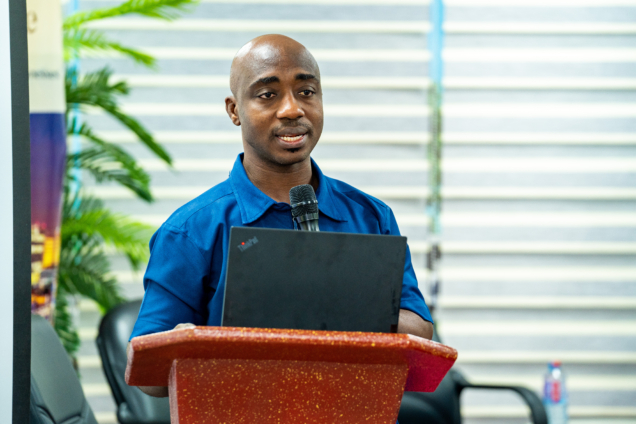
The Strategy and Transactions Partner at Deloitte Ghana and the Africa Infrastructure and Capital Projects Leader at Deloitte Africa, Yaw Appiah Lartey, has indicated that de-risking energy projects is critical to attracting investment and securing commitments from financial institutions.
According to him, the path to bankability lies in blending innovation with risk mitigation, strong partnerships, and alignment with both investor expectations and local realities
Speaking at the Future of Energy Conference Africa on the Bankability of Energy Projects, Mr. Lartey said even in Africa’s high-risk markets, clean energy initiatives can attract capital when ideas are translated into structured, de-risked, and impact-driven opportunities.
He added that bankable projects must pass through key stages:
With regard to idea validation and feasibility studies, he advised governments and stakeholders to conduct thorough resource assessments (solar, wind, hydro) and review policy frameworks.
According to IRENA (2022), over 60% of failed African energy projects stem from weak feasibility studies.
Mr. Appiah cited Kenya’s Lake Turkana Wind Power Project—365 turbines (850KW each), a high-voltage substation, and a 438km transmission line to the national grid—as a success built on detailed wind mapping.
On structuring the business model and securing early commitments, he said engaging governments, utilities, Development Finance Institutions (DFIs), and anchor off-takers is important, stressing that early commitments from institutions such as the IFC and AfDB can de-risk private capital.
Bankable Documentation, Investor Pitching, and Financial Close.
He noted that over 70% of African energy projects are structured as Public-Private Partnerships (PPPs).
A notable example is Ghana’s Bui Dam—a 400MW hydroelectric project on the Black Volta, developed through a PPP between the Government of Ghana and Sino Hydro, a Chinese state-owned construction company.
Barriers to Financing
Mr. Appiah Lartey emphasised challenges including bureaucracy, regulatory bottlenecks, corruption, taxes and tariffs, lack of financing options, technical and equipment gaps, shortage of skilled labour, limited private sector involvement, policy uncertainties, weak community engagement, and inadequate budget allocations.
De-risking Tools and Innovative Financing
He outlined strategies such as blended finance (concessional + commercial capital), political risk insurance (MIGA, ATI), currency hedging mechanisms, government guarantees, credit enhancements, and stronger community engagement for project sustainability.
Latest Stories
-
Customer Service Africa CEO urges business leaders to observe staff and customer interactions
8 minutes -
On night of mayhem for Liverpool, Barcola arrives in style
9 minutes -
Muzic Mensah finds healing and renewed love in new single ‘WayƐ Late’
21 minutes -
FIFA to offer extra £2.6bn for football development
23 minutes -
Government backing is no EPA permit – Authority warns GoldBod, ministries
31 minutes -
Real Madrid produce stunning late fightback to down Roma
43 minutes -
EPA orders immediate halt to unpermitted reclamation and dredging nationwide
52 minutes -
Afenyo-Markin’s lawsuit against Sammy Gyamfi takes focus away from development – Kpebu
1 hour -
FWSC urges media to guard against misinformation in proposed IPEC transition
1 hour -
MoMo Fest 2026: Shatta Wale to Rock Accra Stadium on October 17
1 hour -
GTEC’s letter directing public universities to reopen by October 16 is unprofessional – GAUA
2 hours -
Suspect in viral video assaulting wife jailed for 3 months
2 hours -
GAUA insists strike will end only after Fair Wages addresses market premium issue
2 hours -
Kpemka seeks compensation as he sues BOST over alleged unlawful termination
2 hours -
GES asks applicants to check status of 2026 promotion applications on October 15
2 hours