

Audio By Carbonatix
Fidelity Bank Ghana has called for stronger stakeholder collaboration, harmonised trade systems, and targeted institutional support to remove the structural barriers holding back Ghana's traders and entrepreneurs, particularly women, from reaching their full potential.
The call was made by two of the bank's senior leaders at the Breaking Barriers to Trade conference, where Fidelity Bank participated as a speaker across two key sessions addressing trade modernisation and women-led enterprise development.
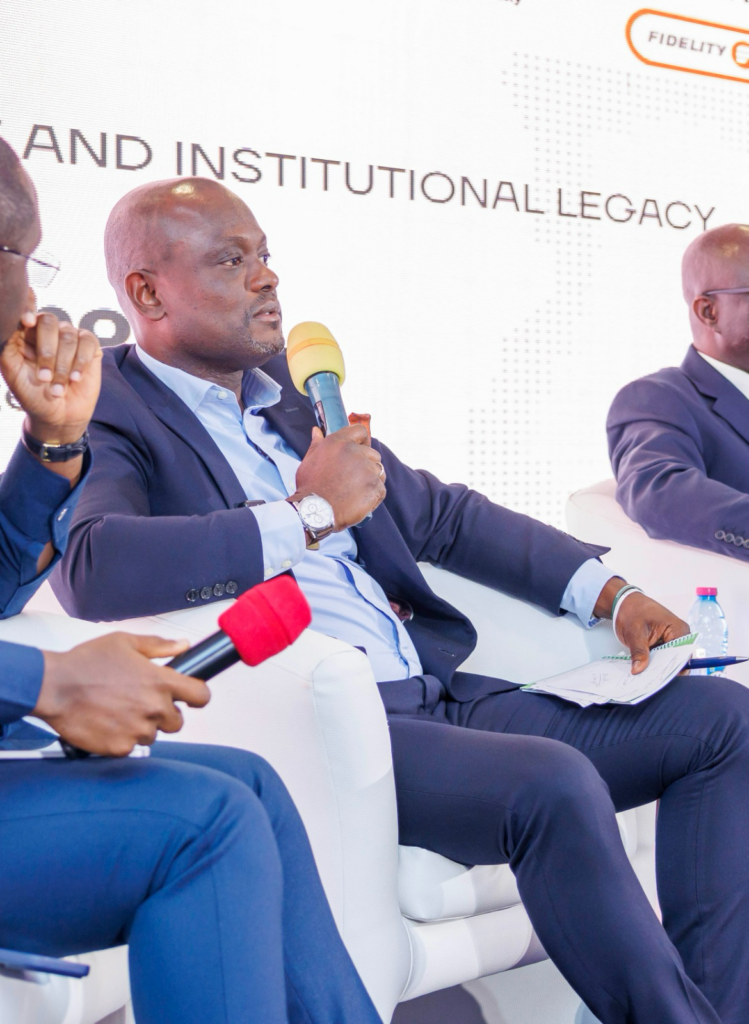
Aaron Ameyaw, Director, Banking Operations, speaking on the topic Reimagining Trade, Influence and Institutional Legacy, identified data quality and fragmented customs systems as among the most pressing obstacles to trade growth in Ghana and across the region.
He noted that while artificial intelligence holds significant promise for transforming trade and commerce, its effectiveness depends entirely on the quality of data underpinning it.
"In Ghana, data is a problem. These AI machine learners thrive on data. And so if your data is not correct, you have big issues," he said.
He pointed to the harmonisation of customs regimes across neighbouring countries as a priority that has gone unaddressed for too long.
Traders, particularly women, who import goods from Lomé or Nigeria continue to navigate excessive bureaucracy that unnecessarily slows commerce and raises costs.
He welcomed the introduction of the Publican AI System in early 2026 to complement the Integrated Customs Management System at Ghana's ports, noting that it had already contributed to revenue growth of over US$300 million, as evidence of what the right technology partnerships can deliver.
Mr. Ameyaw also spoke to Fidelity Bank's digital transformation journey, revealing that the bank has implemented robotic process automation for its reconciliation processes; a move that has improved efficiency and freed up human capacity for higher-value work.
"The good outweighs the bad when it comes to AI," he said.
"It is important that we get the fundamentals right. Once we get it right, it creates opportunities. And for us at Fidelity, we are always doing that."
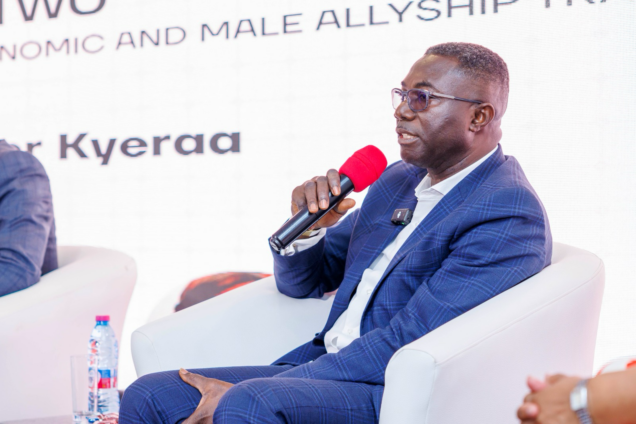
Alex Agyei-Amponsah, Director of SME Banking, brought the conversation to the specific realities facing women-led businesses in Ghana, noting that between 38% and 46% of businesses in the region are owned by women.
The challenge, he argued, is not ambition; it is structure.
"It is not a desire to not grow their business. They actually desire to grow. But the difficulty has been: how can I manage this to the level that I can still take care of the family and still meet other obligations?"
He outlined Fidelity Bank's response through the Fidelity Young Entrepreneurs Fund, a programme targeting women and youth aged 18 to 40, and up to 45 for women, designed to take entrepreneurs from the idea stage through incubation and into funded, market-ready businesses.
The programme offers financing at concessionary rates, programs specifically designed to help entrepreneurs meet regulatory and compliance requirements that would otherwise block them from accessing markets.
Mr Agyei-Amponsah also highlighted the bank's approach to group lending as a vehicle for expanding access, citing a member of the Federation of Associations of Ghana Exporters who was able to participate in a yam export contract to Canada as part of a group, an opportunity she would not have been able to access individually.
"That is how gradually we are doing it," he said. "Once this facility is approved and the yam is exported, the next time around that woman's business will be able to secure a contract by herself."
For Fidelity Bank, the two interventions, trade modernisation and women's enterprise development, reflect a single conviction: that breaking barriers to trade requires both the right systems and the right institutions willing to meet people where they are.
Latest Stories
-
Atta Akyea denies seeking presidential pardon for Wontumi in galamsey case
3 seconds -
Photos: Mahama commissions 85-bed Police Hospital ward, donates two ambulances
9 minutes -
GTEC directs Ghana’s public universities to reopen by October 16 and begin lectures on October 19
10 minutes -
Star Oil donates GH¢1million towards construction of new CID facility
14 minutes -
Court hands Adjetey Sowah, two others lifetime bans after Amputee Football legal dispute
23 minutes -
NDC appoints Julius Kwame Anthony as a Deputy Communications Director
24 minutes -
Ghana repatriates 120 Nigerians rescued from suspected cybercrime centres
28 minutes -
NPP rejects Emelia Agbenyo’s appointment as Deputy EC Chair, demands withdrawal
33 minutes -
EOCO grants Suame MP John Darko enquiry bail in GH¢27m SIC investigation
36 minutes -
NPP cannot question EC appointment after appointing own people to Commission – Kwakye Ofosu
42 minutes -
BoG deepens public trust with regional stakeholder forum in Techiman
51 minutes -
‘We have turned the tide’ – Ato Forson says Ghana is ready to take off
56 minutes -
Police arrest man captured in viral video assaulting wife in Agona Nkwanta
58 minutes -
KATH Mother and Baby Unit construction stalled for 14 months over unpaid contractor arrears
1 hour -
Government wanted to ‘tilt the balance’ with new EC appointments – Kwakye Ofosu
1 hour