

Audio By Carbonatix
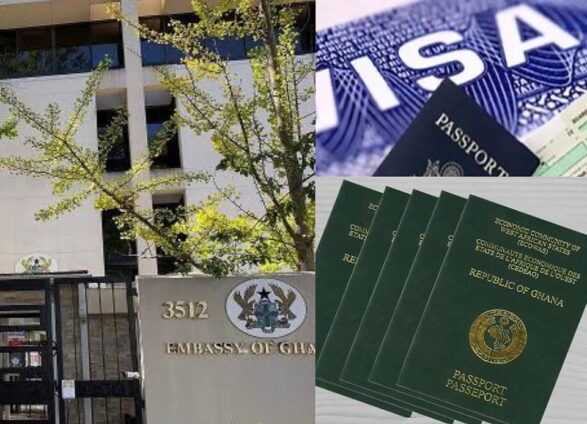
Auditors who conducted a forensic audit at Ghana’s Embassy in Washington, DC, uncovered blank biometric passport booklets, active passport materials and visa stickers in the office of an IT officer, alongside signs suggesting that digital records connected to his work may have been removed from official computers before the audit.
The discovery involved Fred Kwarteng, the Embassy’s IT officer, whose office was searched during a special audit of the Mission, covering the period January 2017 to June 2025.
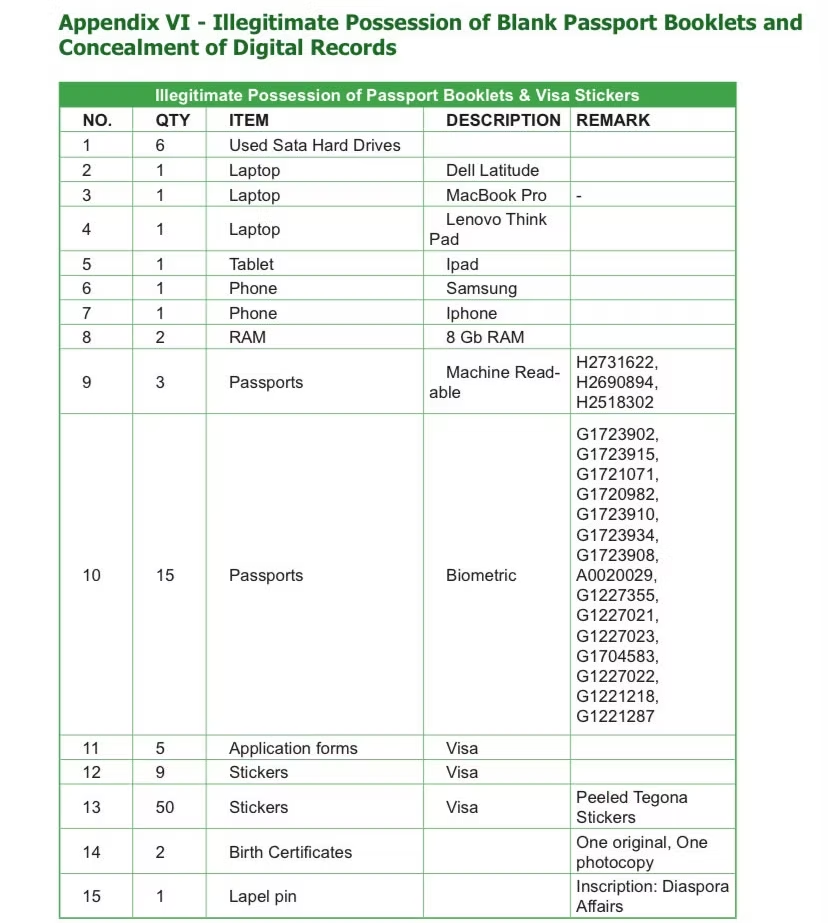
During the inspection, auditors recovered eighteen (18) passport booklets from Mr. Kwarteng’s office. Four of the booklets were blank biometric passport booklets.
One contained Mr Kwarteng’s own image, while the remaining active passport booklets could not be accounted for. Also recovered were fifty-nine (59) used and unused visa stickers, materials that are supposed to be tightly controlled.
Biometric passport booklets are sensitive security documents issued by the Government of Ghana and require strict custody, inventory management and accountability procedures, according to the auditors.
Every booklet received, issued or held in storage at a diplomatic mission is expected to be properly accounted for. The discovery came despite an earlier internal review that had already raised concerns about the management of biometric passport booklets at the Embassy.
A May 2021 internal audit identified weaknesses in record-keeping and stock management practices. Records from Ridge PAC, Ghana’s biometric passport production partner, showed discrepancies between passport booklet numbers supplied to the Mission and those recorded by the Embassy.
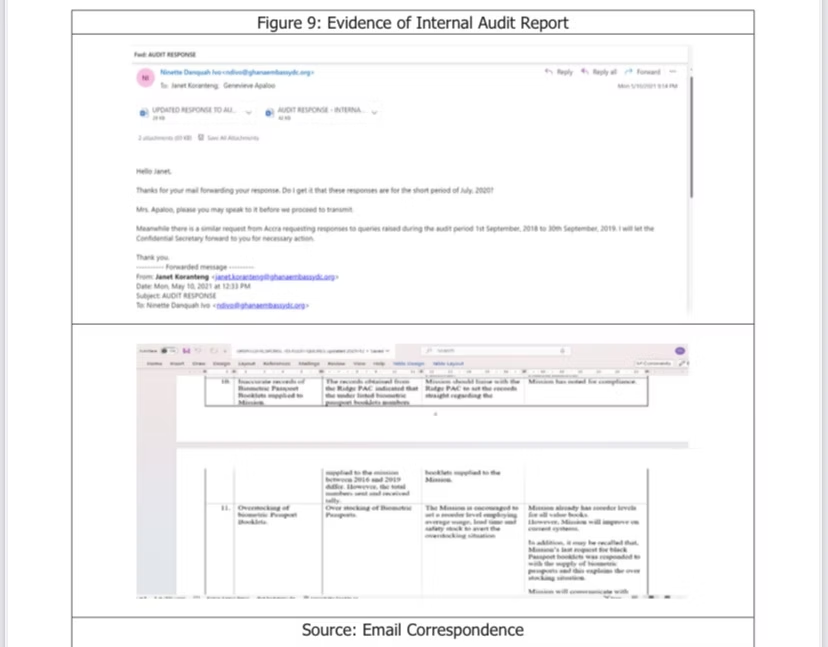
Although the total number of booklets supplied and recorded matched, the differences in serial numbers raised concerns over possible manipulation.
The internal review also found that the Mission was holding excess stocks of biometric passport booklets, increasing the risk of theft or misuse. The review recommended stronger controls, including setting appropriate reorder levels based on usage and ensuring proper reconciliation of passport inventory.
Inside Fred Kwarteng’s Office
However, during the subsequent audit by the Auditor-General, the Embassy could not provide a complete account of passport stock management between 2016 and 2025.
Management was also unable to explain how blank biometric passport booklets came into Mr. Kwarteng’s custody or why earlier recommendations on inventory control had not been implemented.
The possession of blank passport booklets and visa stickers became more significant because Mr Kwarteng also provided visa and passport application support services through a private company whose website he directed traffic to from the official website of Ghana’s Embassy in Washington, D.C.
The circumstances surrounding the materials found in his office, the audit noted, "presuppose" that Mr. Kwarteng may have been engaged in fraudulent issuance of passports and visas outside official Embassy processes.
A source who worked at the embassy at the time, however, told Pledge Against Corruption that the auditors’ conclusion may be wrong.
The source, who wants to remain anonymous, explained that Fred Kwarteng often liaised with printers of Ghana’s passport booklets, so there was a time when some errors occurred during the printing process, resulting in discrepancies in serial numbers.
When it was corrected, some passport booklets whose serial numbers had been duplicated could no longer be used and those may still have been in Mr Kwarteng’s office during the audit.

A forensic examination of 15 empty passport booklets retrieved during the investigation confirmed that they were genuine Ghana passport stock.
The booklets contained standard security features, including Supreme Court watermarks, UV-responsive elements featuring the Parliament House, Coat of Arms and Fawohodie symbol, as well as micro-text reading "Republic of Ghana."
However, seven of the 15 booklets examined had security deficiencies on their biodata pages. The identified defects included the absence of polycarbonate overlay, missing thermochromic print, missing Optical Variable Ink (OVI), irregular Machine-Readable Zone (MRZ) alignment and cancellation markings.
Beyond the passport materials, the auditors also said they uncovered what appeared to be attempts to conceal digital records in Kwarteng’s office.
The desktop computer assigned to him was found without an internal Solid-State Drive (SSD), the component responsible for storing files and system information. Physical inspection showed that the primary storage device had been removed, leaving the computer without its internal storage medium.
Investigators also recovered multiple electronic devices and storage media associated with Mr. Kwarteng’s office, including six used SATA hard drives, Dell Latitude, MacBook Pro and Lenovo ThinkPad laptops, an iPad tablet, Samsung and iPhone mobile devices, and RAM modules.
The removal of the SSD, combined with the presence of multiple storage devices, created concerns that sensitive consular information may have been copied, removed, altered or destroyed before the inspection.
The audit report said, “Examination of the office environment revealed signs of disruption and disorder consistent with a hurried removal of equipment and documents.
Several drawers and shelves were found open and disorganised, with documents, storage media, cables, and electronic components scattered across the workspace. The condition of the office, including dismantled computer components and removed storage hardware, strongly suggests that the computer system had been tampered with prior to the audit inspection.
“Given that the SSD typically contains the operating system, user files, emails, and system logs, its removal effectively eliminates access to potentially critical electronic records.
This raises a reasonable suspicion that the storage device was intentionally removed to prevent auditors from examining digital records that could provide evidence of unauthorised activities, including possible manipulation of passport records, visa processing data, or financial transactions.”
Latest Stories
-
GMTF targets Volta healthcare gaps with equipment, specialist training and patient support
10 minutes -
Telecel Ghana wins 2 awards at the CCIFG Gala and Awards 2026
29 minutes -
Petrol, diesel prices set to fall from Oct. 16 as LPG faces 18.5% hike
49 minutes -
Bank of Ghana engages stakeholders in Techiman
55 minutes -
PIAC unable to verify GH¢21m petroleum-funded projects in Ayawaso West
1 hour -
Ketu North MP led delegation petitions government over deteriorating Weta Irrigation Scheme
1 hour -
Unpaid contractor delays KATH Mother and Baby Unit as materials deteriorate
1 hour -
Kofi Adams says Ghanaians ignored warnings over World Cup visa payments
1 hour -
Banks to apply 20% VAT on cross-border digital payments with Ghana-issued cards
1 hour -
Education Minister appeals to GAUA to call off strike, resume work on October 19
1 hour -
Mahama assures Assemblies of God of support for World Congress
2 hours -
Ghana must prioritise home-grown AI solutions to meet national needs – UNDP
2 hours -
Mahama truly cares – Obuobia Darko-Opoku
2 hours -
Fire at GRIDCo Mallam substation disrupts power in parts of Accra
2 hours -
Your client is Parliament, not a party; remain honest even when unwelcome – Speaker
2 hours