

Audio By Carbonatix
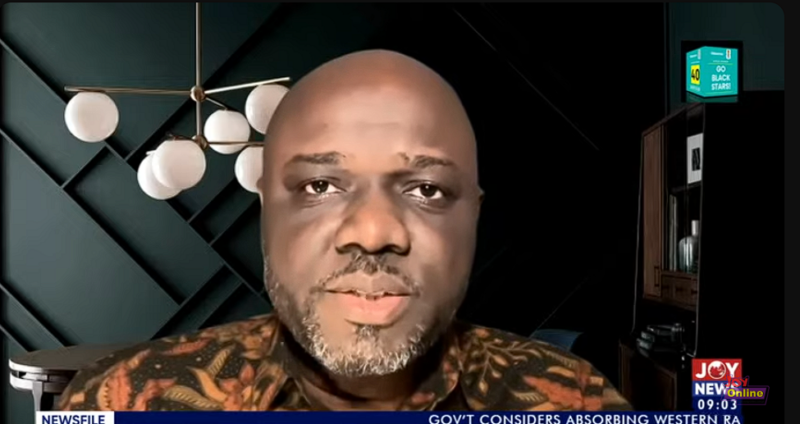
Executive Director of the African Centre for Energy Policy (ACEP), Ben Boakye, has described the fire outbreak at the Ghana Grid Company Limited substation near Akosombo as a preventable incident, blaming what he says is long-standing negligence and weak accountability within Ghana’s power sector.
Speaking on JoyNews’ Newsfile on Saturday, May 2, he said the incident should never have occurred, given the age and importance of the infrastructure, which he noted dates back to the 1960s.
“Thanks to those who worked on GRIDCo to bring Akosombo back on stream. But I have been grieving about that situation since last week. It never should have happened,” he said.
His comments follow a fire outbreak on Thursday, April 23, which gutted part of the Akosombo substation switchyard, disrupting transmission and affecting a key section of the country’s power infrastructure.
Mr Boakye explained that while generation assets such as turbines have seen upgrades, equal attention has not been paid to critical transmission infrastructure such as the switchyard that distributes power to homes.
“You have a switchyard and control systems built in the 60s. We have retrofitted turbines, but we did not pay attention to the switchyard that carries the load to our homes,” he stated.
According to him, proper maintenance, safety upgrades, and modern fire prevention systems were necessary but not adequately implemented. He contrasted the Akosombo facility with newer substations built with advanced safety systems such as thermal cameras, automated shutdown mechanisms, and fire suppression technology.
“If you look at new substations like Pokuase and Kasoa, they have modern safety systems. These are not expensive things,” he said. “Yet we are relying on basic manual response instead of automated protection.”
Mr Boakye further criticised what he described as weak accountability in the energy sector, arguing that institutional failures have long-term financial consequences for the country.
“Accountability is so defective in the energy sector. Basic things don’t get done, and when they don’t get done, they cost all of us billions of dollars,” he said.
Latest Stories
-
Ghana Psychological Association calls for greater involvement of people with lived experience in mental health care
28 minutes -
Ablakwa says Ghana could evacuate more citizens from South Africa if the situation worsens
56 minutes -
Violence against girls must be tackled through individual responsibility – Gender advocate
60 minutes -
Ghana’s BRICS bid must be guided by national interest – International Affairs Analyst
1 hour -
Journalists look back on a decade of breast cancer reporting in Ghana
2 hours -
President Mahama ends Resetting Ghana tour of Ahafo Region
4 hours -
African negotiators seek delivery of climate commitments at COP31
4 hours -
BoG develops AI rules for financial sector
4 hours -
‘Big Push’: Government assures contractors of prompt payments
4 hours -
Court fines miner for breaking into gold buying shop
4 hours -
Tarkwa court jails labourer for three years over GH¢123,000 theft
5 hours -
GAEC must retain nuclear scientists for Ghana’s nuclear ambitions – Minister
5 hours -
Man reportedly mistaken for game and shot by hunter dead in forest
6 hours -
19-year-old mason jailed 15 years for defiling seven-year-old pupil
6 hours -
Ghana’s banking sector assets rise 20.47% to GH¢500.2bn – BoG Governor
6 hours