

Audio By Carbonatix
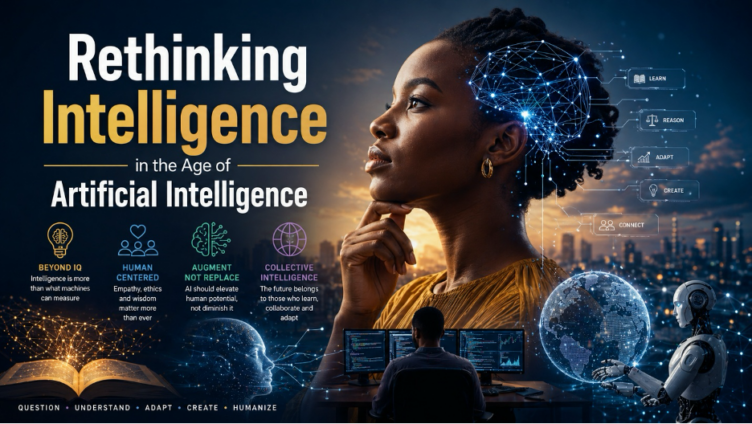
Public discourse has recently been dominated by a troubling claim that today’s young people are becoming cognitively weaker than previous generations. The argument is often supported by declining scores in standardised assessments, reduced attention spans, and concerns about digital technology in schools. While these observations deserve serious consideration, the conclusion that a generation is intellectually diminished is both premature and insufficiently interrogated. What we are witnessing is not necessarily a collapse in cognitive ability, but a profound transformation in how intelligence is expressed, developed, and applied in a rapidly evolving technological environment.
This article challenges the dominant narrative by examining the assumptions underpinning current measures of intelligence, the changing nature of cognition in the digital era, and the misalignment between educational systems and contemporary cognitive demands. Rather than accepting decline as fact, it argues that our frameworks for evaluating intelligence have failed to keep pace with the realities of the 21st century.
The Historical Evolution of Human Cognition
Human cognition has never been static. From the oral traditions of early societies to the invention of writing, from the printing press to the internet, each technological shift has fundamentally altered how knowledge is stored, accessed, and utilised. In oral cultures, memory was paramount. Knowledge had to be retained internally and transmitted through repetition and storytelling. The emergence of writing externalised memory, allowing individuals to store information outside the brain. This shift was initially criticised for weakening memory, yet it ultimately enabled more complex forms of reasoning and the accumulation of knowledge.
The printing press further expanded access to information, reducing reliance on memorisation while increasing the importance of interpretation and analysis. The digital revolution has extended this trajectory by creating an environment in which information is not only abundant but also instantly accessible. Artificial intelligence now adds another layer, enabling machines to assist in reasoning, pattern recognition, and even creative processes.
Each of these transitions was accompanied by concerns about cognitive decline. Yet history suggests that rather than diminishing intelligence, these tools have reconfigured it. The brain adapts to its environment, optimising for the demands placed upon it. When memory storage becomes externalised, cognitive resources are redirected towards higher-order processes such as synthesis, evaluation, and innovation.
The current anxiety surrounding digital tools reflects a similar pattern. The assumption that reduced memorisation equates to reduced intelligence fails to recognise that intelligence is not a fixed construct. It evolves in response to the tools and contexts within which it operates. The critical question is not whether cognition is changing, but whether our systems of evaluation have adapted to reflect these changes.
The Limits of Traditional Intelligence Measures
Standardised assessments such as IQ tests, literacy benchmarks, and numeracy scores have long been used as proxies for intelligence. These measures prioritise specific cognitive abilities, including working memory, processing speed, and pattern recognition under controlled conditions. While these skills are important, they represent only a narrow slice of human intelligence.
In the digital age, these measures reveal significant limitations. They are designed for environments where information is scarce and must be internally processed. However, modern cognition operates in an information-rich ecosystem where the ability to locate, evaluate, and integrate information is often more valuable than the ability to recall it.
This creates a fundamental mismatch. When individuals rely on external tools for information retrieval, traditional assessments interpret this as a deficit rather than an adaptation. For example, a student who uses digital resources to solve complex problems may demonstrate advanced cognitive skills in real-world contexts, yet perform poorly on tests that prohibit such tools.
Moreover, these assessments often fail to capture emerging forms of intelligence, such as digital literacy, systems thinking, and collaborative problem solving. They also overlook the role of context in shaping cognitive performance. Factors such as motivation, engagement, and familiarity with the testing format can significantly influence outcomes, leading to conclusions that may not accurately reflect underlying ability.
The reliance on outdated metrics risks misdiagnosing a transformation as a decline. It also reinforces educational practices that prioritise test performance over meaningful learning. If intelligence is being measured using tools designed for a different era, it is unsurprising that the results appear unfavourable.
Digital Technology and Cognitive Transformation
The integration of digital technology into education has been widely debated, with some studies suggesting negative correlations between screen use and academic performance. However, correlation does not establish causation, and the interpretation of these findings requires careful scrutiny.
Digital environments fundamentally alter how individuals interact with information. They encourage rapid scanning, multitasking, and nonlinear navigation. While these behaviours are often criticised as shallow, they also reflect the demands of a complex information landscape. The ability to quickly identify relevant information, switch between tasks, and synthesise diverse sources can be highly adaptive skills.
At the same time, there are legitimate concerns about reduced deep reading and sustained attention. Digital platforms are designed to capture and maintain user engagement, often at the expense of focus. This can lead to fragmented attention and superficial processing if not properly managed.
The key issue is not the presence of technology, but how it is used. When digital tools are employed merely as substitutes for traditional methods, they may offer little benefit and potentially introduce distractions. However, when used to support active learning, critical inquiry, and collaboration, they can enhance cognitive development.
The challenge lies in equipping learners with the skills to navigate digital environments effectively. This includes the ability to manage attention, evaluate sources, and engage in deep, reflective thinking when required. Without these skills, technology can hinder learning. With them, it can significantly expand cognitive capacity.
Redefining Critical Thinking in the Modern Era
Critical thinking has traditionally been defined as the ability to analyse arguments, evaluate evidence, and draw logical conclusions. While these skills remain essential, the context in which they are applied has changed dramatically.
In the age of artificial intelligence and digital information, critical thinking extends beyond internal reasoning processes. It involves the ability to formulate effective queries, assess the reliability of diverse sources, and integrate information from multiple domains. It also requires an understanding of how algorithms and digital systems influence the information we encounter.
This expanded definition reflects a shift from isolated cognition to distributed cognition. Individuals no longer think in isolation but in interaction with tools and networks. The capacity to leverage these resources effectively becomes a central component of intelligence.
Educational systems have been slow to adapt to this shift. Many curricula continue to emphasise memorisation and procedural tasks, while assessments focus on individual performance under constrained conditions. This approach does not align with the cognitive demands of contemporary society, where problem-solving often involves collaboration and the use of external resources.
Redefining critical thinking requires a broader perspective that recognises the role of technology in shaping cognition. It also demands a shift in educational priorities, from knowledge transmission to skill development. Learners must be taught not only what to think, but how to think in a dynamic and interconnected world.
The Role of Education in a Changing Cognitive Landscape
Education has historically been a primary driver of cognitive development, providing structured environments for learning and intellectual growth. However, the effectiveness of education depends on its alignment with the broader context in which it operates.
In many cases, educational systems have remained largely unchanged despite significant technological advancements. Classrooms continue to follow models developed for industrial era societies, emphasising standardisation, uniformity, and content delivery. This approach is increasingly at odds with the needs of learners in a digital age.
The persistence of traditional methods can create a disconnect between what is taught and what is required. Students may excel in examinations yet struggle to apply their knowledge in real-world contexts. Conversely, those who are adept at navigating digital environments may be undervalued if their skills are not recognised by conventional assessments.
Addressing this misalignment requires a fundamental rethinking of educational practices. This includes integrating technology in ways that support active learning, fostering critical thinking and creativity, and developing assessment methods that capture a broader range of cognitive abilities.
It also involves recognising that learning is no longer confined to the classroom. Digital platforms provide opportunities for self-directed learning, collaboration, and access to global knowledge networks. Education systems must adapt to this reality by embracing flexibility and innovation.
Moving Beyond the Narrative of Decline
The narrative that digital technology is making young people cognitively weaker is appealing in its simplicity, but it fails to account for the issue's complexity. It overlooks the adaptive nature of human cognition and the transformative impact of technological change.
Rather than framing the situation as a decline, it is more accurate to view it as a transition. Cognitive processes are evolving in response to new tools and environments. This evolution brings both opportunities and challenges, requiring careful management and thoughtful adaptation.
Blaming technology alone obscures the role of educational systems, assessment frameworks, and broader societal factors. It also risks diverting attention from the need to develop new approaches that better align with contemporary realities.
A more constructive perspective recognises that intelligence is not diminishing but changing. The task is not to resist this change, but to understand it and guide it in ways that enhance human potential.
Conclusion: Towards a New Understanding of Intelligence
The question of whether today’s generation is less cognitively capable than previous ones cannot be answered without first examining how we define and measure intelligence. Current evidence suggests that while certain traditional metrics may show decline, these do not capture the full spectrum of cognitive abilities relevant in the modern world.
Digital technology has undoubtedly altered how we think, learn, and interact with information. It has introduced new challenges, particularly in relation to attention and depth of processing. However, it has also created unprecedented opportunities for learning, creativity, and problem-solving.
The real issue lies not in the tools themselves, but in our ability to adapt our systems of education and evaluation. By clinging to outdated measures and methods, we risk misinterpreting change as decline and failing to prepare future generations for the complexities of the world they inhabit.
A more nuanced and forward-looking approach is needed, one that recognises the evolving nature of intelligence and embraces the potential of technology as a partner in cognitive development. Only then can we move beyond simplistic narratives and build a more accurate and empowering understanding of human capability in the age of artificial intelligence.
*******
Dr David King Boison is a Maritime and Port Expert, pioneering AI strategist, educator, and creator of the Visionary Prompt Framework (VPF), OBIBINI Multi Intelligence and ADINKRA OMEGA Africa Intelligence, NYAME MIND Intelligence, driving Africa’s transformation in the Fourth and Fifth Industrial Revolutions. Author of Digital Assets Economy, The Ghana Intelligence Economy Playbook, The Nigeria AI Intelligence Playbook, and advanced guides on AI in finance and procurement, he champions practical, accessible AI adoption. As head of the AiAfrica Training Project, he has trained over 2.4 million people across 15 countries toward his target of 11 million by 2028. He urges leaders to embrace prompt engineering and intelligence orchestration as the next frontier of competitiveness.
kingdavboison@gmail.com | aiafriqca.com | +233 207696296 / 559853572 | aiafricastimulus@gmail.com
Latest Stories
-
World Vision targets 90 percent universal WASH access in Asunafo North, Asutifi North
4 seconds -
I told EOCO to arrest Manhyia South MP – Mustapha Gbande
20 minutes -
2028 election will be a combination of strategy and ‘buga’ – Miracles Aboagye
21 minutes -
Bombs preventing rescue of kidnapped youths, Nigerian police say
30 minutes -
Flydubai co-pilot planned to crash plane into Tel Aviv airport or building, reports say
31 minutes -
National security must be built beyond Accra – Muntaka
31 minutes -
Ghana bans preaching on buses with jail terms for offenders
31 minutes -
Twelve arrested for allegedly running cat trafficking ring in Vietnam
45 minutes -
Kojo Bamba could be a chairman in the NDC any day without competition – Miracles Aboagye
47 minutes -
Photos: Vice President Jane Naana Opoku-Agyemang at the Ghana Teacher Prize 2026
52 minutes -
GoldBod Jewellery opens new showroom in Takoradi to promote gold value addition
1 hour -
National Cathedral site handed back to government pending AG’s review – Mahama Ayariga
1 hour -
Gov’t outlines measures to expand access to affordable housing as Ghana marks World Habitat Day
1 hour -
Ghana AI Summit 2027 set for Accra in March
1 hour -
GoldBod to sell spot dollars to banks twice a week under new FX framework
1 hour