

Audio By Carbonatix
According to the Further Africa report and SAP research, AI is projected to contribute up to $2.9 trillion to Africa's economy, with 230 million new digital jobs forecast for the continent over the same period. For Ghana's business leaders, where do you sit when the rules, talent pipelines, and capital flows of that economy are being decided?
Many AI gatherings answer a short question: which AI vendor to use, which AI use case to listen to, which AI pilot to take on? Useful, but tactical and short-term focused.
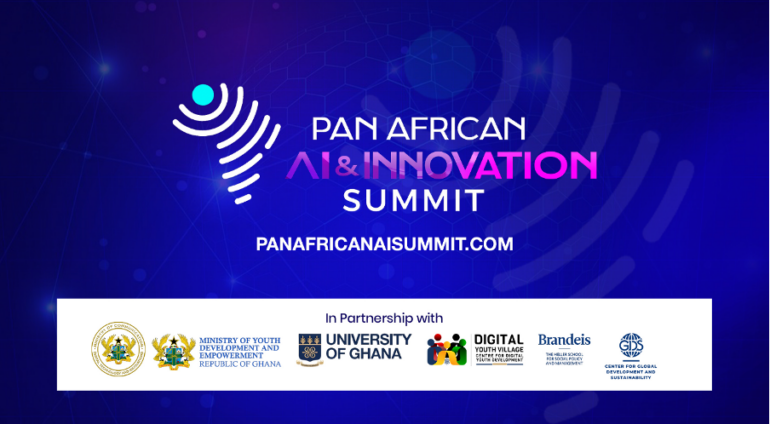
The Pan African AI & Innovation Summit (PAAIS) puts a sharper focus on long-term strategic questions. What ecosystem do Ghanaian and African companies need around them to compete in the next decade? That shift from summit to infrastructure and capacity building is what makes the difference.
Three things set PAAIS apart, and each one maps directly to a measurable risk on your balance sheet.
1. It is where policy gets shaped, without just consuming. The Pan African AI Summit is convened in partnership with the Ministry of Communication, Digital Technology and Innovation, the University of Ghana Digital Youth Village, and Brandeis University's Centre for Global Development & Sustainability. It sets the operational engine of Ghana's National AI Strategy, sitting alongside the country's planned $250 million national AI compute centre and the proposed establishment of the Responsible AI Office. More than 40 African countries have now passed national data protection policies. Acet For Africa research highlights that the rules being written in this window will define AI market access, liability and procurement eligibility for the next decade. Leaders who arrive after those standards are set will be writing cheques to comply with them.
2. PAAIS is where your talent pipeline gets built.
SAP reports that nine out of ten African businesses are concerned about the shortage of AI expertise. In Ghana, youth unemployment sits at 32.4%, with more than 1.3 million young people classified as Not in Employment, Education or Training, against a national median age of 21.3 years. By 2030, nearly 45% of jobs in the informal sector are projected to require some level of digital literacy, according to a Ghana New Agency report. The bottleneck in Ghanaian AI adoption seems to lie far from models. It’s the lack of people capable of deploying them. The Pan African AI Summit's youth and skills pillar, in stark alignment with the One Million Coders initiative, is the most direct line to the engineers, data scientists, and AI product managers your firm will hire over the next five years.
3. The summit is free to participate, and that is not a footnote; it is a deliberate feature and a strategic decision to support national capacity building.
Free access means your operations teams, junior engineers and middle managers can attend alongside the C-suite. Capacity is built by saturating an entire organisation with shared exposure, not by sending one executive to a paid conference. Research from SAP shows that over 650 million African citizens are projected to require digital skills training or retraining in the coming years.
4. It is continental in scope, in contrast to vendor-led in the agenda.
PAAIS draws ministers, regulators, business leaders, global firms like Google, Microsoft, IBM and MTN, academics, civil society, venture capital and African AI entrepreneurs into the same room under a public-interest charter instead of a single firm's product roadmap. For business leaders, that breadth is the difference between sourcing a tool and shaping a market.
Polished demos and curated panels have their place. But they do not build a $2.9 trillion economy. Policy, talent and trust do. The appeal for Ghana's boardrooms is to be in the room and round the table at PAAIS at the Kempinski Hotel on 22nd - 23rd September.
Because when Africa's AI ecosystem hardens into capacity building and the rules, the talent and the capital settle into place, where do you want your company positioned? At the table, or in the audience watching the news?
Visit panafricanaisummit.com to find who else will be at the table for a collaborative national AI capacity building, partnerships and policy
Latest Stories
-
GoldBod Jewellery opens new showroom in Takoradi to promote gold value addition
11 minutes -
National Cathedral site handed back to government pending AG’s review – Mahama Ayariga
12 minutes -
Gov’t outlines measures to expand access to affordable housing as Ghana marks World Habitat Day
13 minutes -
Ghana AI Summit 2027 set for Accra in March
17 minutes -
GoldBod to sell spot dollars to banks twice a week under new FX framework
19 minutes -
‘No vacancy’ notice was administrative, not policy to halt national service – Parliament
20 minutes -
Hopeson Adorye elected to World Taxpayers Association board
22 minutes -
Deputy Education Minister appeals to striking teachers to return to classrooms
32 minutes -
Mahama satisfied with Aayalolo contra-flow results – Ayariga
34 minutes -
Ghana’s Rabiu Alhassan joins board of International Fact-Checking Network, IFCN
47 minutes -
Argentina hit 7 as Burkina Faso land five hours before kick-off
50 minutes -
NPP’s choice of Kojo Bamba, is a rejection of ‘suit and big English’ – Mustapha Gbande
54 minutes -
Innovators urged to build low-cost, locally maintainable health solutions
57 minutes -
Frank Appiah Kusi, PhD: Governance Gaps, Transparency, and the Business of Football in Ghana
57 minutes -
Manhyia South MP charged with conspiracy, financial loss and money laundering
1 hour