

Audio By Carbonatix
Workers across Ghana say their daily grind still feels like a struggle for survival, despite the recognition that comes with May Day celebrations.
“Every day is about survival,” one worker said during interactions with journalists on May 1, capturing the mood of many labourers marking this year’s International Workers’ Day.
While May Day offers symbolic recognition, it does little to change the economic realities they face.
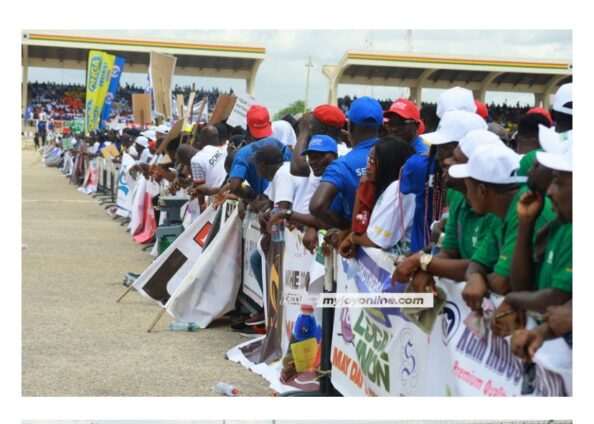
Observed annually on May 1, May Day is meant to celebrate the contributions of workers to national development. In Ghana, the day is typically marked by parades, solidarity marches, and speeches by labour unions and government officials.
However, this year’s commemoration has also amplified calls for action, particularly from workers in the informal sector who say they remain largely unprotected.
Food vendors, petty traders, and small-scale business operators say rising costs and inconsistent income continue to threaten their livelihoods. Many described a cycle of hard work with little financial stability.
“The money we make is not enough to match the cost of living,” another worker noted, while others pointed to the absence of job security and social protection systems.
Across various parts of the country, workers and labour groups participated in peaceful marches and gatherings, emphasising unity while also pressing for reforms. Despite the calm atmosphere, the underlying message was clear — recognition must go beyond celebration.
Many workers are calling for more inclusive policies that address the needs of informal sector players, who make up a significant portion of Ghana’s workforce but often lack access to benefits such as pensions and healthcare.
Their concerns come at a time when Ghana continues to grapple with economic pressures, including inflation and cost-of-living challenges, which have impacted household incomes and business sustainability.
While acknowledging the importance of May Day, several workers stressed the need for sustained dialogue between government, employers, and labour unions to ensure meaningful change.
As the celebrations wind down, expectations remain high that authorities will move beyond ceremonial gestures and implement practical measures to improve wages, job security, and overall working conditions.
For many, the hope is simple — that their efforts will not only be recognised, but rewarded with tangible improvements in their daily lives.
Latest Stories
-
Conflicts among care providers linked to maternal, neonatal deaths – Expert
35 minutes -
GIS marks 10th TIME conference, champions improved teaching practices
42 minutes -
BRICS Or Balance? What Ghana’s bid really means
1 hour -
GPRTU wants full TRAFFITECH-GH implementation to start in 2027
1 hour -
Mahama announces plans to import electric wheelchairs for PWDs
2 hours -
KGL U17 Colts 2026: Western beat Prempeh Elite Academy to set up final final with Greater Accra Region
2 hours -
Late Solanke strike salvages 10-man Spurs draw at Man United
2 hours -
Gender Ministry to monitor welfare of Nana Akua Addo’s children amid domestic violence case
2 hours -
Benedict Okyere Yeboah: Ghana’s football problem goes beyond sacking a coach
2 hours -
GPL 2026/27: Darkwah Wiafe’s winner sees All Blacks beat Kotoko
2 hours -
ITF World Tour : Patel Wins Boys’ Singles Final at J100 Accra
3 hours -
Ghana must pursue BRICS partnership if it brings economic benefits – Kpebu
3 hours -
Success and Wright Claims J100 Accra Girls’ Doubles Championship
3 hours -
ITF J100: America’s Wright wins J100 Accra Girls’ Singles Title
3 hours -
Expedition hopes to find aviator Amelia Earhart’s plane on remote island
3 hours