

Audio By Carbonatix
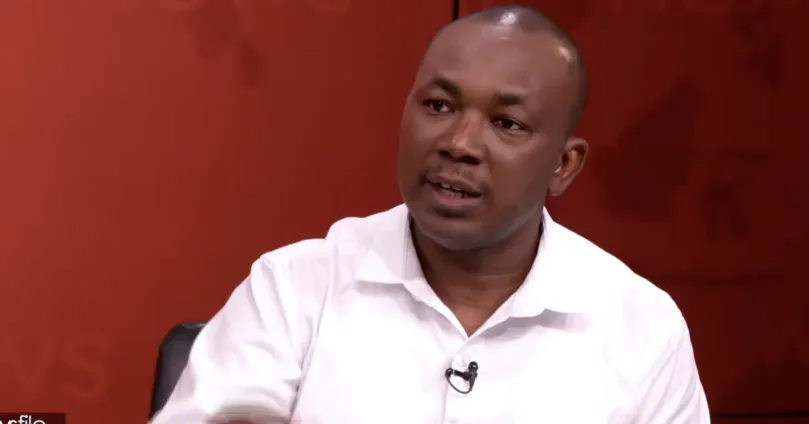
A finance professor and economist at the University of Ghana, Prof. Godfred A. Bokpin, says ongoing inefficiencies are making life harder for ordinary citizens in Ghana.
Speaking on Newsfile on Saturday, May 2, Prof. Bokpin lamented what he describes as a longstanding failure of leadership and planning, warning that the average Ghanaian remains trapped in a cycle of reactive policymaking and rising costs.
He argued that consumers continue to face uncertainty due to weak long-term planning and poor leadership in addressing structural challenges, noting that “we are not proactive and it’s a lack of leadership.”
Prof. Bokpin also raised concerns about governance and accountability during periods of crisis, suggesting that such situations can sometimes create opportunities for financial exploitation.
“And when the crisis manifests like this, remember that in crisis moments, some politicians monetise and make money through procurement and all of that,” he stated.
He further called for clarity and accountability from political leadership on when Ghana can expect lasting solutions to its energy challenges.
“I’m hoping the minister will be quite clear on when we are exiting this completely… so that in the next three, four, five months on Newsfile, this shouldn’t be an agenda item,” he said.
According to him, failure to deliver sustained improvements should attract consequences for leadership.
“If it doesn’t happen, then the minister himself should resign. It’s not just VRA; the boss who should resign and all of that,” he added.
The economist also criticised what he described as a culture of avoiding responsibility among political actors, noting that governments often shift blame for inherited problems.
“These two main political parties have had a chance to govern this country in the last 33 years. And each one of them will tell you they inherited a worse situation. They inherited a worse situation from whom?” he asked.
Prof. Bokpin further argued that ordinary citizens continue to bear the financial burden of inefficiencies through utility tariffs regulated by the Public Utilities Regulatory Commission (PURC).
“The average taxpayer and consumer are burdened through PURC tariffs. We keep paying for inefficiencies,” he said.
He lamented that Ghanaian households are under constant pressure due to challenges across multiple sectors, including water supply, roads, education, healthcare, and environmental management.
“The average Ghanaian has no breathing space. It’s either water that is not flowing, your road network is very bad, electricity is not working, the school system is very bad, or our environment is polluted,” he said.
Questioning national progress, he asked what meaningful improvements had been achieved across critical sectors since independence.
“What are we looking up to? What is the leadership? What have we done? What legacy have we left for Ghana?” he asked.
Prof. Bokpin further stressed the need for comprehensive reforms that improve all aspects of public life, including education, health, the environment, and food systems, so that citizens can have confidence in national development.
“The two main political parties have failed us. We should apologise to Ghanaians,” he stated.
Reflecting on the nation’s progress nearly seven decades after independence, he described the situation as deeply troubling, citing poor road networks, weak water systems, struggling hospitals, and declining education standards.
He ended with a call for better governance and improved living standards, insisting that “the average Ghanaian deserves more than this.”
Latest Stories
-
IMMILAC president recounts personal losses as security women lead breast cancer awareness campaign in Wa
2 minutes -
University of Ghana postpones October 12 reopening as GAUA strike persists
16 minutes -
Bahass Foundation launches vocational skills training to support mental health recovery in Wa
48 minutes -
NPP orders parliamentary aspirants and their supporters to suspend campaign activities
1 hour -
Techiman unites against child marriage: Joy Impact Makers Awardee leads charge on International Day of the Girl Child
2 hours -
Ghana Psychological Association calls for greater involvement of people with lived experience in mental health care
3 hours -
Ablakwa says Ghana could evacuate more citizens from South Africa if the situation worsens
3 hours -
Violence against girls must be tackled through individual responsibility – Gender advocate
3 hours -
Ghana’s BRICS bid must be guided by national interest – International Affairs Analyst
3 hours -
Journalists look back on a decade of breast cancer reporting in Ghana
4 hours -
President Mahama ends Resetting Ghana tour of Ahafo Region
6 hours -
African negotiators seek delivery of climate commitments at COP31
6 hours -
BoG develops AI rules for financial sector
6 hours -
‘Big Push’: Government assures contractors of prompt payments
6 hours -
Court fines miner for breaking into gold buying shop
6 hours