

Audio By Carbonatix
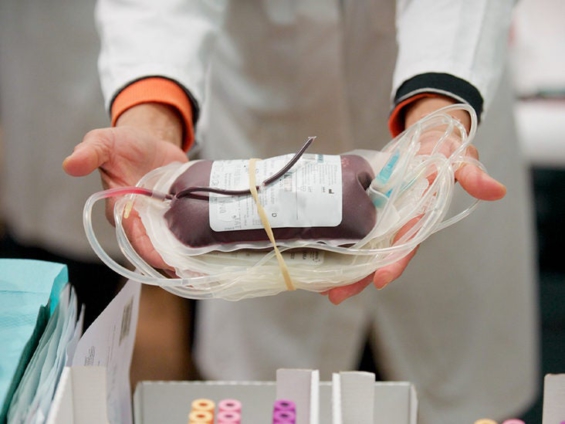
Health Experts say refusal of blood transfusion is not synonymous to rejection of medical care. They therefore caution against rejection and stigmatisation of people who refuse blood transfusion.
They said the decision not to accept blood transfusion was not ethically and medically wrong and per Ghana's legal regime and other international conventions, the patient had the right over their health needs.
Mr Sakitey Sackey, Staff Researcher at the Hospital Information Department of Jehovah's Witnesses, Ghana, said there had been alternative medications that had been proven and tested in Ghana and across the globe.
He was speaking during a media sensitisation on the topic: "The Medical and Ethical Challenges -Those Refusing Allogeneic Blood Transfusion," using the Jehovah's Witnesses as a Case Study Group.
The engagement sought to bring to light the importance of alternative medication.
Mr Sackey said: "If anyone or doctors say it is only the blood that patients need to survive, that is not so but there are alternatives."
He said the application of alternative medications would help reduce the amount of blood required at health facilities and limit the adverse effect of blood transfusion.
"It reduces health care costs, the cost of the health system and mortality," he said.
The Jehovah's Witnesses are said to be stigmatised for not accepting allogeneic blood transfusion (someone's blood to another person) and autologous blood transfusion (reinfusion of blood or blood components to the same individual from whom they were taken).
However, there are minor fractions of the blood component that are acceptable by them.
Mr Samson Kraikue, a Clinical Pharmacist and Programme Coordinator for Hospital Information Department, Jehovah's Witnesses, Ghana, said blood transfusion was not sacrosanct to the survival of patients.
He said alternative medications had proven to be simple, easy, efficacious, and cost-effective in cases of trauma and emergency, especially based on the type of alternative used and time it had been used.
"There have been instances where people die from blood transfusion and the cost of managing blood transfusion reactions is huge. You have no idea," he said.
He said it was possible to manage road accident victims, who have lost blood without allogeneic blood transfusion and that the country needed to develop protocols to care for patients in the absence of blood transfusion.
Dr Emmanuel Akorli, Managing Director at the Tamale Teaching Hospital, said: "We have experienced patients who come in with very low haemoglobin and the patients are managed with these alternatives and they survive. So, it is true, it is possible, it works."
"It is unfortunate some of our doctors just do not want to try the alternative, but there are others who have embraced it," he said.
Latest Stories
-
Gov’t working to address salary arrears of 2024 teachers – Education Minister assures
15 minutes -
‘Democracy Is Not for Sale’ forum ends with strong calls to tackle vote buying, reform political financing
21 minutes -
Parliament rejects Minority motion to investigate GoldBod losses
26 minutes -
‘We don’t have a lot of options’ – Otto Addo on playing Yirenkyi at right-back
34 minutes -
Tiger Woods involved in Florida rollover crash
39 minutes -
Report: Austria batter Black Stars in Vienna
2 hours -
Man jailed for four years after Barron Trump reported attack to UK police
2 hours -
Palestinian man killed as death toll from West Bank settler violence climbs
3 hours -
Political activism undermining supremacy of law – Supt Odartey
3 hours -
Celebrating Ability: C.H.I.L Awards honour outstanding PWDs in Ghana
3 hours -
Three dead after helicopter crash in Hawaii
3 hours -
People don’t report vote buying to Police – Prof Alhassan raises concern over enforcement gaps
3 hours -
We’ve inadequately educated on democracy – Supt. Odartey
3 hours -
US expects to end Iran operation in ‘weeks not months’, Rubio says after G7 meeting
3 hours -
Photos: ‘Democracy Is Not For Sale’ forum in Tamale
3 hours