

Audio By Carbonatix
The Governor of the Bank of Ghana (BoG), Dr. Johnson Asiama, is urging stakeholders in the financial sector to champion the adoption of Non-Interest Banking and Finance (NBF) to promote credible, ethical, and serve as an alternative to conventional banking.
The Bank of Ghana has already initiated feasibility studies to assess the viability of implementing NBF in the country. This include regulatory framework development and extensive stakeholder consultations. The studies will inform the structure, guidelines, and partnerships needed to operationalise the system while maintaining financial sector stability.
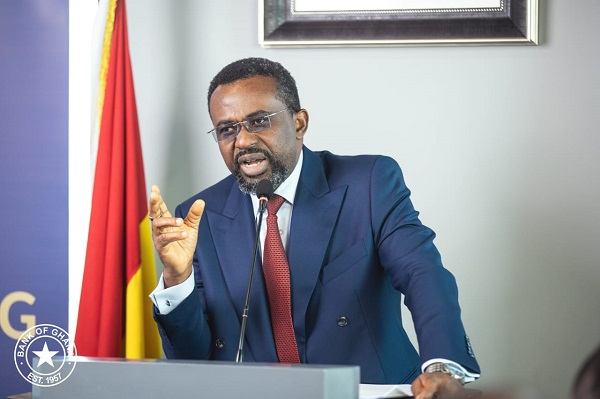
Speaking at a stakeholder engagement with members of the clergy, Dr. Asiama described NBF as a transformative instrument for economic justice and inclusive prosperity, noting that it prohibits speculative and unethical investments, as it focuses on real asset-backed transactions.
“Non-Interest Banking offers an ethical and inclusive financial model that aligns with real economic activity and asset-backed transactions,” said Dr. Asiama. “It provides a platform to mobilize long-term capital in a way that is transparent, equitable, and socially responsible. Precisely what we need to address Ghana’s vast infrastructure needs.”
Dr. Asiama stressed that the model prohibits interest-based lending, speculation, and investment in unethical sectors. “Instead, it fosters profit-sharing, risk-sharing, leasing, and partnership-based financial instruments that are aligned with Sharia principles.
With Ghana facing a multi-billion-dollar shortfall each year to fund critical infrastructure including roads, energy, healthcare, and education Dr. Asiama believes the time is ripe to explore new financing avenues that will not only attract global ethical capital, but also deepen financial inclusion at the household level.
“We need innovative and inclusive mechanisms to close the infrastructure gap without placing unsustainable debt burdens on future generations,” he added. “Non-Interest Banking can help us tap into a global pool of ethical investors looking for opportunities in frontier markets like Ghana.”
Dr. Asiama noted that NBF has already gained tremendous attention across parts of Africa including Nigeria, Kenya, and South Africa, and can co-exist with conventional banking to offer consumers and investors greater choice.
“Our goal is not to replace the current system but to complement the opening of door to ethical finance, economic justice, and shared prosperity,” he stated.
As the feasibility process continues, the central bank plans to engage further with banks, faith-based organizations, academia, and international partners to ensure a robust and locally adapted implementation strategy.
If successfully rolled out, Ghana would join a growing number of countries leveraging Islamic finance to mobilize ethical investment, boost financial resilience, and accelerate sustainable development.
Latest Stories
-
Anti-LGBTQ Bill: Forget the rumour mongers, I’m a man of action, and will pass the bill – Speaker
20 minutes -
Women and children among those killed in Sudanese army shelling of wedding celebration
23 minutes -
President Mahama is not sincere with Ghanaians on LGBTQ bill matter – Hassan Tampuli
41 minutes -
Gov’t to establish Prison Industrial Hub to equip inmates with income-generating skills – Prison Service boss
1 hour -
Alhassan Tampuli donates cement, roofing sheets to support storm victims in Gushegu
1 hour -
Alhassan Tampuli appeals for urgent support for storm victims in Gushegu
1 hour -
The hypocrisy must stop; pass Anti-LGBTQ+ Bill now – Alhassan Tampuli to Mahama
1 hour -
Imprisonment should be rehabilitative, not punitive – Ghana Prisons boss at UNGA
1 hour -
Ga Adangbe traditional priests petition Mahama over McDan aviation licence revocation
2 hours -
Anti-LGBTQ Bill: NDC’s arrogance is worrying – Hassan Tampuli
2 hours -
Let’s give OSP time to mature, not to scrap it – Hassan Tampuli
2 hours -
Nigeria convicts 386 Islamist militants in mass trials
2 hours -
Djibouti president wins election with 97.8% of vote, state media says
2 hours -
We don’t have mandate to deduct tax from rent allowance of security services personnel – Interior Ministry clarifies
2 hours -
Ablakwa receives Presidential Special Envoy on Reparations to advance global agenda
3 hours