

Audio By Carbonatix
The Ministry of Health has reiterated its commitment to combating sickle cell disease (SCD) in Ghana, describing it as a significant public health challenge that requires sustained national action and community involvement.
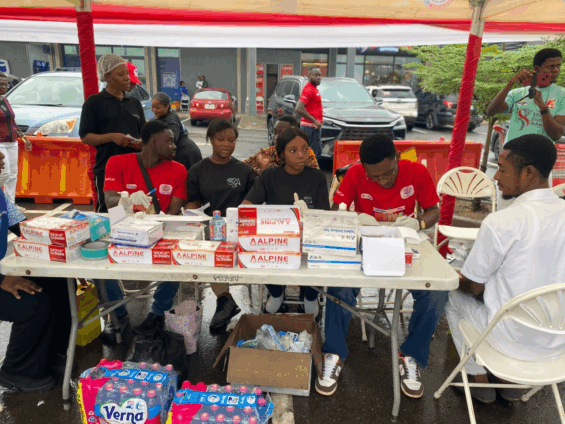
Delivering a statement on behalf of the Ministry, the Sector Minister and his director, Dr Hafez Adam Taher, Head Public Health & Health Promotion Unit of the Ministry, Prince Amoah addressed participants at a Sickle Cell Fun Fair organised by the Focus on Sickle Cell Foundation (FoSCel) at the Achimota Mall in Accra on Saturday, February 14.

The representative expressed appreciation to FoSCel for what he described as an impactful initiative, commending the foundation for partnering with the Ministry to bring sickle cell awareness and free testing directly to members of the public.

“This initiative demonstrates the power of collaboration in addressing one of Ghana’s most pressing inherited health conditions,” he noted.

Sickle Cell: A Major Public Health Concern
The Ministry outlined the scale of the challenge facing the country. According to current data:
- Approximately 2 per cent of babies born in Ghana each year have sickle cell disease.
- This translates to roughly 15,000 newborns annually.
- Between 20 and 30 per cent of Ghanaians carry the sickle cell trait (AS).
- Without early diagnosis and appropriate care, many affected children face severe complications and, in some cases, early mortality.

“These figures remind us that sickle cell disease is not rare,” the statement emphasised. “It is a major public health challenge in our country.”
Health officials warned that late diagnosis remains a persistent problem, as many young people only discover their genotype during marriage preparations or pregnancy—often when difficult personal and medical decisions have already arisen.

Importance of Early Genotype Testing
The Ministry stressed that early genotype testing is critical to prevention and effective management.
Knowing one’s genotype at an early stage, the statement explained, enables individuals to make informed reproductive choices, including partner selection.

It also facilitates early enrolment into care for affected children, reduces complications and hospital admissions, and helps to dismantle stigma and myths surrounding the condition.
The Fun Fair at Achimota Mall was therefore described as an important platform, offering the public an opportunity to test, learn and ask questions in a supportive and non-judgemental environment.

National Strategy 2024–2028
In November 2024, the Ministry launched the National Strategy for Sickle Cell Disease (2024–2028), a comprehensive framework aimed at addressing systemic gaps in prevention, diagnosis and treatment.

Key priorities under the strategy include:
- Nationwide expansion of newborn screening.
- Integration of sickle cell testing into child welfare clinics and antenatal services.
- Expansion of specialised SCD clinics across all regions.
- Improved availability of essential medicines, including hydroxyurea.
- Establishment of a National Sickle Cell Registry.
- Strengthened public education and advocacy campaigns.

The Ministry estimates that implementation of the five-year strategy will cost approximately GH¢175 million, highlighting the scale of investment required to tackle the burden effectively.
Partnership and Collective Action
Officials emphasised that defeating sickle cell disease cannot be achieved by the health sector alone. The collaboration between the Ministry and FoSCel was described as a reflection of shared commitment to stronger advocacy, community-based awareness, psychosocial support for families, and the promotion of early genotype testing.

Communities, families, faith-based organisations, the private sector and young people were all urged to play an active role in raising awareness and encouraging testing.

Message to the Public
The Ministry delivered a message to attendees:
- Those who do not know their genotype should get tested.
- Those who do know it should educate others.
- Individuals living with sickle cell disease should recognise that they are not alone.

Reaffirming its commitment, the Ministry pledged continued support to FoSCel and other partners in advancing awareness, prevention strategies and quality care for all persons living with sickle cell disease.

“Together, through awareness, prevention and early care, we can significantly reduce the burden of sickle cell disease in Ghana,” he concluded.
Latest Stories
-
US seeks changes to rejected $109m health compact with Ghana – Mahama
3 minutes -
Nine dead in mass shooting at Pennsylvania home
20 minutes -
‘Time for Ukraine to get new president,’ says Trump after Zelensky condemns diesel deal
23 minutes -
Hincapie injury adds to Arsenal issues after Guimaraes rescue act
32 minutes -
Henderson scores twice as Chelsea thumb Bournemouth
41 minutes -
Photos: Mentapulse Africa convenes health and labour summit to address talent retention
53 minutes -
Mahama inspects Nkokɔ Nketenkete plant, eyes Bechem as chicken capital
60 minutes -
Ghana not seeking full BRICS membership, applying as Partner Country – Ablakwa
1 hour -
Woman injures three people in third Poland school knife attack in a week
1 hour -
Ghana should join BRICS as partner, not member – NPP Bono East Regional Secretary
1 hour -
Ghana High Commission warns nationals in South Africa over protests in Johannesburg, Durban
1 hour -
Mahama praises Roads Minister for keeping Big Push contractors on their toes
1 hour -
World Cup Visa Scandal: ‘My client has not collected money for visas’ – Ampofo Ankrah’s lawyer
1 hour -
US immigration officials defend ICE agents who shot man in same car as child
2 hours -
Commentator Katie Zacharia picked as new White House press secretary
2 hours