

Audio By Carbonatix
The Governor of the Bank of Ghana (BoG), Dr. Johnson Asiama, has urged commercial banks to reassess their lending strategies in the wake of the central bank’s latest monetary policy decision aimed at revitalising the economy.
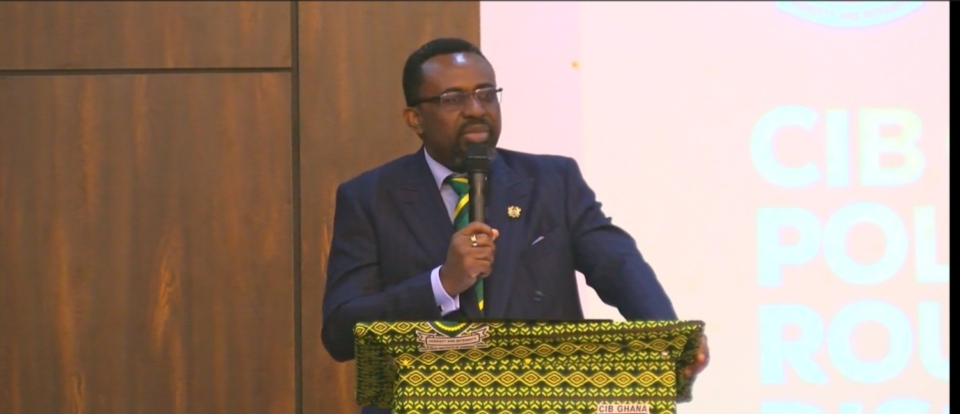
Speaking at the Chartered Institute of Bankers Ghana’s post Monetary Policy Committee (MPC) roundtable discussion, Dr. Asiama said the recent 300 basis point cut in the policy rate presents a strategic opportunity for banks to deepen credit support to the private sector.
“This policy adjustment is a deliberate step to ease credit conditions and unlock new avenues for private sector-led growth,” Dr. Asiama noted. “Banks must respond accordingly by revising their business models to direct more capital into productive sectors.”
Dr. Asiama also called on financial institutions to align their operations with the Bank of Ghana’s broader objectives of building a resilient and inclusive financial ecosystem.
“We must ensure our financial system supports all segments of society,” he stressed. “By adopting a more inclusive lending approach, banks can play a pivotal role in fostering sustainable development and economic stability.”
Speaking to Joy Business, Chief Executive Officer of the Chartered Institute of Bankers, Ghana Robert Dzato, reiterated the importance of providing robust support to banks to enable them to fully play their role in national development.
“Banks must be empowered and supported to respond to the changing dynamics of our economy,” Dzato emphasized. “With the policy rate reduction, we must work collectively to ensure that the benefits are passed on to businesses and individuals through accessible, affordable credit.”
The policy rate cut is expected to translate into lower lending costs, making loans more affordable for businesses and consumers. The central bank hopes this will spur investments, improve liquidity in the market, and ultimately accelerate economic growth.
The Governor’s comments come at a time when many private enterprises, particularly in agriculture, manufacturing, and small-scale industries, have cited limited access to affordable credit as a major barrier to expansion.
Industry watchers say the policy rate cut, combined with proactive lending reforms from banks, could mark a turning point for Ghana’s credit landscape—potentially leading to stronger private sector participation in the economy.
Latest Stories
-
A source of excellence across generations – Vice President Opoku-Agyemang lauds Mfantsipim
22 minutes -
(Photos) Mfantsipim School launches historic 150th anniversary
45 minutes -
Knights and Ladies of Marshall group backs Catholic Bishops’ stance on anti-LGBTQ+
2 hours -
Bright Simons writes: All the Filla in the Ibrahim Mahama/E&P – Gold Fields Saga
2 hours -
Monetise Idiocy In Ghana
2 hours -
The Ghanaian prophet and the mysterious death of his scottish wife Charmain Speirs
3 hours -
Nearly 400 sentenced in Nigeria for links to militant Islamists
3 hours -
Ghana’s recovery supported by gold strength despite global oil price pressures – Standard Bank Research
3 hours -
Methodist Church hails Mfantsipim@150; calls for “fresh consecration” to excellence
4 hours -
‘Excellence is our inheritance’ – Nana Sam Brew-Butler hails Mfantsipim’s 150-year reign in leadership
4 hours -
Kwaku Azar writes: A-G vs OSP
4 hours -
Mfantsipim–Adisadel rivalry built excellence, not division – Sam Jonah
4 hours -
Vice President launches Mfantsipim’s 150 years of shaping Ghana’s greatest mind
5 hours -
I assure Otumfuo, Mahama will join him to commission KNUST Teaching Hospital by end of this year – Haruna Iddrisu
5 hours -
Barcelona dominate derby to extend La Liga lead
6 hours