

Audio By Carbonatix
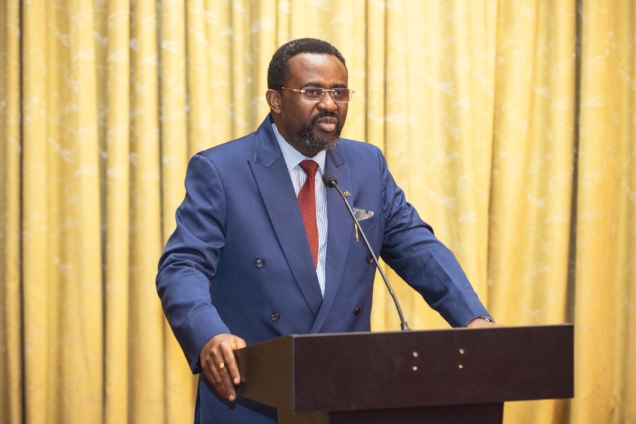
Bank of Ghana (BoG) Governor Dr. Johnson Asiama has dismissed speculation that the central bank is pumping large volumes of dollars into the market to prop up the cedi.
He said, “The stability that we are witnessing now has nothing to do with the fact that we are selling reserves.”
In an exclusive interview with JoyBusiness’ George Wiafe in Washington D.C., on the sidelines of the IMF/World Bank Spring Meetings, Dr. Asiama revealed that the Bank is not intervening directly in the market with its dollar reserves.
“All that we are doing now is strengthening the surge in inflows and implementing foreign exchange market reforms. It’s the combination of these factors that is enhancing the cedi’s recent stability,” he explained.
Indeed, Ghana’s cedi has experienced one of its most sustained periods of stability in recent years. Since December 2024, the currency has not only held its ground but has appreciated slightly against the US dollar on some trading days.
As of April 2025, Bank of Ghana data showed the cedi had appreciated by 2.76% against the dollar.
Bloomberg reported that commercial banks were selling the dollar at around GH¢15.58, with some even quoting GH¢14.38—figures that signal renewed confidence in the local currency.
No Return to a Fixed Regime
Dr. Asiama was quick to shut down any notions of exchange rate control.
“Whatever measures we are implementing will not lead to a fixed exchange rate for the Ghana cedi. We believe in allowing market forces to determine the rates, and that is what is going to happen,” he insisted.
What’s Really Behind the Cedi’s Comeback?
The Governor pointed to a blend of macroeconomic improvements and global trends as the foundation of the cedi’s rebound:
- Strong remittance inflows and improved export earnings from gold and cocoa are bolstering Ghana’s external position.
- Coordinated fiscal and monetary policies are shoring up confidence in the economy.
- A weaker US dollar globally has created favourable conditions for emerging market currencies like the cedi.
“The fiscal side has been supportive of monetary measures, helping to maintain the current development,” Dr. Asiama added, underscoring the delicate balance between policy coordination and market-led exchange rate determination.
As speculation mounts over the sustainability of the cedi’s strength, the Bank of Ghana appears determined to maintain confidence, not with reserves, but with reforms.
Latest Stories
-
We can tackle multiple priorities – Sam George defends Anti-LGBTQ Bill push
4 minutes -
Statement: Ghana Chamber of Mines’ Response to Claims in Joe Jackson’s “Ananse Stories about the Economy of Ghana”
5 minutes -
GES opens 2026 teacher recruitment for licensed B.Ed graduates
7 minutes -
Ghana must value skilled trades, build resilient learners — Ibn Chambas
16 minutes -
Ghana must rethink education around relevance, resilience and responsibility — Ibn Chambas
19 minutes -
Prince Harry faces defamation lawsuit from charity he co-founded
20 minutes -
South Korea deploys thermal cameras to track escaped zoo wolf
22 minutes -
Calls for royal meeting with Epstein survivors grow ahead of US visit
25 minutes -
Ibn Chambas advocates blend of technology and human values in education
27 minutes -
UMA improves healthcare access in Asutifi North with GH₵700k ‘Kim Taylor Legacy’ Walkway
32 minutes -
Scholarships Authority and Fanaka University offer sponsorship for procurement and supply chain studies
35 minutes -
Bisa Kdei drops new single ‘Go N Look’ featuring Medikal
41 minutes -
Benin facing rising terrorism in north as French military presence faces growing criticism
42 minutes -
UEW Public Lecture Series 2026: Education debate ‘about the soul of Ghana’s future’ — Dr Ibn Chambas
43 minutes -
EU fingerprint and photo travel rules come into force from today
1 hour