

Audio By Carbonatix
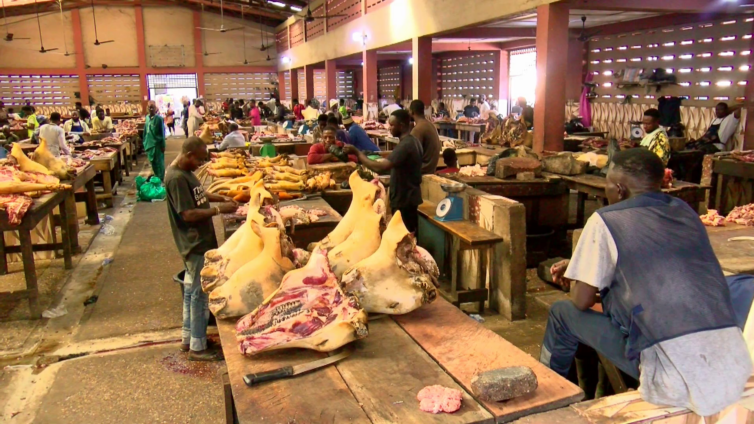
Butchers in the Ashanti Region are decrying the importation of foreign meat products into the local market.
According to them, about 80% of their customers prefer cheap imported meat to fresh ones on the local market.
Some have abandoned their tables in pursuit of other trades.
The number of livestock slaughtered daily in Kumasi is reducing.
A leader of the butchery section at the Kumasi Abattoir, Mallam Mustapha, is worried some of his men have moved to other markets within the Metropolis to meet sales targets.
“Ten years ago, we used to slaughter about 200 or 250 cows daily. But now the foreign meat has destroyed our market. Now, the highest we slaughter is 120 or 150. That meat is not good for us,” he revealed.
Customers of the butchers prefer the imported frozen cow parts such as the intestines, head and legs, compared to the locally processed products.
“We are not spoiling their market, but the imported meat is not healthy. I heard the government is going to ban their activities. That is the correct thing to do. It will help people buy the fresh meat we produce. It is expensive but healthy,” he said.
The cattle business is passed from generation to generation.
After dealing in livestock farming for over 40 years, Tijani Alhaji Abdul Rahaman Naanah is unwilling to hand over the trade to his offspring.
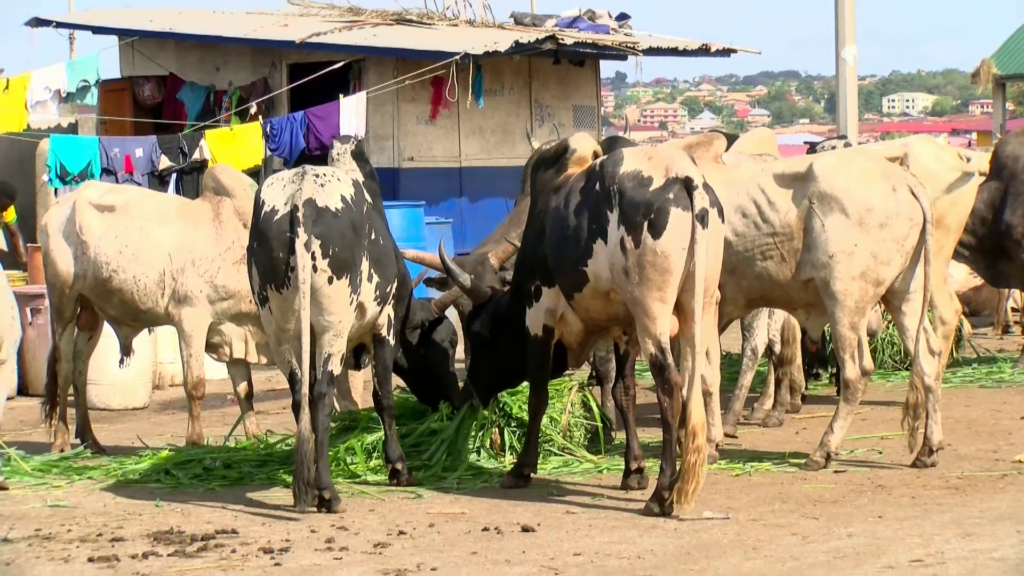
Cattle rearing is becoming increasingly expensive.
“I don’t want my children to take up this job. The job is too hard now. The cattle are expensive and people cannot buy them. From 1980 the price of cattle increased. The price of cattle is over 10,000 cedis,” he revealed.
Cows are currently imported from neighbouring Ivory Coast, Burkina Faso, Mali and Niger. Meanwhile, the foreign exchange rate is hampering their ability to purchase cows.
“Many people bring their cattle from Burkina Faso and Ivory Coast. In Ghana, our cattle are only produced during the rainy season,“ he said.
Production Manager at the Kumasi Abattoir Company Limited, Michael Tongban, is calling for the revamping of the meat industry.
The abattoir employs over 1,000 workers and has the potential to employ more.
Data from the Ministry of Food and Agriculture shows Ghana produces 10% of the meat it consumes, with the livestock sector contributing about 1.3% to Ghana’s GDP.
Latest Stories
-
GPL 2025/26: Dreams FC stage stunning comeback to hammer Eleven Wonders
1 hour -
Livestream: The Probe examines Kumasi’s looming water crisis
1 hour -
MTN Ghana gears up to lead Africa’s AI revolution
1 hour -
Philanthropist Alhaji FuZak donates Da’wah bus to Ambariya Sunni community
2 hours -
GUTA calls for suspension of Publican AI system over trade disruptions
2 hours -
TTAG raises alarm over proposed recruitment of 7,000 teachers, demands national posting roadmap
2 hours -
Civilians feared killed after reports of air strike on Nigerian market
2 hours -
Bishop Simon Kofi Appiah installed as new Jasikan Diocese Bishop
2 hours -
Trump’s Strait of Hormuz blockade threat raises risks and leaves predicaments unchanged
2 hours -
US Court backs extradition of former MASLOC CEO Sedina Tamakloe-Attionu to Ghana
3 hours -
Seven arrested as NAIMOS dismantles illegal mining camp, seizes firearms at Boin River
3 hours -
Fire erupts at Madina Ritz Junction, destroys multiple wooden structures and containers
3 hours -
Daniel-Kofi Kyereh returns from long-term injury, registers assist for Freiburg U23
3 hours -
Knifeman calling himself ‘Lucifer’ slashes three at NYC’s Grand Central
3 hours -
Brands are built from within to without
3 hours