

Audio By Carbonatix
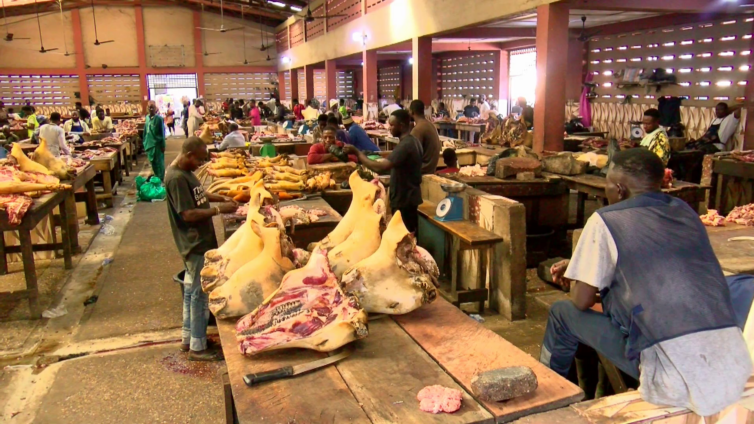
Butchers in the Ashanti Region are decrying the importation of foreign meat products into the local market.
According to them, about 80% of their customers prefer cheap imported meat to fresh ones on the local market.
Some have abandoned their tables in pursuit of other trades.
The number of livestock slaughtered daily in Kumasi is reducing.
A leader of the butchery section at the Kumasi Abattoir, Mallam Mustapha, is worried some of his men have moved to other markets within the Metropolis to meet sales targets.
“Ten years ago, we used to slaughter about 200 or 250 cows daily. But now the foreign meat has destroyed our market. Now, the highest we slaughter is 120 or 150. That meat is not good for us,” he revealed.
Customers of the butchers prefer the imported frozen cow parts such as the intestines, head and legs, compared to the locally processed products.
“We are not spoiling their market, but the imported meat is not healthy. I heard the government is going to ban their activities. That is the correct thing to do. It will help people buy the fresh meat we produce. It is expensive but healthy,” he said.
The cattle business is passed from generation to generation.
After dealing in livestock farming for over 40 years, Tijani Alhaji Abdul Rahaman Naanah is unwilling to hand over the trade to his offspring.
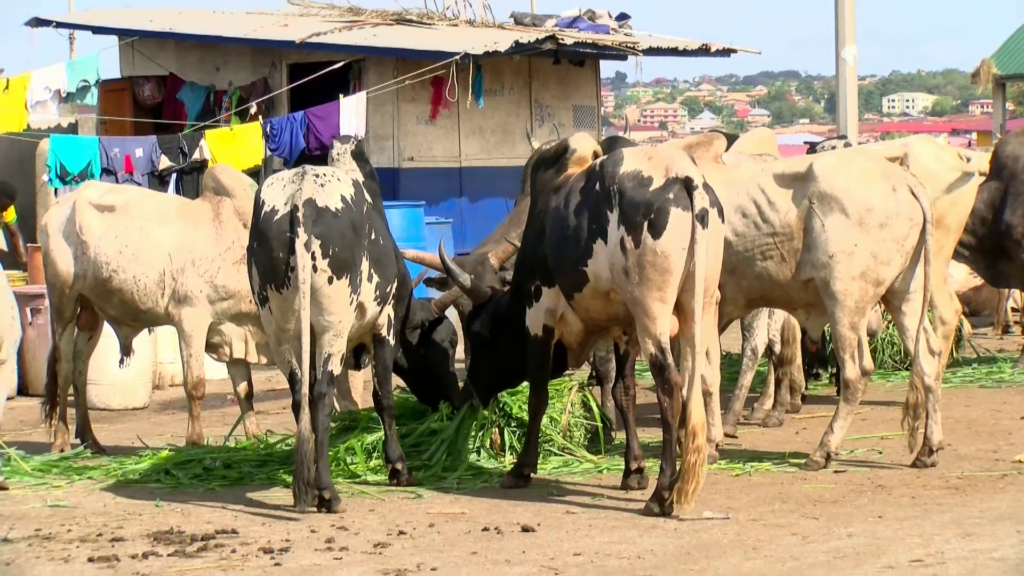
Cattle rearing is becoming increasingly expensive.
“I don’t want my children to take up this job. The job is too hard now. The cattle are expensive and people cannot buy them. From 1980 the price of cattle increased. The price of cattle is over 10,000 cedis,” he revealed.
Cows are currently imported from neighbouring Ivory Coast, Burkina Faso, Mali and Niger. Meanwhile, the foreign exchange rate is hampering their ability to purchase cows.
“Many people bring their cattle from Burkina Faso and Ivory Coast. In Ghana, our cattle are only produced during the rainy season,“ he said.
Production Manager at the Kumasi Abattoir Company Limited, Michael Tongban, is calling for the revamping of the meat industry.
The abattoir employs over 1,000 workers and has the potential to employ more.
Data from the Ministry of Food and Agriculture shows Ghana produces 10% of the meat it consumes, with the livestock sector contributing about 1.3% to Ghana’s GDP.
Latest Stories
-
Communities affected by the construction of Akosombo Dam urge government to speed up the compensation process
8 seconds -
World Cup visa scandal: Sports Ministry not shielding anyone – Sports Minister’s special aide
21 minutes -
World Cup visa scandal: Over 30 people misrepresented as GTA board members to US Embassy – Vincent Assafuah alleges
22 minutes -
Fire destroys wooden structure near Yesu Mo Villa at Bush Road
24 minutes -
NDC threatens sanctions over oversized campaign posters, gives aspirants 5 days to comply
1 hour -
Star Oil paid GH¢2.7bn in taxes, levies in nine months of 2026
2 hours -
Samson’s Take: The rule of law is cheaper before the bulldozer
2 hours -
GRA blames system failure for delay in issuing receipt over passenger’s customs duty
2 hours -
Livestream: Newsfile discusses World Cup visa scandal, beach demolitions, education strikes, BRICS bid
2 hours -
NC-PTAs welcomes end of teachers’ strike, urges parents to prepare children for Monday
2 hours -
Government procures over 2,000 transformers as Ghana’s electricity access hits 89.13% – Energy Minister
3 hours -
UTAG-UG threatens strike on October 19 over unpaid allowance
3 hours -
Let The Constitution direct Chieftaincy to deliver “All Development Is Local”
4 hours -
John Jinapor outlines renewable energy, nuclear power priorities for 2027
4 hours -
Ghana explores centre of excellence for hearing, communication and cochlear implant care
5 hours