

Audio By Carbonatix
The issue of illegal mining, commonly referred to as "galamsey," has become a significant environmental and social crisis in Ghana. With its detrimental impact on water bodies, forests, and agricultural lands, galamsey poses a direct threat to the livelihoods of many communities.
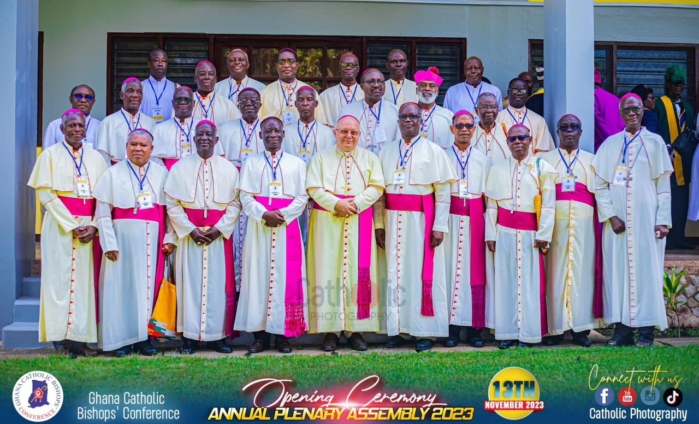
As the country grapples with this pressing challenge, the involvement of influential institutions like the Catholic Church plays a pivotal role in raising awareness and driving change. The Catholic Bishops Conference deciding to lead the Church in a demonstration against galamsey means the implications would be profound and multifaceted.
The Moral Imperative
The Catholic Church has historically been an advocate for social justice, environmental stewardship, and the protection of the vulnerable. By taking a stand against galamsey, the Catholic Bishops Conference would underscore the moral imperative to protect the environment for future generations.
This action would resonate with the Church’s teachings on the sanctity of creation and the need for responsible stewardship of natural resources. Such a stance could mobilize not only Catholics but also other faith-based organizations, creating a powerful coalition for change.
Mobilising Communities
A demonstration led by the Catholic Bishops Conference would mobilise thousands of church members and concerned citizens. The Church’s extensive network of parishes and community outreach programmes would facilitate widespread participation.
Local congregations, youth groups, and Catholic organisations could come together to march, advocate, and educate the public about the dangers of galamsey.
This grassroots mobilisation could foster a sense of unity among diverse communities, highlighting the collective responsibility to combat environmental degradation.
Raising Awareness
A public demonstration would serve as a vital platform for raising awareness about the impacts of galamsey.
The Catholic Bishops Conference could leverage its position to highlight not only the environmental consequences but also the health implications for communities affected by polluted water and deforestation.
Through speeches, literature distribution, and media engagement, the Church could inform the public and policymakers about the urgent need for sustainable practices and stronger regulations against illegal mining.
Engaging with Policy
In addition to raising awareness, the Catholic Bishops Conference could use its influence to engage directly with policymakers.
By advocating for stricter enforcement of existing laws and the implementation of more robust policies to combat illegal mining, the Church could help shape the national dialogue on environmental protection.
Collaborating with government agencies and NGOs, the Church could propose sustainable alternatives to galamsey to support local economies while preserving the environment.
Promoting Sustainable Practices
The Catholic Church has a unique opportunity to advocate for sustainable mining practices that could coexist with environmental preservation. By promoting responsible mining and supporting initiatives that prioritise ecological health, the Church could play a significant role in transitioning communities away from illegal activities.
Educational programmes could be developed to teach miners and community members about sustainable practices, thereby creating a pathway toward economic stability that does not compromise the environment.
Building a Legacy of Environmental Stewardship
The Catholic Bishops Conference would leave a great legacy by taking a firm stand against galamsey.
By positioning itself as a leader in the fight against environmental degradation, the Church could inspire future generations to prioritise stewardship of the Earth.
Such actions could reinforce the Church’s relevance in contemporary society, demonstrating that faith can be a powerful catalyst for social change.
Conclusion
The possibility of the Catholic Bishops Conference leading the Catholic Church in a demonstration against galamsey presents a unique opportunity to address a critical issue facing Ghana.
By mobilising communities, raising awareness, engaging with policymakers, and promoting sustainable practices, the Church could significantly impact the fight against illegal mining.
As a moral authority, the Catholic Church has the potential to unite diverse voices in a common cause, emphasising the importance of environmental stewardship and social justice.
In an age where the consequences of inaction are increasingly dire, the Church’s leadership could be the beacon of hope needed to safeguard the future of Ghana’s environment and its people.
Source : Lambert Donkor
Latest Stories
-
No withdrawal of MPs from committees – Majority Chief Whip clarifies
12 minutes -
Divine Mission Academy, Supreme Montessori School secure semifinal spots in 2026 Luv FM VitaMilk Primary Schools Quiz
19 minutes -
IGP Special Operations Team deployed to combat crime in Kumasi
25 minutes -
UN slavery resolution opens door for global reparatory justice – Ablakwa
27 minutes -
The world has affirmed that trafficking of enslaved Africans is the gravest crime against humanity – Ablakwa
43 minutes -
Gold reserves not being sold off, funds reinvested for returns – Sammy Gyamfi
56 minutes -
Three killed, burnt beyond recognition in Nkwanta South conflict
56 minutes -
Claims of disruption in Parliament business false – Dafeamekpor
59 minutes -
GoldBod Jewellery sponsoring ‘Women of Valour’ London programme false – Sammy Gyamfi
59 minutes -
This is an emphatic victory for justice – Ablakwa hails UN slavery resolution
1 hour -
Communications Minister champions fintech-led growth at 3i Africa Summit 2026 launch
1 hour -
National AI Masterclass Cohort 2 begins to boost public sector digital skills
1 hour -
Ghanaian journalists receive advanced science training at Imperial College London
1 hour -
The world has spoken the truth through UN slavery resolution – Ablakwa
2 hours -
We can’t change history but we can change how we remember it – Ablakwa on UN slavery resolution
2 hours