

Audio By Carbonatix
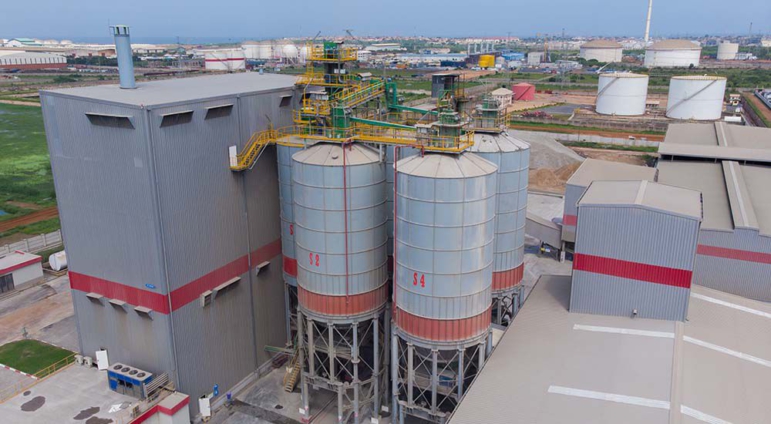
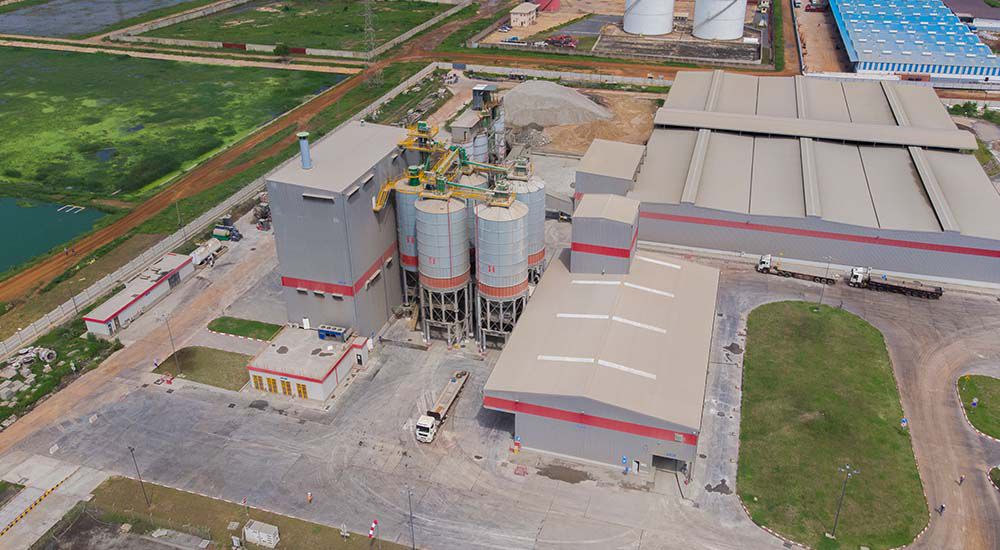
CBI Ghana Limited, producers of Supacem Cement, has signed an $80million contract to construct the world’s largest Calcined Clay Cement plant, a 405,000-ton-per-annum plant at the Tema Free Zones Enclave.
The plant will use new technology to substitute 20% of clinker, the raw material used to make cement, with environmentally-friendly clay from Ghana.
The operation of the Calcined Clay Cement plant will have a profound impact on the Ghanaian economy.
By partially substituting imported clinker for Ghanaian clay, CBI will improve the value-for-money of its cement products for its customers by exceeding Ghanaian cement quality standards, while lowering raw material, energy, and fuel costs.
Lower imports will also translate to reduced local demand for US dollars and help decrease pressure on US dollar exchange rates.
In addition, the two-year construction period and the long-term operation of the Calcined Clay Cement plant will create hundreds of low- and high-skilled jobs for Ghanaians.
Substituting clinker with calcined clay in cement production will have immense environmental benefits.
Globally, cement production accounts for about 7.5% of CO2 emissions. Using calcined clay to minimise the need for traditional, carbon-intensive clinker is a major advancement toward eliminating the negative environmental footprint of cement production.
“Ghana is the perfect location for using clay as an environmentally-friendly alternative to clinker,” said Frédéric Albrecht, CEO of CBI Ghana Ltd.
“West Africa is traditionally a clinker- and cement-importing region due to the lack of suitable limestone reserves. Developing countries, with their young populations and a growing need for infrastructure and housing, represent the future in cement consumption. Calcined clay cement are the most sustainable alternative to traditional clinker-based cement.”
CBI Ghana’s $80-million investment into its Calcined Clay Cement plant brings the company’s investments in the Ghanaian cement industry to $130 million.
The new project is financed by an international consortium including its parent company F. Scott, Société Générale, Norfund, the Norwegian Investment Fund for Developing Countries, IFU, the Danish Investment Fund for Developing Countries, and EKF Denmark, with equipment supplied by FLSmidth, the world leader in cement manufacturing equipment.
Latest Stories
-
Livestream: The Law discusses Supreme Court @150
27 minutes -
MTN Momo staff walk to promote wellness and fitness
44 minutes -
Assafuah: Sedina Attionu’s return from Nevada will test government’s commitment to accountability
48 minutes -
How GRA’s Modified Taxation Scheme is boosting revenue compliance & SMEs competitiveness
1 hour -
Stonebwoy Can Do It: A call to unite behind 2026 BHIM Fest
2 hours -
World Shea Expo returns to Tamale for 2026 edition
2 hours -
Prioritise cocoa sector with better prices, timely payments-Annoh-Dompreh urges NDC
2 hours -
Lands and Mines Watch Ghana endorses Heath Goldfields’ mining capacity
2 hours -
Gbintiri residents protest alleged diversion of 24-hour market project
3 hours -
Justin Bieber headlines Coachella with nostalgia-fuelled set
3 hours -
Ukraine and Russia accuse each other of hundreds of ceasefire violations
3 hours -
Asha Bhosle: The sound of Bollywood dies aged 92
3 hours -
Fire destroys section of 4-bedroom apartment at Tantra Hill
3 hours -
Safe city: Unnoticeable protection
3 hours -
North East Regional Police Commander raises alarm over burning of checkpoints
4 hours