

Audio By Carbonatix
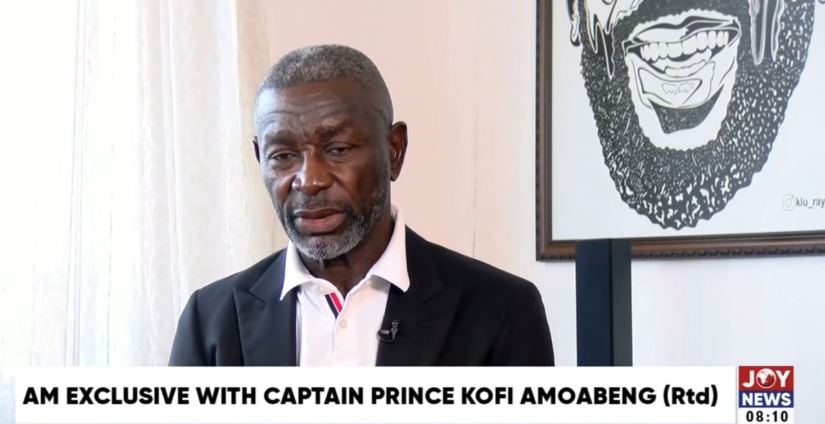
Founder of the defunct UT Bank and UT Holdings, Capt. Rtd. Prince Kofi Amoabeng, has predicted that the woes of the local currency (the cedi) could deepen further, hitting GHȼ20 to a dollar by the end of the year.
According to him, the dollar almost always strengthens during an election year.
In an interview on Joy News AM Show on Thursday, May 16, he said, ”My fear is that if the cedi to the dollar is now GHȼ15 and we are just about getting to an election; the records are there that every time there's an election, there is a huge devaluation of the cedi.
“So I wouldn’t be surprised if the cedi by the end of the year is hovering around GHȼ 18 or 20.”
He highlighted the country's over-reliance on imports and the decline in exports as major contributory factors to the challenges facing the currency.
According to him, Ghana does not export adequate resources, and that even with cocoa exports which used to be significant, they are now decreasing.
He argued that countries with robust export economies experience strong growth, while those heavily reliant on imports face economic challenges.
Mr Amoabeng emphasised the need for better infrastructure, strategic planning, and holistic approaches to address these issues. He also pointed out that agricultural workers are leaving the sector due to insufficient support.
“So, unless we look into ourselves and take pragmatic action to reduce...initially it should be harsh, but certain things shouldn’t even be imported at all.
“So why is it that we’ve been forced to import things that we cannot pay for, I don’t get it."
As an example, Mr Amoabeng suggested focusing on local rice production instead of importing foreign rice to reduce the country's import cover.
Analysts are envisaging a continuous weakening trajectory of the local currency as foreign exchange demand-supply disparity remains substantial.
They, however, anticipate improved liquidity conditions towards the end of quarter two of 2024 after the International Monetary Fund (IMF) board approves the second review of Ghana’s programme. This will lead to a tranche disbursement of US$360 million under the IMF programme.
Latest Stories
-
Reality Zone with Vicky Wireko: International Day of the Girl, shaping today’s girl for tomorrow’s future – ZONTA Clubs lead the way
28 minutes -
Global health must be led by countries, not designed for them – Mintah Akandoh
1 hour -
Mahama honoured at 2026 World Health Summit in Berlin for global health leadership
2 hours -
Breast cancer is not a death sentence – Besease Kontire Obaapanin, Magmina Foundation lead awareness campaign
2 hours -
EcoBank invests in digital education of 4 Garisson School to mark 40 years in Africa
2 hours -
AGI urges investment in skills and raw materials to strengthen local manufacturing
2 hours -
GPL 2026/27: ‘We have to rectify our mistakes’ – Boadu reacts to Aduana FC defeat
2 hours -
No disability access, no building permit – KMA declares
2 hours -
Asantehene to lead environmental restoration effort at Jimi Land Reclamation Site
2 hours -
Poor Ghanaians are being jailed because they cannot afford justice – Crime Check Foundation
2 hours -
No conflict in appointing Emelia Agbenyo as Deputy EC Chair – NDC
2 hours -
87-year-old man jailed 20 years for defiling 9-year-old girl at Ofankor
2 hours -
Sankofa Gold targets 70kg output after 9-month shutdown
2 hours -
Tamale, Bolgatanga had just one Legal Aid lawyer between them – Kwesimintsim MP
3 hours -
PAC orders eviction of former irrigation company MD from official residence
3 hours