

Audio By Carbonatix
All is set for this year's Census Night, which falls tomorrow Sunday, June 27, 2021.
The Census Night is the reference date for census enumeration and all questions asked during enumeration will relate to that Night.
All persons who spend the Census Night in Ghana will be counted. This includes everyone who spent the night inside household, people who spent the night at hotels, people in transit and all outdoor sleepers.
In effect, everyone in Ghana during the time of the Census would be counted.
The enumeration exercise will continue from June 28 and end on July 11, 2021.
The listing of structures to herald the main exercise began on Sunday, June 13, 2021.
The 2021 PHC will provide important information to support the evidence-based implementation of the national development agenda and support the tracking of achievements of the Sustainable Development Goals and Agenda 2063 of the African Union.
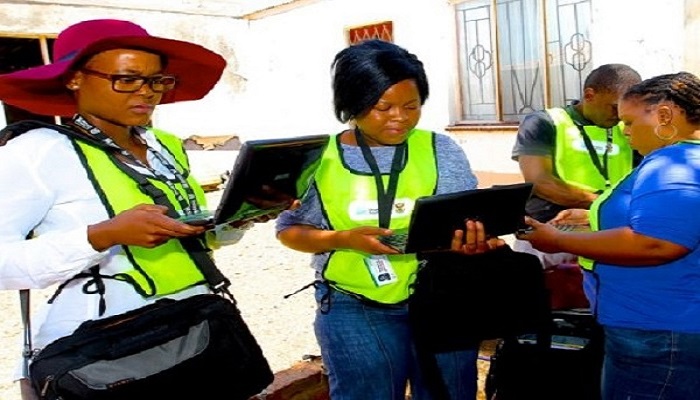
During enumeration, a census official (enumerator) will visit each household and administer a questionnaire (collect some information) from the head of household or any other adult in the household.
The enumerator will present their ID card on arrival. The interview to collect information must be conducted in the language that the respondent (household member) can understand.
It is important that everyone takes note of the Census Night and where one spent that night to answer the questions accurately.
All heads of households should also make note of all the persons that slept in their households on the Census Night, both usual members of the household and any visitors.
Enumerators will visit all households or institutions and collect detailed information on the persons that slept there on Census Night.
It is important that all household heads are able to answer these questions on behalf of others in their absence.
The information to be collected covers the following:
1. Travel history of household members who have migrated abroad
2. Socio-demographic characteristics (age, sex, education, ethnicity, religion etc.)
3. Literacy and education
4. Economic activity (employment status, job description, occupation, industry)
5. Difficulties in performing daily living activities (seeing, hearing, walking etc.)
6. Ownership and usage of ICT devices
7. Children born to women 12 years or over
8. Deaths of household members within the past 12 months
9. Housing conditions (construction materials of structure; water supply; asset ownership)
10. Sanitation (disposal of solid and liquid waste)
11. Source of water, lighting and cooking fuel.
Latest Stories
-
KsTU marks 70th Anniversary Celebration, rallies partners for AI-driven future as gov’t pledges support
2 minutes -
Ghana missing out on billion-dollar Carnival Industry — WCC CEO urges urgent investment
20 minutes -
MP Akurugu cuts sod for 8.2 km Ashongman road project
59 minutes -
No certificate, no entry – IFMA Ghana demands strict enforcement of occupancy permits to halt building collapses
1 hour -
Schools under trees: Gov’t targets 400 new schools, 1m desks this year – Mahama
1 hour -
Mövenpick Accra Business Forum 2026: A platform for shaping Ghana’s economic future
1 hour -
‘Not our jurisdiction’ — Mahama breaks silence on Ofori-Atta case
1 hour -
Mahama pushes for return of civic education to tackle indiscipline, sanitation challenges
1 hour -
Ghana’s Black Stars fall again as Germany snatch late victory
2 hours -
Mahama praises Volta Region’s cleanliness, urges national replicati
2 hours -
Ghana Medical Trust Fund set for launch as Board finalises key systems
2 hours -
Ghana restores investor confidence through economic reform – Deputy Finance Minister
2 hours -
We never promised to end sole sourcing, only its abuse – Sammy Gyamfi
2 hours -
Middle East tensions: Ghana’s current energy resilience thanks to increased domestic gas production – Mahama
2 hours -
KsTU unveils ‘Nimde3 Hyiren’ Regenerative Electric Vehicle
3 hours