

Audio By Carbonatix
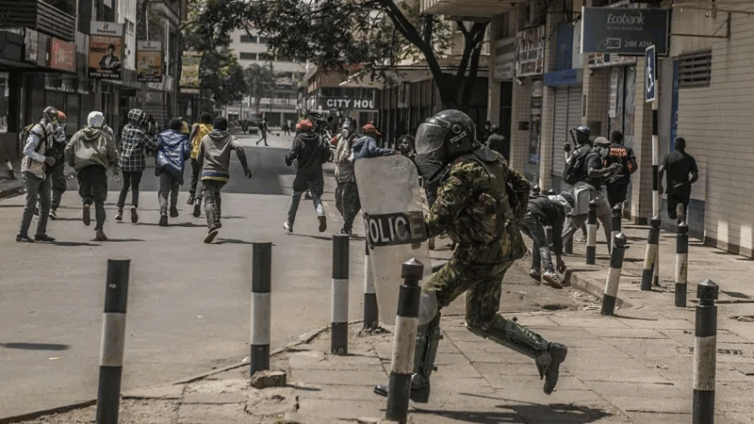
Kenya's security forces have blocked all major roads leading into central Nairobi, ahead of planned nationwide protests.
Much of the city centre is deserted, with businesses shut and a heavy security presence on the streets. Some schools have advised students to stay at home.
Hundreds of early-morning commuters and overnight travellers were stranded at checkpoints, some located more than 10km (six miles) from the city centre, with only a few vehicles allowed through.
Within the city, roads leading to key government sites - including the president's official residence, State House, and the Kenyan parliament - are barricaded with razor wire.
In a statement issued on Sunday evening, the police said it was their constitutional duty to protect lives and property while maintaining public order.
Monday's protests, dubbed Saba Saba (Swahili for 7 July), commemorate the 1990s struggle for multiparty democracy in Kenya.
These demonstrations have been organised primarily by young people, demanding good governance, greater accountability, and justice for victims of police brutality. They are the latest in a wave of anti-government protests that began last year.
On 25 June, at least 19 people were killed and thousands of businesses looted and destroyed in a day of nationwide protests that were being held in honour of those killed in last year's anti-tax protests.
Recent demonstrations have turned violent, with reports of infiltration by "goons", who are accused of looting and attacking protesters. Civil society groups allege collusion between these groups and the police - accusations the police have strongly denied.
On Sunday, an armed gang attacked the headquarters of a human rights NGO in Nairobi. The Kenya Human Rights Commission had been hosting a press conference organised by women calling for an end to state violence ahead of Monday's protests.
This year marks the 35th anniversary of the original Saba Saba protests - a key moment that helped usher in multiparty democracy in Kenya after years of one-party rule.
The response by the then government under President Daniel arap Moi was brutal. Many protesters - including veteran politician Raila Odinga, who is now working with the government, were arrested and tortured, while at least 20 people were reportedly killed.
Since then, Saba Saba has come to symbolise civic resistance and the fight for democratic freedom in Kenya.
Latest Stories
-
Latvian businessman Aldis Ozols enstooled as development Chief of Supresu-Man
49 seconds -
‘We should go in for the best’ – Ernest Thompson on next Black Stars coach
6 minutes -
US, Iran receive 45-day ceasefire proposal as Trump deadline to reopen Strait of Hormuz looms
19 minutes -
Iran defiant as Trump vows ‘entire country’ could be taken out if no deal reached by tonight
24 minutes -
Afigya Kwabre North crowned champions of maiden MTN Ashantifest Regional U17 football competition
24 minutes -
The case for an explicit and limited Legal threshold for internal military deployment in Ghana
26 minutes -
UK Wireless Festival sponsorship withdrawals highlight high cost of Kanye West controversy for global brands
28 minutes -
CAF President to pay working visit to Senegal over AFCON title saga
36 minutes -
GPL 2025/26: Samartex end winless run with victory over Kotoko
38 minutes -
Afreximbank to avail US$10bn under its Gulf Crisis Response Programme to shield African, CARICOM economies from Middle East conflict
43 minutes -
NPP behind every monumental agenda in Ghana – Miracles Aboagye
54 minutes -
Ho Airport not a misplaced priority — GACL Board Chair
55 minutes -
Nationwide sensitisation of haulage truck drivers ahead of Axle Load Enforcement
56 minutes -
Vice President backs community tourism at Vodza Regatta 2026
59 minutes -
Tree Crops Development Authority says media reports on rubber exports are misleading, demands apology
1 hour