

Audio By Carbonatix
For decades, the global tourism narrative has been written by the North for the South. Destinations in Africa and the Caribbean were often viewed through the lens of seasonal consumption: beautiful escapes that remained fragile in the face of global shocks. However, this week in Nairobi, that narrative was decisively rewritten.
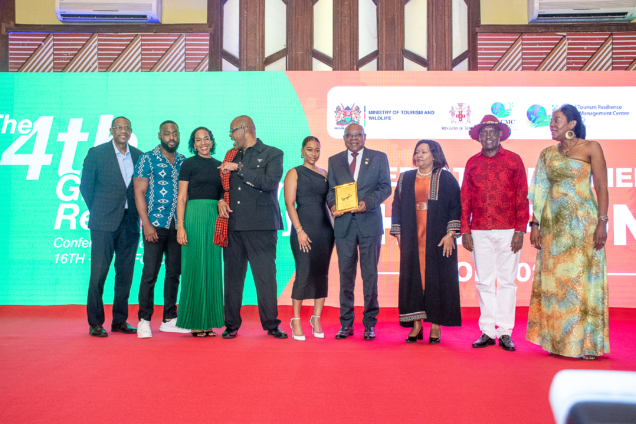
The 4th Global Tourism Resilience Day, Conference and Expo (GTRDCE), held at the Kenyatta International Convention Centre (KICC), marked a historic milestone. As the first edition held outside of Jamaica, it formalised a powerful "Nairobi Tone": a commitment to a new era of South-South cooperation where Africa and the Caribbean no longer just survive crises but lead the global response to them.
From Vulnerability to Leadership
The conference opened with a resounding call to action from Hon. Edmund Bartlett, Jamaica’s Minister of Tourism and the founder of the Global Tourism Resilience and Crisis Management Centre (GTRCMC). Bartlett, alongside his co-author Prof. Lloyd Waller, has spent years championing the idea that tourism resilience is not a "luxury" for developing nations, it is an existential necessity.
"Resilience is not about waiting for the storm to pass; it is about learning to navigate the gale," Bartlett declared. His vision was echoed by Prof. Lloyd Waller, who praised Bartlett for elevating the concept into a practical policy imperative. This was further cemented by the launch of their co-authored book, Destination Reputational Resilience. The text serves as a manual for the modern age, arguing that in a world of instant social media, a destination’s image is its most vulnerable infrastructure. For a country like Ghana, currently building its global brand, the lesson is clear: digital defence is as important as physical security.
The Kenyan Blueprint: Sustainability in Action
The conference was formally inaugurated by Hon. Rebecca Miano, Kenya's Cabinet Secretary for Tourism and Wildlife, on behalf of Deputy President Prof. Kithure Kindiki. Miano’s keynote was a masterclass in operationalising resilience. She noted that Kenya’s pivot to green energy—where over 90 per cent of its consumption is renewable - is not just an environmental choice but a strategic economic one.
"Investing in resilience today is the surest antidote to tomorrow’s losses," she stated. This sentiment was echoed by Dr. John L. Ololtuaa, Principal Secretary for the State Department for Tourism, and Prof. John Okumu, Acting Vice-Chancellor of Kenyatta University. Together, they demonstrated how academia and government must work in tandem to create evidence-based policies that protect the local tourism value chain.
Diplomacy and the "Many Nations, One Africa" Vision
Perhaps the most significant intervention came from Prime Cabinet Secretary Hon. Musalia Mudavadi. Speaking with the authority of Kenya’s chief diplomat, Mudavadi moved the discussion from "tourism" to "statecraft." He argued that for the African continent, tourism is a sovereign economic anchor.
Hon. Mudavadi’s "Many Nations, One Africa" vision called for an end to the "fragmented borders" that stifle continental growth. He argued that if Africa is to be truly resilient, it must speak with one voice on issues ranging from visa protocols to a National AI Strategy. His call for "technological sovereignty" resonated deeply, particularly the need for African-led data systems to counter the "dangerous frontier" of digital misinformation that can cripple a destination’s reputation overnight.
He argued that for Africa, tourism is not a "luxury" sector but a sovereign economic anchor, noting that economic shocks in tourism often lead to broader social instability. He pushed for a unified African vision, arguing that "fragmented borders are the greatest threat to continental resilience." His call for technological sovereignty was equally firm, noting that Kenya is actively pursuing a National AI Strategy to protect the digital assets of the tourism value chain.
According to him, the positive sector performance is evidence that Kenya’s strategy is gaining traction. Tourism earnings stood at approximately KSh 268 billion in 2023, with growth in 2024 at KSh 452 billion, while international arrivals have reached 2.4 million. The Government, he said, is targeting 5.5 million arrivals in the coming year.
“These figures reflect a positive trajectory,” he told delegates. “We remain fully committed to developing a vibrant, competitive and resilient tourism sector.”
The Global Fund and the Road to Málaga
Minister Bartlett took this a step further by proposing a Global Tourism Resilience Fund. He challenged the international community to move beyond speeches, pointing out that while global bodies often talk about resilience, the financing mechanisms to support small island and emerging continental states remain woefully inadequate.
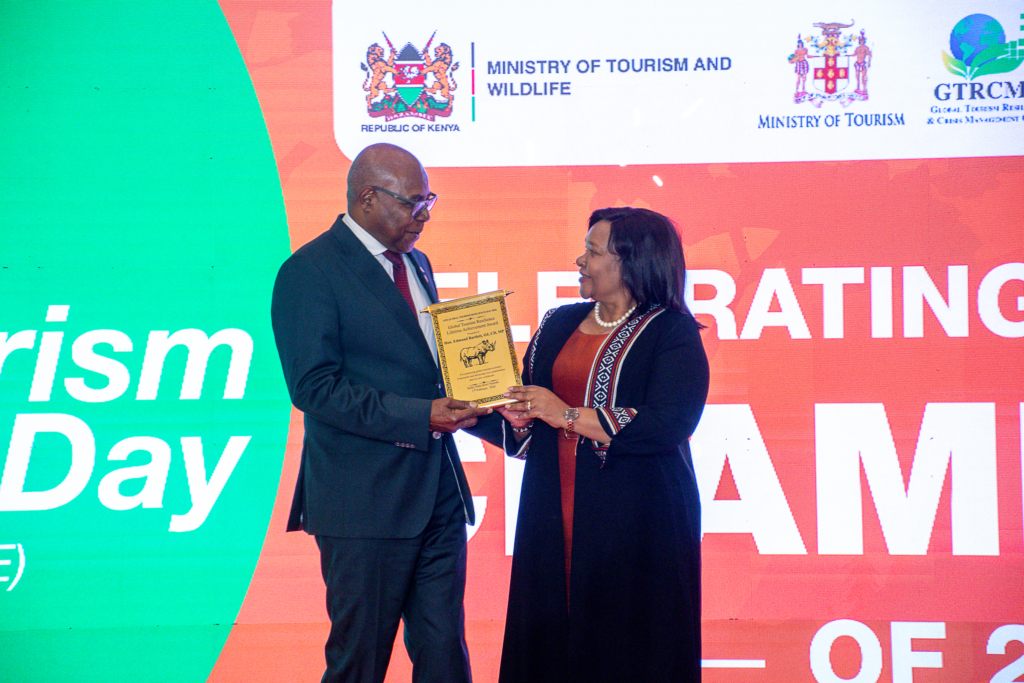
As the conference concluded with a grand Awards Ceremony at the Safari Park Hotel, where Bartlett was honoured for his pioneering advocacy, the announcement of the next host city signaled the conference's global maturation. In 2027, the movement will travel to Málaga, Spain. By moving from the Caribbean to Africa and now to Europe, the conference is proving that the lessons learned in the South are now being exported to the North.
Lessons for the West African Corridor
For the stakeholders of Ghana’s tourism industry, the Nairobi conference offers three distinct takeaways. First, resilience must be institutionalised, it cannot be an afterthought once a crisis hits. Second, digital reputation is a frontline asset that requires active governance. Third, regional integration is the only way to insulate our economies from global volatility.
Before departing, delegates visited the Nairobi National Park, seeing first-hand how conservation can be a resilient economic engine. As we look towards 2027, the "Nairobi Tone" remains clear: Africa is no longer waiting to be taught resilience; it is now the teacher.
Latest Stories
-
Labour Minister wants SOEs to help shape new public pay system
1 hour -
IPEC will ensure Equity and Sustainability in SOEs Compensation
2 hours -
White House bars CNN from travelling with Trump on Air Force One
3 hours -
Fennis wins second consecutive ITF J60 title in Accra
3 hours -
Spain beat England in thriller after Kane penalty miss
3 hours -
GPL 2026/27: Zaidan’s late goal ends Hearts of Oak unbeaten start
3 hours -
CEOs demand clarity on pay harmonisation, board autonomy as FWSC engages SOEs bosses over IPEC transition
3 hours -
2026 Women’s Super Cup: FC Savannah, Epiphany Warriors maintain top spots ahead of final group games
3 hours -
‘Is EOCO responsible for determining lawyers’ fees?’ – Baffour Awuah
3 hours -
David Beckles claims second J60 Accra title
3 hours -
No France cocaine suspect linked to Mahama, Vice President’s security details – NACOC
4 hours -
Anwelle Foundation launched in Jirapa to tackle poverty, youth unemployment
4 hours -
Joy Sports Editor Fentuo Tahiru Fentuo to moderate inaugural Music Meets Football Summit in Zambia
4 hours -
Court premises too volatile for Baffour Awuah’s attempted arrest by EOCO – Inusah Fuseini
4 hours -
Drug bust: Under no circumstances will NACOC leadership be compromised – Twum-Barimah
4 hours