


Audio By Carbonatix
The Chief Executive of the Development Bank Ghana (DBG), Kwamina Duker says changing the mindset of players in the financial industry is pivotal to increasing support to the agricultural sector.
He believes that if financial institutions understand the importance of collaborating with players in the agriculture sector, it would be easier to lend to them.
Speaking at a training session organised for financial institutions by the Ghana Incentive-based Risk-sharing System for Agricultural Lending (GIRSAL) he said, “We’ve got ourselves into a cycle where there’s blame on both sides; the SMEs are blaming the banks and vice versa and there’s no common language.
He, however suggested that the way forward is changing mindsets of financial institutions about agriculture.
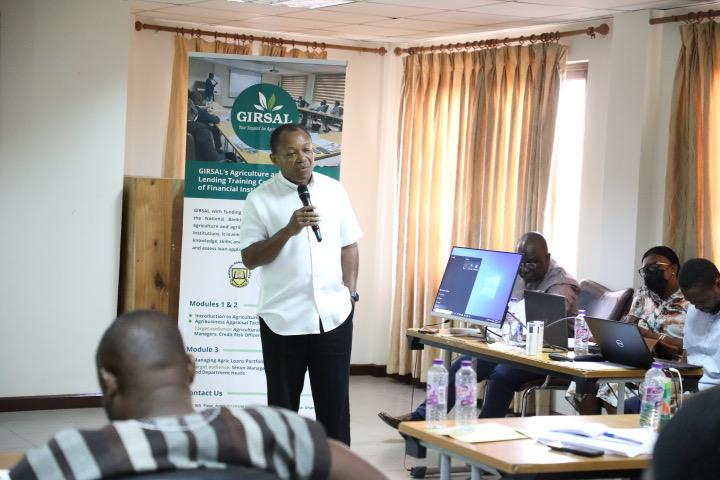
“So, by bringing together the banks, Development Bank Ghana and GIRSAL, we then look at the ecosystem and first ask ourselves, ‘what is causing the risk? Is it the long-term financing? Is it that we need SMEs to be more ready? Do they have a good understanding of what banks require to be able to meet loans?’”
Mr. Duker believes “it’s not a matter of just giving out the money because that ends with everyone going bankrupt. So, now there’s a mindset of working together, collaborating and connecting for the common good.”
The Ghana Incentive-based Risk-sharing System for Agricultural Lending (GIRSAL) introduced the Agriculture and Agribusiness Lending Course for financial institutions in 2020 in collaboration with the National Banking College.
The programme is to help financial institutions improve their capacity to access agricultural loan applications and manage agribusiness lending.
Chief Executive of GIRSAL, Kwesi Korboe reiterated his outfit’s commitment to growing the agriculture sector.
He indicated that his outfit has identified three things that need immediate attention.
“Recently we added advocacy to our mandates where we’re trying to look at the entirety of risk in agric financing. In fact, for this year, we have identified three critical issues; policy on exports at the Tema Port, agric production and the issue of imported chicken. These are some of the things we’re focusing on to help make recommendations to government that these challenges need to be addressed to fully realise the potentials of the sector,” he stated.
In all, 55 participants from 12 financial institutions attended the training session
Latest Stories
-
Kwaku Azar writes: A-G vs OSP
12 minutes -
Mfantsipim–Adisadel rivalry built excellence, not division – Sam Jonah
37 minutes -
Vice President launches Mfantsipim’s 150 years of shaping Ghana’s greatest mind
54 minutes -
I assure Otumfuo, Mahama will join him to commission KNUST Teaching Hospital by end of this year – Haruna Iddrisu
2 hours -
Gov’t to roll out free special education for persons with disabilities from July 1 – Education Minister
2 hours -
“We used it to test our officiating officials’ readiness” – Bawah Fuseini after CAA Athletics event
2 hours -
Volleyball emerges as Ghana’s fastest rising sport
3 hours -
National Sports Fund needs strong leadership from the top – Administrator David Wuaku
3 hours -
JoySports Exclusive: Steve McLaren in talks with GFA after expressing interest in Black Stars job
3 hours -
Fire guts auto parts warehouse at Bubuashie, one fire officer injured
3 hours -
I owe my victory to coach Ofori Asare – Allotey after winning WBA Africa Gold Super Flyweight belt
3 hours -
Church of Pentecost supports over 2,000 BECE candidates in Obuasi with career guidance seminar
5 hours -
Brandon Asante and Coventry all but promoted to Premier League despite Sheffield Wednesday draw
5 hours -
GPL 2025/26: Late Kwartemaa strike downs Hearts in Tema
5 hours -
Ghana Faces Sierra Leone Moment as Prosecutorial Powers come under strain
5 hours