

Audio By Carbonatix
Over the past five years, the Ghana Incentive-based Risk-sharing System for Agricultural Lending (GIRSAL) has issued credit guarantees valued at over GH¢604.53 million to 17 financial institutions, covering up to 70%.
Under the credit guarantee scheme, GIRSAL has channelled GH¢1.18 billion worth of loans, at relatively lower interest rates to about 137 agribusinesses located in 72 districts across 15 regions.
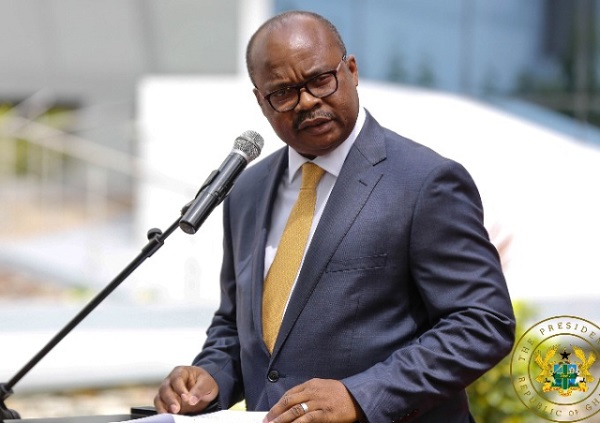
Speaking at the 5th Anniversary Launch and Rubber Value Chain Conference, the Governor of the Bank of Ghana, Dr. Ernest Addison, said, GIRSAL’s presence has lifted the agriculture sector, adding, it has recognised the untapped potential in the rubber sector and has taken steps in to facilitate the entry of indigenous processors.
“In doing so, GIRSAL provided essential financing incentives to mitigate perceived risks thereby inducing local participation and growth in the sector. Through this intervention, the rubber sector has created permanent employment, generating some GH¢3.5 million per year in income to rural households. GIRSAL also empowered 451 local smallholder rubber farmers and service providers, contributing a total of GH¢30 million per annum in incomes to 12,616 individuals. These interventions in the rubber sector generated US$8 million in export proceed”, he mentioned.
He continued that GIRSAL’s Technical and Advisory Services have also delivered training and capacity building programmes to mid-level staff, executives, and Board members of financial institutions. The direct technical support includes loan application assessments, loan facility restructuring and monitoring, strengthening of internal systems for agricultural lending, and the management of agricultural portfolios. These have been complemented by support from consultants and third-party organisations. GIRSAL has also extended business advisory services to develop and manage projects for its clients.
Challenges in Agricultural Financing
Notwithstanding these achievements, the Governor said participants in the agricultural value chain continue to face challenges in accessing finance.
First, interest rates on loan to actors in agricultural value chain continue to be prohibitive due to the high perception of risks, combined with collateral requirements that are almost impossible to meet. The sector is also beset with risks that are beyond the control of actors in the value chain requiring some form of insurance schemes which may be inaccessible in most cases.
In the face of these challenges, the Governor pointed out that significant innovation would be required to revolutionise the agricultural financing landscape to expand access beyond the traditional financing sources. This calls for modification of the financing models, its expansion, and adaption to meet the peculiar needs of the sector.
Future of Agriculture Financing
The Governor also called for digital platforms to connect farmers with investors, offer microloans, and streamline the application process.
“Advances in data analytics and artificial intelligence would also help lenders assess creditworthiness more accurately by analysing data from various sources—such as credit reference bureaux, weather patterns, and historical yields—AI can be deployed to provide precise risk assessments and tailor financing solutions to individual needs”, he added.
On Environmental and climate considerations , he said with climate change posing significant risks to agriculture, there is growing interest in financing projects that enhance climate resilience. This includes funding for sustainable practices, such as agroforestry and water-saving technologies.
On economic and market dynamics, he said the development of advanced risk management tools, such as weather derivatives and crop insurance products, will become more integral to agricultural financing.
In conclusion, the Governor said agricultural financing in Ghana is evolving with a mix of traditional and innovative approaches aimed at overcoming the sector's inherent challenges.
This he said the future of agricultural finance hinges on continued reform, technological advancements and collaborative efforts between the government, private sector, and international partners.
Latest Stories
-
Kenya confirms second Ebola case – a relative of the first victim
1 hour -
Hidden video recording device found in cabin of Australian navy ship
1 hour -
Saudi Arabia overturns death sentence for man over Facebook comment, Sri Lanka says
2 hours -
Burnham says he wants to ‘repair bridges’ between Ukraine and US
2 hours -
Pope walking and recovering ‘as expected’ after surgery, doctors say
2 hours -
Total expenditure as of July 2026 amounted to GH¢147.07bn, 16% below target – BoG
4 hours -
Total revenue & grants stood at GH¢144.5bn in July 2026, slightly below target – BoG
4 hours -
Ghana Sports Fund urges sports federations to submit credible proposals and measurable targets
4 hours -
Sally Rooney books withdrawn in UK over Palestine Action support
4 hours -
Musk says US government may be behind slowdown of Ukraine drone speeds
4 hours -
Picking Chief Justices nearing retirement could give Mahama immense power – Bentil
4 hours -
Netflix to shed 1,000 jobs in steepest cuts since 2022
5 hours -
Burnham had two hospitality dinners with Man City chairman, deleted records show
5 hours -
Semenyo ‘froze’ after alleged racist abuse, court told
5 hours -
‘Shameless’ – Mourinho critical of Vinicius Jr ban timing
5 hours