

Audio By Carbonatix
China has agreed to allow British citizens to travel to the country for up to 30 days without a visa, Downing Street has said.
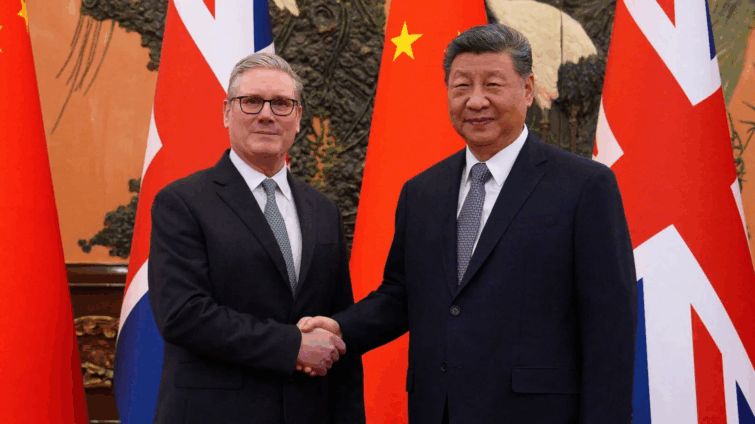
The announcement came after Prime Minister Sir Keir Starmer met President Xi Jinping in Beijing, as he became the first British leader to visit the country in eight years.
The trip also saw an agreement to reduce import tariffs on UK whisky from 10% to 5%, as the government seeks closer trade ties with Beijing to boost economic growth.
However, critics have argued that the UK should maintain a more cautious relationship with China due to risks to national security and the country's human rights record.
There is no set date for when the visa agreement will take effect, but the government hopes it will happen as soon as possible.
Hundreds of thousands of British people could potentially benefit from the change, with around 620,000 travelling to China in 2024, according to the Office for National Statistics.
Downing Street said it would bring the UK into line with 50 other countries, including France, Germany, Italy, Australia and Japan.
Sir Keir said the move would make it easier for businesses to expand in China, while people would also be able to travel there for holidays without a visa.
"As one of the world's economic powerhouses, businesses have been crying out for ways to grow their footprints in China," he said.
"We'll make it easier for them to do so – including via relaxed visa rules for short-term travel – supporting them to expand abroad, all while boosting growth and jobs at home."
Downing Street said the UK and China had also agreed to explore whether to enter into negotiations on a services agreement, which would establish clear, legally binding rules for UK firms doing business in China.
The UK is the world's second largest exporter of services – including in finance, healthcare and legal services - and No 10 said demand from China in the area was growing.
It said an agreement would open Chinese markets to businesses, for example, by enabling recognition of UK professional qualifications.
Meanwhile, pharmaceutical company AstraZeneca will invest $15bn (£10.9bn) in China through 2030, establishing new manufacturing sites and expanding its workforce.
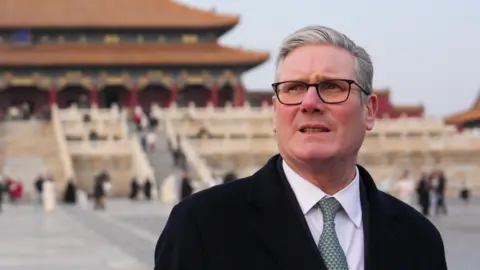
Speaking after his meeting with President Xi at the Great Hall of the People in Beijing, which lasted around an hour and 20 minutes, Sir Keir said the pair had discussed how "huge opportunities" in China could benefit people in the UK.
He said the pair had also made "good progress" on cooperation over illegal migration.
Under an agreement signed on Thursday, Downing Street said UK and Chinese law enforcement would cooperate to disrupt the supply of small boat engines and equipment used by criminal gangs to help migrants cross the Channel.
Last year more than 60% of engines used by smuggling gangs were found to be branded as Chinese-manufactured.
The deal is among 10 agreements signed between the two countries, covering areas including exports, education and food safety.
The prime minister said he had also raised contentious issues including the jailing of pro-democracy campaigner Jimmy Lai and the treatment of the Uyghur minority in Xinjiang.
"Part of the rationale for engagement is to make sure that we can both seize the opportunities that are available, which is what we've done, but also have a mature discussion about issues that we disagree on," he added.
Conservative shadow home secretary Chris Philp said: "Keir Starmer has gone to Beijing to kowtow to President Xi, in the hope to get a few economic crumbs from President Xi's table, to make up for the catastrophic handling of the economy, and he's trading off our national security in order to do that."
He added that the deal on small boats was a "gimmick" that would make no difference to crossings.
Latest Stories
-
We can tackle multiple priorities – Sam George defends Anti-LGBTQ Bill push
15 minutes -
Statement: Ghana Chamber of Mines’ Response to Claims in Joe Jackson’s “Ananse Stories about the Economy of Ghana”
17 minutes -
GES opens 2026 teacher recruitment for licensed B.Ed graduates
19 minutes -
Ghana must value skilled trades, build resilient learners — Ibn Chambas
27 minutes -
Ghana must rethink education around relevance, resilience and responsibility — Ibn Chambas
30 minutes -
Prince Harry faces defamation lawsuit from charity he co-founded
32 minutes -
South Korea deploys thermal cameras to track escaped zoo wolf
33 minutes -
Calls for royal meeting with Epstein survivors grow ahead of US visit
37 minutes -
Ibn Chambas advocates blend of technology and human values in education
38 minutes -
UMA improves healthcare access in Asutifi North with GH₵700k ‘Kim Taylor Legacy’ Walkway
43 minutes -
Scholarships Authority and Fanaka University offer sponsorship for procurement and supply chain studies
46 minutes -
Bisa Kdei drops new single ‘Go N Look’ featuring Medikal
53 minutes -
Benin facing rising terrorism in north as French military presence faces growing criticism
54 minutes -
UEW Public Lecture Series 2026: Education debate ‘about the soul of Ghana’s future’ — Dr Ibn Chambas
55 minutes -
EU fingerprint and photo travel rules come into force from today
1 hour