

Audio By Carbonatix
In a bid to strengthen Ghana’s credit ecosystem and reduce rising non-performing loans, the Chartered Institute of Credit Management Ghana (CICMG), under the leadership of President Evelyn Osei Tutu, is combining professional recognition with practical training initiatives to promote responsible lending, effective debt recovery, and long-term business sustainability.
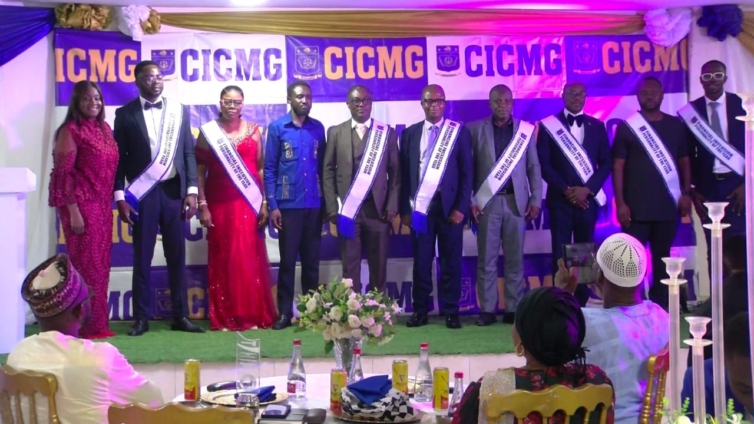
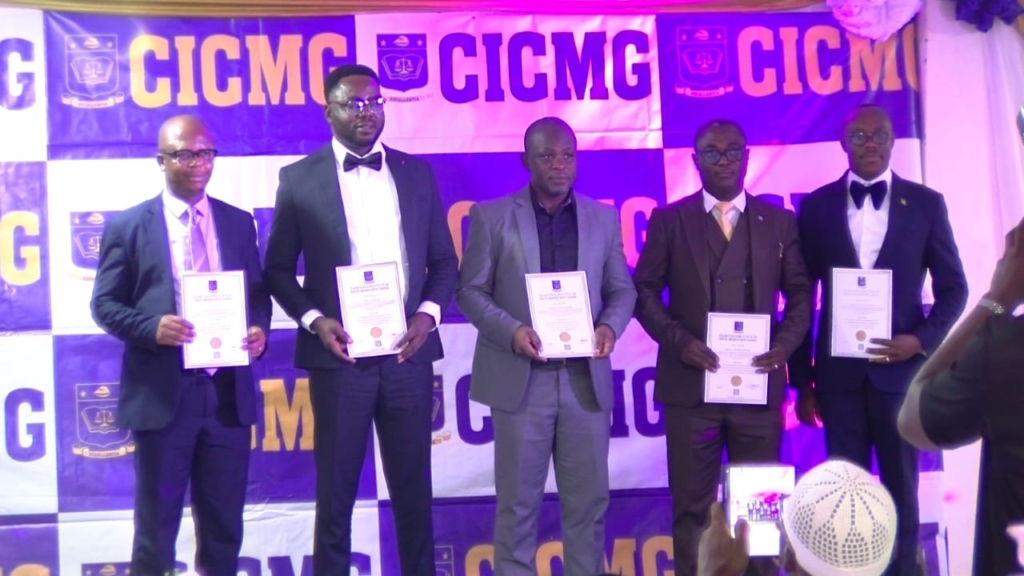
At the 2025 Induction and Graduation Ceremony, CICMG honoured seasoned credit professionals who have contributed decades of service to the financial industry.
According to President Evelyn Osei Tutu, recognising these industry veterans not only celebrates their dedication but also creates a platform for collaboration with financial institutions, SMEs, and the informal sector to ensure credit facilities are granted responsibly and recovered efficiently.
“If you give out facilities and you are not able to recover the monies, then you become a bad lender. That is why we are partnering institutions to ensure proper assessment, sound credit analysis, and effective recovery, so that together we can make positive moves in the economy.”
The Institute is also rolling out its New Year Debt Recovery School, which, according to Registrar Amo Agyapong, equips businesses and financial institutions with practical skills to manage credit and recover outstanding debts. The programme focuses on real-life recovery techniques, including the application of the Pareto principle, or 80–20 rule, to make debt recovery more efficient and reduce the burden of non-performing loans.
“We are introducing practical tools like the Pareto principle, the 80–20 rule, to help institutions manage their recovery processes more effectively. These are unique skills that empower organisations to reduce non-performing loans and make recovery easier and more structured", Mr. Amo said.
CICMG believes that through professional recognition, capacity-building, and strategic collaboration, Ghana’s financial institutions and businesses will be better positioned to improve recovery rates, promote sustainable lending, and contribute to economic growth.
The Institute continues to extend these services to both formal and informal sectors, aiming to bring more unbanked individuals into the credit system while fostering disciplined credit practices across the economy.
Latest Stories
-
Gov’t to establish Prison Industrial Hub to equip inmates with income-generating skills – Prison Service boss
17 minutes -
Alhassan Tampuli donates cement, roofing sheets to support storm victims in Gushegu
17 minutes -
Alhassan Tampuli appeals for urgent support for storm victims in Gushegu
20 minutes -
The hypocrisy must stop; pass Anti-LGBTQ+ Bill now – Alhassan Tampuli to Mahama
24 minutes -
Imprisonment should be rehabilitative, not punitive – Ghana Prisons boss at UNGA
46 minutes -
Ga Adangbe traditional priests petition Mahama over McDan aviation licence revocation
57 minutes -
Anti-LGBTQ Bill: NDC’s arrogance is worrying – Hassan Tampuli
1 hour -
Let’s give OSP time to mature, not to scrap it – Hassan Tampuli
1 hour -
Nigeria convicts 386 Islamist militants in mass trials
1 hour -
Djibouti president wins election with 97.8% of vote, state media says
1 hour -
We don’t have mandate to deduct tax from rent allowance of security services personnel – Interior Ministry clarifies
2 hours -
Ablakwa receives Presidential Special Envoy on Reparations to advance global agenda
2 hours -
Christina Koch becomes first woman to travel around the moon on Artemis II
2 hours -
Epstein survivors’ calls to meet King Charles and Queen harder to ignore as US visit approaches
2 hours -
UN Secretary-General names Ghana’s Anita Kiki Gbeho as South Sudan envoy
2 hours